
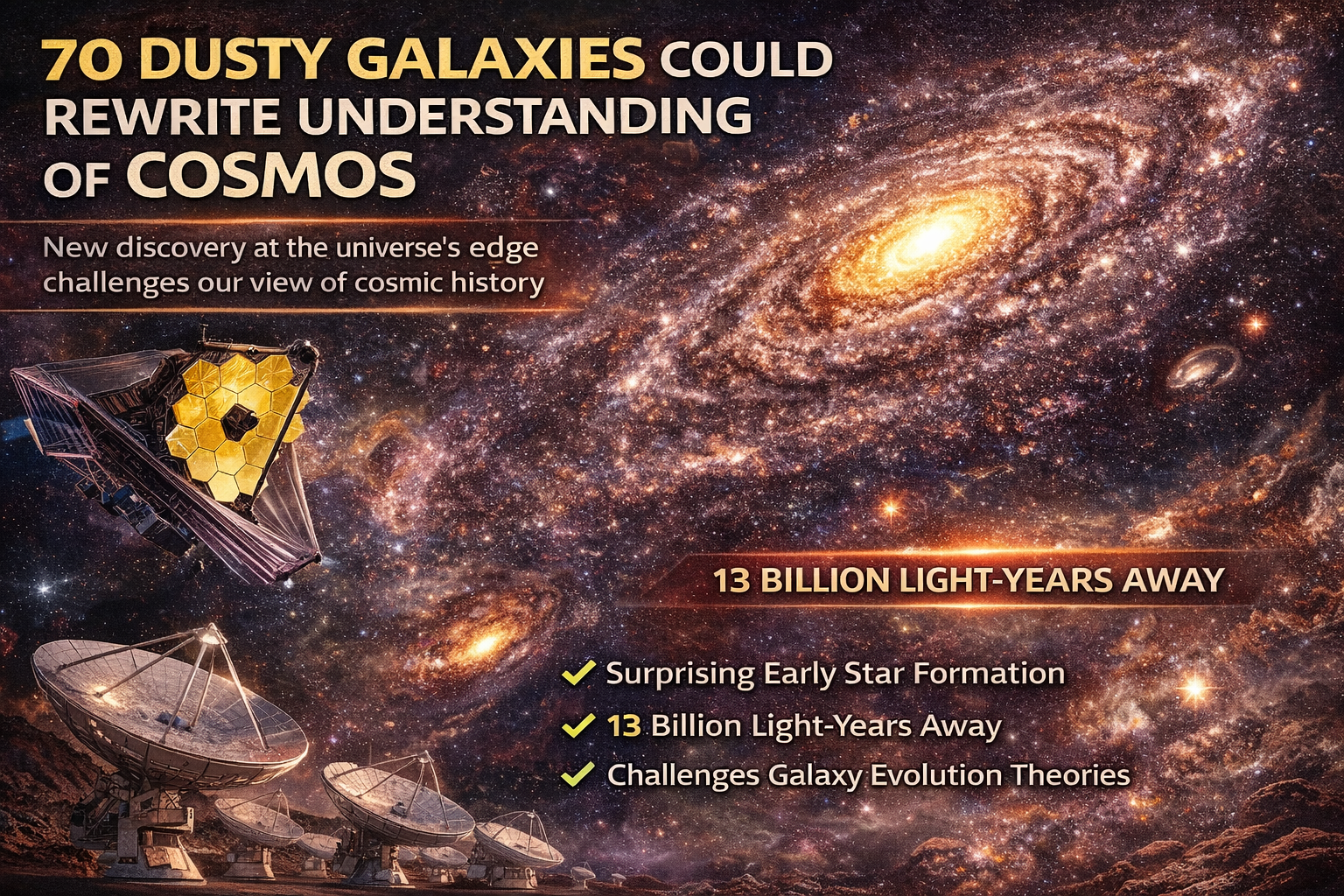
A set of new findings made by a group of astronomers has revealed the discovery of 70 dusty galaxies which are found on the very edge of the observable universe. These are galaxies that are approximately 13 billion light-years away and they have the potential to revolutionize our sense of galaxy creation and development. The implications of the findings to the study of the cosmos and galaxy formation in particular include far reaching implications of the role of dusty environments in the early formation of galaxies.
The analysis was carried out on the latest astronomical tools including the Atacama Large Millimeter Array (ALMA) in Chile and James Webb Space Telescope (JWST). These new technologies enabled the scientists to look back in time and have a glimpse of these galaxies in a new light. Although the discovery remains in its very infancy, it already poses interesting questions concerning the conditions in which galaxies are formed and develop, and how these circumstances may be different in the more mature galaxies of today.
The Nature of Dusty Galaxies
The galaxies are enormous masses of gas, dust, stars, and dark matter that we know of, and which are held together by gravity. The gas and dust are crucial constituents of these processes and thus, they contribute to the formation of stars in many of the oldest galaxies. But until recently, it has been thought that the dusty galaxies were formed later in the history of the universe as galaxies had already had time to acquire large masses of material and acquire complex morphology.
These 70 galaxies are however defying the pattern. The new study indicated that the dust content of these galaxies implied that these galaxies were experiencing a high level of star formation at a much earlier period in the history of the universe than had been known before. This finding may compel astronomers to re-write the history of galaxy evolution and determine whether dust has a more significant role in the formation of galaxies than previously understood.
Dust obscures light in most of the galaxies and thus, the astronomers find it challenging to study them. However, dust may also present some important information about the physical processes that are taking place in these galaxies. The fact that such a large number of dusty galaxies are found at the border of the observable universe leads to the belief that dust might have been a primary element in the ancient history of cosmic evolution.
A Glimpse into the Early Universe
These galaxies are located at the distant end of the observable universe and are being observed just a few hundred million years after the Big Bang, a period of time when the universe was still in its youthful years. The period is called the reionization era, during which the universe was progressing through an opaque phase to the transparent state we have currently.
This large population of dusty galaxies found in this early period of time disagrees with the existing galaxy formation and evolution theories. In the earlier models, galaxies in the early universe were considered to be smaller because some elements, like carbon and oxygen, were scarce, and this prevented the formation of dust. It is thought that the processes in which these elements were created might have happened much earlier than thought because of the large quantity of dust in these galaxies.
Another explanation that the study poses is that the galaxies are more active than most of their counterparts. They seem to be experiencing a rapid star-forming process, where new stars are being formed much faster than we would otherwise expect in older galaxies. The high activity may provide useful information on the initial circumstances that led to the inception of galaxies and the development of stars.
New Insights from James Webb Space Telescope
This discovery has been central to the James Webb Space Telescope (JWST), which took off in December 2021. However, in contrast to its predecessors, JWST can observe the universe in the infrared spectrum, which is able to look through the dust clouds that cover more distant objects. This ability is essential in the research of these dusty galaxies, since the infrared light will be able to cut through the dust and unveil their structure and activity in forming new stars.
The capacity of JWST to gather the light of such distant galaxies is also vital since the further into the past an object is, the dimmer it would be. It is only a testament to the advanced capabilities of the telescope that JWST has been able to observe these galaxies at such an extreme distance, and it is a great stride in our comprehension of the early history of the universe.
Rewriting the Cosmic Timeline
Among the most prominent implications of this discovery, one can mention the fact that it may alter the history of cosmic evolution. The cosmic timeline that we have been used to over the decades has been premised on the assumption that the cosmic history of galaxy formation was gradual with dust and star formation later on in cosmic time. These galaxies might be present in such early cosmic history and would indicate that dust and star formation were components of the process that have always existed.
It is also through this discovery that the need to revise earlier expectations regarding the contribution of galactic mergers and interactions to galaxy growth. In case these first galaxies could build up large quantities of dust and be able to populate stars at a high rate, then it might indicate that the mechanisms by which galaxies grow and evolve might be far more efficient and active than we had ever imagined.
The Role of Dust in Galaxy Evolution
The presence of dust in these early galaxies is not just an interesting observation — it may provide critical clues about the physical conditions in the early universe. Dust is formed when heavy elements such as carbon, oxygen, and silicon combine in the cooling gas of a galaxy. The fact that these elements were present so early in the universe’s history implies that supernova explosions and other high-energy events occurred earlier than expected, distributing heavy elements into the surrounding gas and enabling dust formation.
The discovery of dusty galaxies at such an early stage in the universe’s history could also have profound implications for our understanding of galaxy feedback processes. In more mature galaxies, dust plays a crucial role in regulating star formation by absorbing ultraviolet light from young stars and preventing it from ionizing the surrounding gas. Understanding how these early galaxies managed to accumulate dust and form stars could provide key insights into how galaxies evolve over time.