
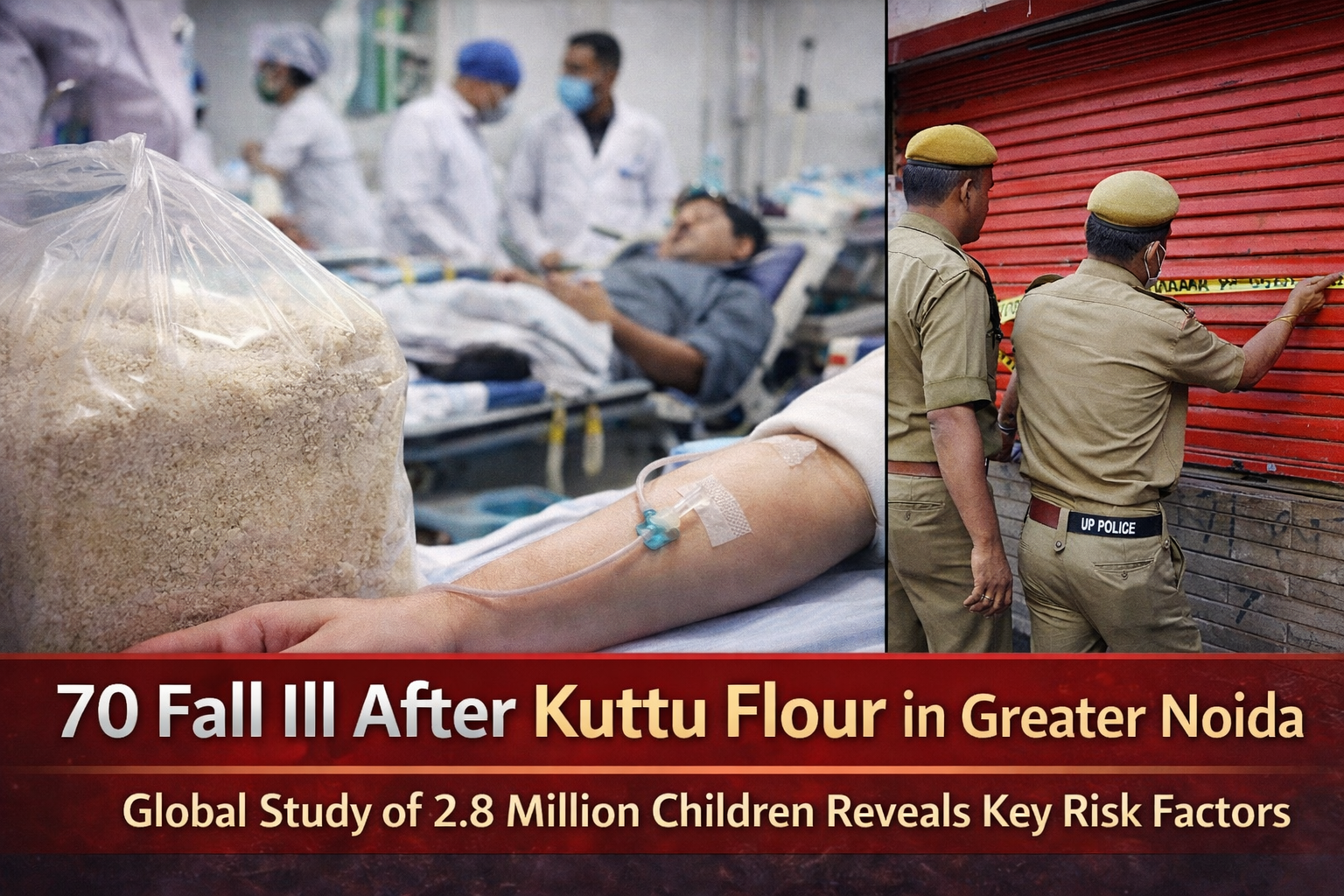
Greater Noida West, Uttar Pradesh: Over 70 people who had attended three housing societies in the Greater Noida West became ill on Sunday night after they claimed to have eaten buckwheat flour (kuttu atta) in their fasting on Maha Shivratri. The event caused panic among the residential clusters, with dozens of people rushing to the nearby hospitals with symptoms of food poisoning.
The people who are affected are mainly the residents of Supertech Ecovillage 3, Royal Court Society and the Himalayan Pride Society. Based on the health officials and residents, the majority of those who had gotten ill had eaten meals made using buckwheat flour that had been purchased locally on Sunday afternoon. The rotis, together with other fasting meals, were made using the flour, which is traditionally consumed after the Maha Shivratri fast.
Sudden Onset of Symptoms
The residents said that the symptoms started to appear a few hours after dinner. A large number of them complained of acute stomachache, vomiting, nausea, dizziness and diarrhea. There are instances of cases where two or more family members were hit by the same, and this created a conjectural idea that there was a common food source.
Ajay Sharma, a Supertech Ecovillage 3 resident, claimed that his family started feeling sick right after 10 pm. We were fasting all day long, and at night had kuttu rotis. A few minutes after dinner, my wife and daughter complained that they were feeling dizzy and nauseous. In an hour, we all began to vomit, he said. The family was rushed to the closest hospital in order to be treated.
In the Himalayan Pride Society, there were reports of the same. Other residents, such as Komal, claimed that her whole family experienced extreme stomach pain after eating food that was made using the same flour. She went to the hospital with the flour packet and presented it to doctors who were suspecting poisoning.
Medical Respons and Hospitalizations
A number of patients were admitted to the private hospitals around Noida and in Sector 71 and Sector 128. Doctors proved that the symptoms were correlated to food poisoning. As most patients were sent out of the hospital once they were treated and observed, there are those patients who were aged and those with underlying health conditions, who necessitated their continued observation.
Doctors said that the majority of patients were stable and were responding to treatment. Severe cases were treated with intravenous fluids and vomiting and dehydration control medications. There were no reported deaths during the writing period, but the doctors stressed the significance of early treatment in this situation.
Food poisoning is generally a result of bacterial contamination, fungal toxins or chemical adulterants in food. Buckwheat flour that is commonly available during long intervals as a result of seasonal demands during fasting feasts may be unhealthy when not processed and stored correctly.
Food Safety Investigation, Police
After the incident, the local police took a First Information Report (FIR) against the sale of the noxious food under the provisions of the Food Safety and Standards Act, 2006 and other relevant sections of the Bharatiya Nyaya Sanhita. A food safety officer lodged the complain after initial investigations showed that there could be contamination.
The food safety officials initiated an on-the-spot inspection of the shops located in the area that stocked buckwheat flour. The police closed down at least two retail stores and a warehouse, which was suspected of selling the bad batch. The flour samples were also collected and submitted to the laboratory, where they were to be analyzed so as to establish the actual source of contamination.
Primary enquiries pointed out the flour supply as a manufacturing and packaging facility in the Greater Noida area. Authorities arrested several members of the supply chain to question them. This research is in light of determining whether the contamination was caused by bad storage conditions, fungal growth, adulteration, or packaging.
Re-occurring Issries in the Fasting seasons
This is not the first instance when buckwheat flour is known to have caused food poisoning in western Uttar Pradesh and the National Capital Region. Similar accidents have happened in the past in Navratri and other fasting days, where the demand for fasting-specific foodstuffs is significantly high.
According to experts, buckwheat flour is usually milled and kept in advance of the seasons of festivals. It may get contaminated with fungi in case it is exposed to moisture or unfavorable storage conditions. There have also been reports of the danger of adulteration or contamination by low-quality ingredients to satisfy the high demand in a few cases.
Due to the limited number of occasions when buckwheat is eaten, such as during certain religious holidays, there is no quality control and regulation sometimes until incidents have taken place.
Residents Express Concern
The occupants of the affected housing societies were worried about the safety of packaged foodstuffs. A lot of families reported that they believed in the brands that are accessible locally, and they had not gotten any warning of contamination before. Some residents insist that food items distributed during religious occasions should be strictly monitored, especially those that are taken after extended periods of fastening since people might already be in a weak physical condition.
The society management committees in the affected residential complexes issued an advisory that advised the residents to avoid using the remainder of the suspected flour and report any cases within the first instance as soon as possible. The communities had WhatsApp groups where families organized hospital visits and communicated on how to help each other.
Health Consultative Measures and Prevention
Doctors recommend that consumers should only buy buckwheat flour that is of good origin and attentively analyze the packaging information, such as the manufacturing and expiry dates. Flour must be kept in dry containers in cool areas so that it is not exposed to moisture.
The health authorities also advise against the use of products with a strange smell, color, or clumping. Before people who have been suspected of food poisoning attend the doctor, they need to consult the doctor as soon as they start showing signs of the symptom which include continued vomiting, dehydration, high fever, or severe stomach pain.
The officials of the Gautam Buddh Nagar district said that there would be surveillance and inspection drives in the coming days. Retailers are not supposed to sell uncertified or inadequately stored products. Further prosecution might be enforced against the individuals identified as being at fault, in accordance with laboratory results.
Waiting for Laboratory Results
The precise cause of the outbreak, which is the contaminant, has not yet been officially proved. Analysis of the flour samples collected is being done in the laboratory. The officials suggested that these results would assist in deciding whether it was bacterial contamination, fungus toxins or chemical adulterants.
Simultaneously, the majority of the affected residents have healed, and no new cases were reported as the suspected batch was eliminated. The district administration has promised the residents that it would take serious measures after the investigation is carried out. So far, governments have encouraged people to be careful in buying and eating fasting-related foods.