
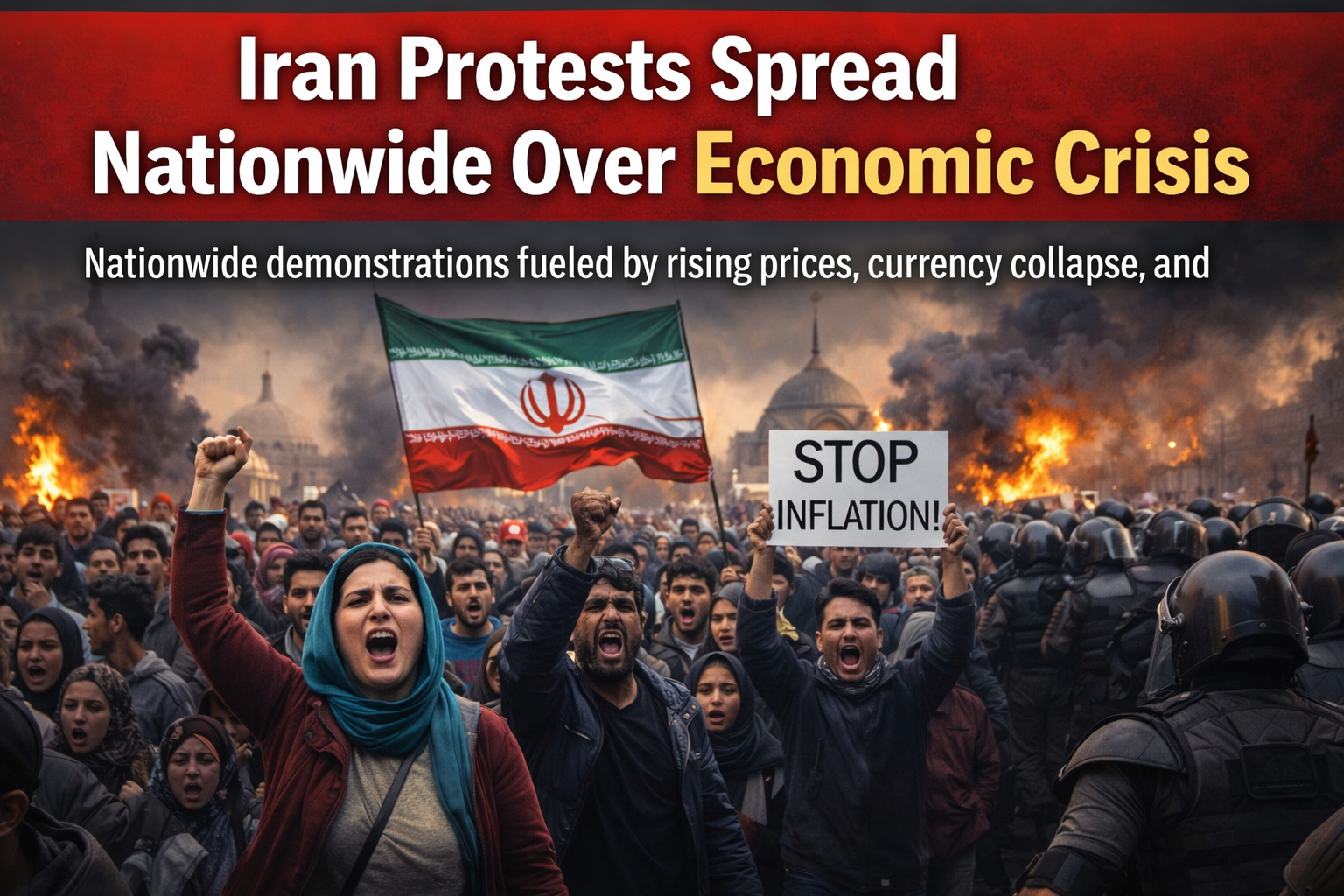
Mega protests raised by growing economic despair in Iran have swept the country, and protesters are taking out spleen over skyrocketing prices, currency devaluation and policies that they say have never helped alleviate their plight. What started as local protest actions against cost of living concerns has now been extended to the rest of the country, challenging the theocracy in the country and putting additional pressure on the civilian government, as well as the Supreme Leader Ayatollah Ali Khamenei.
At the beginning of January 2026, the activist groups and human rights organizations reported that there were demonstrations across all provinces of the Islamic Republic, making this wave of unrest one of the most geographically expanded since the 2022 demonstrations in the wake of the death of Mahsa Amini, a young woman whose deadly experience with the morality police caused widespread protests and an extended movement.
Economic Pressures at the Heart of Unrest
The key element of the recent wave of protests is an economical situation, which has become exceptionally bad in recent months. In late 2025, the Iranian rial, the country’s currency, fell to historic lows against the U.S. dollar, which is adding to the inflation spurt and making the purchase of basic goods unaffordable to most households. Food supplies like rice, bread, cooking oil and medical supplies have shot up tremendously due to a combination of currency depreciation, subsidy reforms and structural drawbacks within the economy.
To common Iranians, such economic strains have become everyday troubles. Inflation has eaten up salaries and savings, which economists contend has been extremely high, and the availability of basic services has been under increasing strain. The present economic crisis is more than just a matter of sanctions and currency, but structural inefficiencies and regional conflict, which have interrupted trade and investment.
The demonstrations first broke out in the historic Grand Bazaar in Tehran, where traders and small-scale entrepreneurs first organized protests and go-slows in late December 2025 due to the currency volatility and loss of purchasing power. These protests rapidly moved outside commercial areas with the workers, students and common citizens joining in their support due to declining livelihoods.
Nationwide Mobilization and Diverse Participation
The difference between the recent wave of protests and the past protest waves is the scale of the involvement and geographical coverage. It was now claimed that demonstrations were being held in provincial capitals as well as in small towns, rural and urban communities in Tehran through to Isfahan, Shiraz, Mashhad, etc. The big processions, store shutdowns and demonstrations in the streets have become the order of the day, thus highlighting the extent to which the issues of the economy have infiltrated Iranian society.
According to the social media footage and reports, there is a variety of people present in the streets: the old shopkeepers were almost literally stopping whole marketplaces. Meanwhile, youth and school-going children have also been jumping on the bandwagon to change things. There have been occasional strikes and rooftop chants in certain places to supplement street marches, and this is organised without an apparent central leadership and represents the general malaise.
This unorganized aspect of the protests reminds us of the past protests, such as the Mahsa Amini protests, where the demonstrators were organized around such frustrations with the economic situation, political repression and the need for actual change without a formal structure.
Rising Toll: Violence, Detentions and Deterrence
As demonstrations spread, the Iranian state’s response has grown increasingly forceful. Activists say at least 38 people have been killed and more than 2,200 detained in the unrest. Official figures remain limited and contested. Security forces have been deployed to disperse crowds in key urban centers, and clashes between protesters and law enforcement have been reported in several provinces.
Unlike the heavy-handed crackdowns seen in earlier protests, which often included widespread internet shutdowns and large-scale military deployment, authorities so far have refrained from fully cutting off communications or flooding city streets with troops. This relative restraint could be a tactical choice, though analysts caution that further escalation remains possible if the unrest intensifies.
Human rights organizations have documented cases of live ammunition, tear gas and other crowd control measures being used in Kurdish regions and other protest hotspots, with some footage showing severe force against unarmed demonstrators. Rights advocates warn of growing abuses as the crisis deepens and the government attempts to quash dissent.
Political Dimensions and Calls for Change
Massive demonstrations sparked by growing economic misery in Iran have swept the nation, with protesters taking their frustrations out on skyrocketing prices, currency destruction and government policies that some claim have done little to alleviate their plight. What started as local protest actions against cost-of-living concerns has now been extended to the rest of the country, confronting the theocracy in the country and putting additional pressure on the civilian government, as well as the Supreme Leader Ayatollah Ali Khamenei.
At the beginning of January 2026, the activist groups and human rights organizations reported that there were demonstrations across all provinces of the Islamic Republic, which made this wave of unrest one of the most geographically expanded since the 2022 demonstrations in the wake of the death of Mahsa Amini, a young woman whose deadly experience with the morality police caused widespread protests and an extended movement.
Economic Measures and Government Response
The key element of the recent wave of protests is an economical situation, which has become exceptionally bad in recent months. In late 2025, the Iranian rial, the country’s currency, fell to historic lows against the U.S. dollar, which is adding to the inflation spurt and making the purchase of basic goods unaffordable to most households. Food supplies like rice, bread, cooking oil and medical supplies have shot up tremendously due to a combination of currency depreciation, subsidy reforms and structural drawbacks within the economy.
To common Iranians, such economic strains have become everyday troubles. Inflation has eaten up salaries and savings, which economists contend has been extremely high, and the availability of basic services has been under increasing strain. The present economic crisis is more than just a matter of sanctions and currency, but structural inefficiencies and regional conflict, which have interrupted trade and investment.
The demonstrations first broke out in the historic Grand Bazaar in Tehran, where traders and small-scale entrepreneurs first organized protests and go-slows in late December 2025 due to the currency volatility and loss of purchasing power. These protests rapidly moved outside commercial areas with the workers, students and common citizens joining in their support due to declining livelihoods.
International Attention and Regional Implications
The difference between the recent wave of protests and the past protest waves is the scale of the involvement and geographical coverage. It was now claimed that demonstrations were being held in provincial capitals as well as in small towns, rural and urban communities in Tehran through to Isfahan, Shiraz, Mashhad, etc. The big processions, store shutdowns and demonstrations in the streets have become the order of the day, thus highlighting the extent to which the issues of the economy have infiltrated Iranian society.
According to the social media footage and reports, there is a variety of people present in the streets: the old shopkeepers were almost literally stopping whole marketplaces. Meanwhile, youth and school-going children have also been jumping on the bandwagon to change things. There have been occasional strikes and rooftop chants in certain places to supplement street marches, and this is organised without an apparent central leadership and represents the general malaise.
This unorganized aspect of the protests reminds us of the past protests, such as the Mahsa Amini protests, where the demonstrators were organized around such frustrations with the economic situation, political repression and need for actual change without a formal structure.
Outlook: Sustained Unrest or Shift to Reform?
As protests continue to sweep across the country, the situation remains unpredictable. Without meaningful economic relief or political concessions, the unrest appears poised to persist, with merchants, workers and youth alike continuing to voice their frustrations loudly and forcefully.
Whether this nationwide movement evolves into a lasting call for structural change or whether state repression will ultimately suppress it remains an open question. For now, Iran’s streets reflect a population grappling with economic hardship and yearning for a better future, a powerful reminder of how economic conditions can drive political expression and upheaval in societies around the world.