
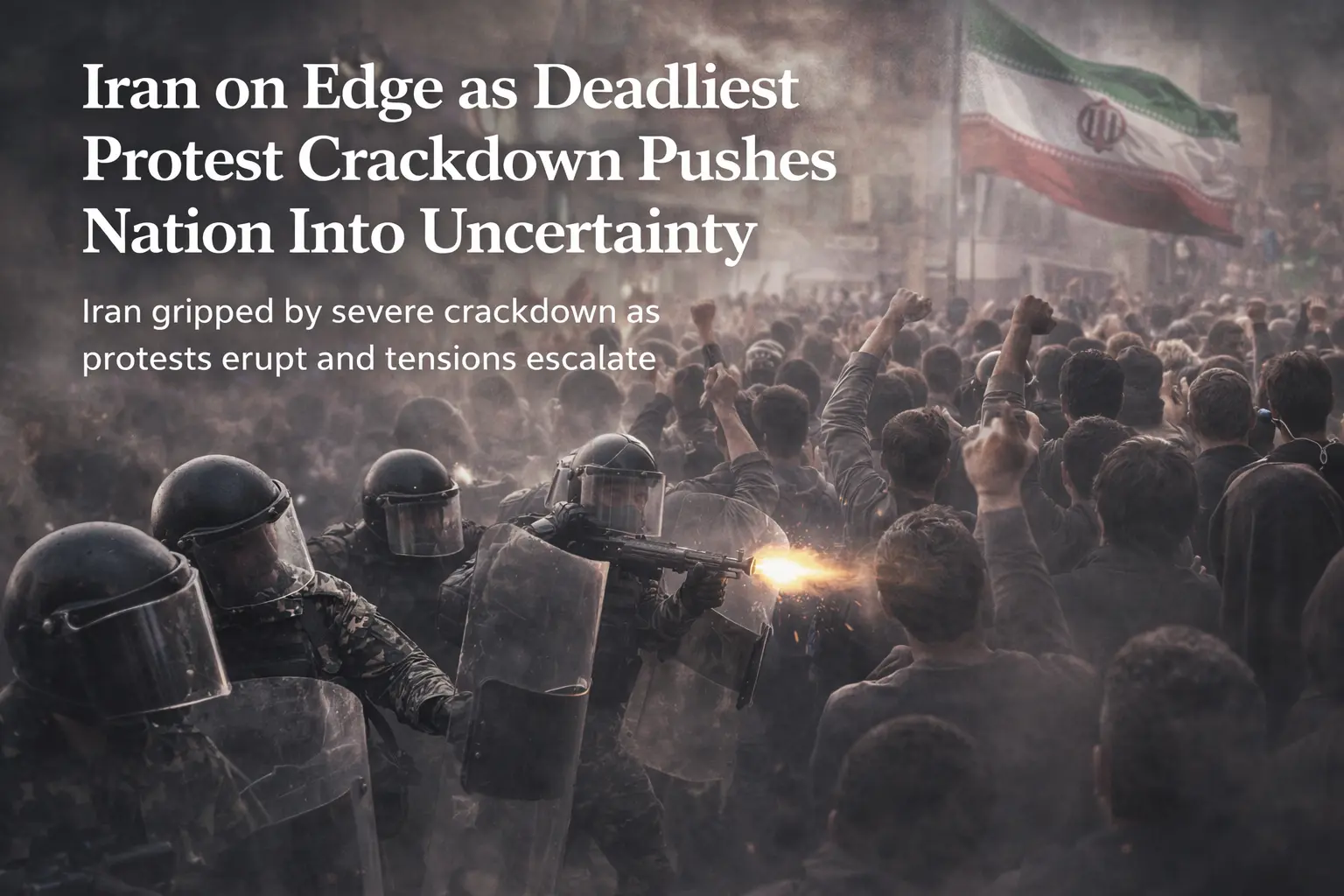
Iran is experiencing a point that most people within the nation term a breaking point. The streets formerly filled with slogans and shouts are now filled with silence, terror, and high levels of security. What started as isolated demonstrations against the economic strain has evolved into a national struggle between the citizens and the government.
The magnitude of violence applied to quell the protests has surprised even the people who were accustomed to Iran’s history of unrest. Whole neighborhoods have been reportedly closed, people have been arrested in large numbers, and families are also having difficulties locating missing relatives who have gone to join protests.
To a large number of Iranians, the current turmoil is no longer a transitory crisis. For many Iranians, this situation feels like a significant turning point.
Why Anger Exploded Across the Country
Years of economic stress have predetermined this unrest. Inflation has emptied the pockets, day-to-day necessities are unattainable, and employment opportunities, particularly among the youth, have continued to fade away. A good number of homes are living month by month, and there is no likelihood of the situation getting any better.
The only difference with this moment was that the frustration spread very fast. Protests were not limited to big cities. Smaller towns and the countryside also participated, signaling that discontent had moved deep into society.
Initially, the demands were directed at the prices, wages, and conditions of life. But days went by, and no reply was received, and the tone grew tougher. The appeals for economic relief evolved into broader calls for power, significantly elevating the stakes.
Security Forces Move In
The state reaction heightened as the protests increased. Massive security forces were deployed, and the use of force was used to restore order in public places. Residents report unannounced raids, checkpoints, and arrests.
Hospitals were reportedly under pressure when injured protesters came in large numbers. In the meantime, communication networks were cut off several times, which complicated the process of information sharing or seeking assistance.
The transparency has not been there, and this has contributed to anxiety. Families, in most instances, claim to have no formal assurance of what happens to the imprisoned family members.
Climate of Fear and Silence
People cleared off the streets as the crackdown widened. Stores shut down early, the streets became silent, and people were afraid instead of being energized by the demonstrations that had taken place only a few days before. Many individuals opted to remain in their homes without knowing what would happen tomorrow.
Small pockets of resistance still existed despite the pressure. In certain places, protesters returned to the streets at night, risking arrest to make their voices heard. The demonstration has continued to highlight the extent of the resentment.
Meanwhile, the price has been killing. It is estimated that there were many victims, but the real numbers are unknown because of the limitations on information.
International Concern, Nervous Silence
Although the turmoil originates within Iran, it does not reside within the country. The world governments are on high alert, as they know that the instability in such a strategically significant country can easily cross borders.
Markets have been cautious, and regional players are rethinking their positions. Any sustained crisis would have an impact on energy flows, trade routes, and political balances way beyond Iran itself.
Diplomatic talks are now getting heated, although the rhetoric is kept low.
Editorial Opinion: No Easy Solutions
This crisis is difficult to draw conclusions on in an editorial opinion. The aggravation that led to the protests is genuine and profound. Meanwhile, the reaction has caused wounds that will not be healed in years.
History knows that mass violence can bring back the appearance of calm on the surface, but it can hardly ever solve the roots of the unrest. The stress will not restore trust, and the silence will not erase trauma.
Foreign officials must exercise caution. Shouting can please the audiences in other countries, but can make matters in the field more complex. The most important thing at the moment is restraint, access to the correct information, and the security of civilians.
Editorial View: No Simple Answers
Iran stands at a crucial juncture today. The course that is taken in the next few weeks might be the one that will guide the nation for a generation. Further repression can lead to further isolation and resentment. Solving grievances, though not easy, provides an opportunity, however remote, to avoid additional bloodshed.
The future is unpredictable for ordinary Iranians. Some are exhausted, mourning, and scared but will not forget about what they have gone through.
This crisis is no longer a protest only. It concerns dignity, survival, and the issue of the extent of pressure that a society can endure before something snaps forever.