
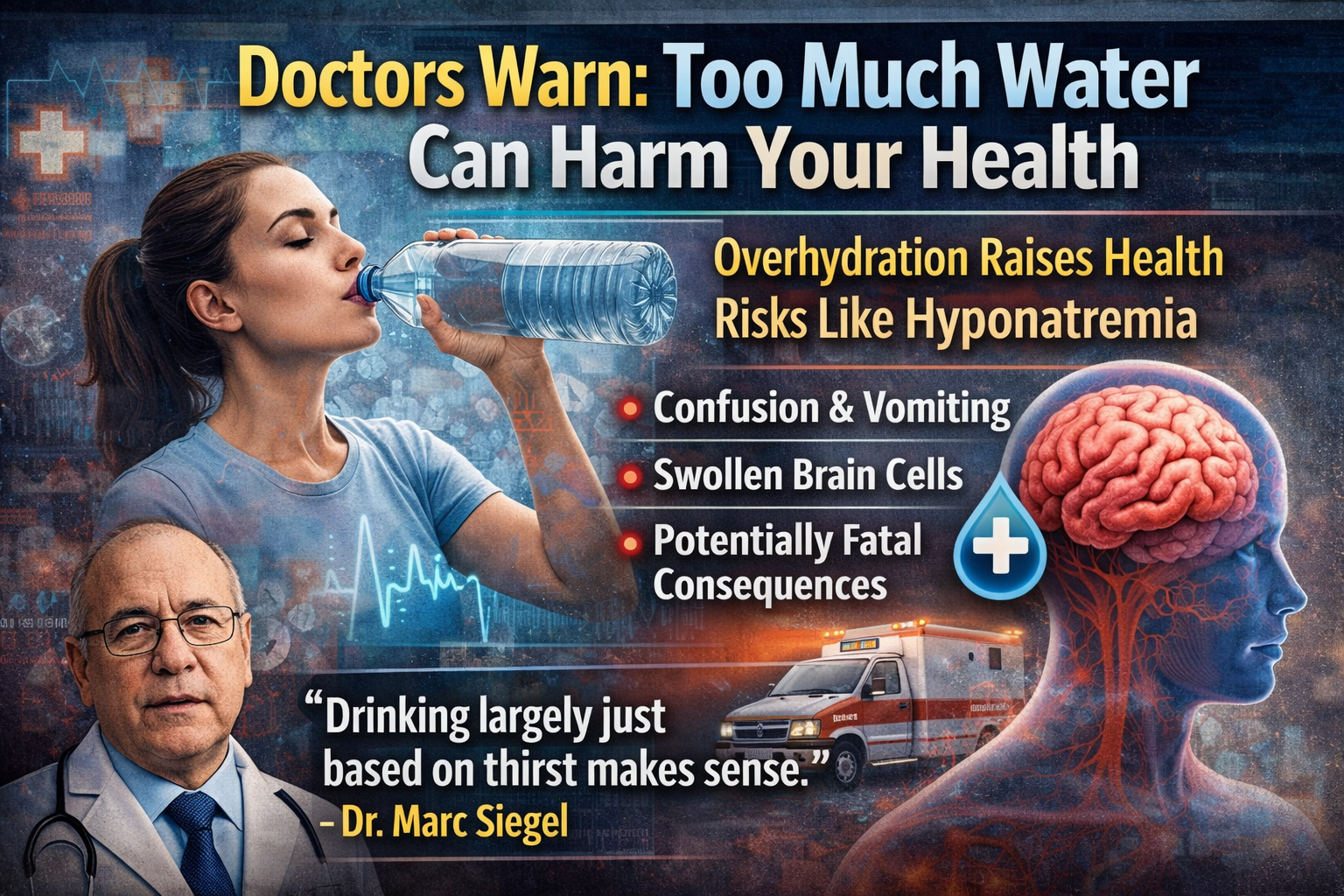
Millions of human beings continue to live their lives oblivious to the fact that a habit that appears harmless may be compromising their health. One such habit that doctors and health experts are currently warning about is overhydration, or imbalanced hydration, which can, in some cases, cause more harm than good.
The Hidden Risk of Drinking Too Much Water
Most of us have learned the health mantra of drinking as much water as possible to stay healthy. Staying hydrated is crucial to the vast majority of people: it aids in digestion, temperature control, joint lubrication, and nearly all the key parts of the human body to operate correctly. However, physicians who discussed the subject claim that excessive water under the wrong conditions, such as the so-called overhydration, may be fatal.
The excessive intake of water over surpassing the capacity of the body to complete its elimination results in overhydration. This does not only weaken the important electrolytes such as sodium in the bloodstream, it can also result in an otherwise fatal condition known as hyponatremia. Excessive blood sodium depletion may lead to cells swelling – and brain cells swell, the consequences of which can be particularly dangerous.
Recognizing the Warning Signs
Symptoms of overhydration may be initially inconspicuous and may resemble other illnesses. Nonetheless, physicians affirm that some of its symptoms are worth considering and they include:
- Estrangement or alienation.
- Nausea or vomiting
- Very weak or tired.
- Headache or dizziness
- Difficulty walking or coordination problems.
Such symptoms arise due to too low sodium concentration in the body a state that disturbs fluid balance between cell membranes. Extreme cases of overhydration have resulted in seizures, coma or even death unless these conditions are timely addressed.
Who Is Most at Risk?
Although generally, a healthy adult with normal kidney response can regulate the intake and output of water, physicians indicate that there is a certain group that may be more susceptible to overhydration:
People with some hormonal problems, such as some antidiuretic hormone (ADH) problems, which control the retention of fluid.
Individuals who have heart or kidney disease, and who may have difficulties in the excretion of excess water.
Athletes who engage in endurance activities and particularly those who take high amounts of water in the course of their long-duration activities.
Patients taking specific drugs, such as some antidepressants or diuretics, which affect fluid balance.
Health experts (kidney specialists and sports medicine doctors talking to health magazines) add that it is not only excessive water, the way and the timing of drinking is also contributing factors. When a person drinks large amounts of water within a period the amount of water going through the kidneys would exceed the limit of the kidney to pass fluid in the form of urine and the consequences are a rapid and dangerous dilution of the electrolytes.
Balancing Hydration: Experts’ Advice
So what should you do? The majority of physicians would advise their patients to take fluids as they feel thirsty, as opposed to having a set of drink eight glasses of fluids daily. It is important to listen to your body. A guide to follow: When urine is pale yellow, this is usually a sign of good hydration and overhydration may be indicated by completely clear urine.
In the majority of healthy adults, the requirements in hydration depend on the level of activity, climate, and general health. Doctors will frequently recommend instead of the number of ounces a day:
- Intake fluids slowly during the day.
- Replenish electrolytes in case of excessive sweat (e.g. in intensive exercise).
- Regulate water consumption depending on temperature and effort.
More specifically, sportspeople and individuals engaged in physical activities that last long might find solutions that include electrolytes instead of just plain water as a way of replacing those that are lost in sweat.
A Generalization on Daily Health Practices.
This issue of overhydration becomes part of a bigger picture that health experts have been stressing throughout the years not every well-meaning or healthy suggestion is universally good and that context is critical. The other daily practices like sitting down long, inadequate sleep, or taking sugary drinks have also been associated with adverse effects on the health when done regularly and beyond measure.
A detailed examination of habits as identified by experts that silently damage health includes such things as:
- Sedentary lifestyles
- Neglecting routine medical examinations.
- Frequently drinking, even in the expected moderation.
- Failure to take sufficient fruits and vegetables.
- Regular sugary drink intake
These illustrations make us not forget that health is seldom the product of individual decisions – it is the product of trends through time.
My Take: Hydration in Context
The changing discourse on hydration as a health news editor is of special interest to me since it highlights a larger change in the way we currently think about wellness. The advice to drink more water has been nearly unchallenged over the years that almost no one ever thought that it can be excessive.
Health science seldom concerns itself with absolutes. Context, temperance and personal differences are critical. What benefits one individual – e.g. a marathoner who sweats hours away – might be too much and opposite to another one who spends all his day at a desk. Likewise, hydration requirements differ depending on age, renal and cardiac conditions, drugs, nutrition, and physical activity.
The lesson here is that there is nothing to be afraid of when it comes to water, but instead hydration needs to be viewed as a dynamic component in your health profile, as opposed to a fixed objective. In uncertainty, be honest with your healthcare provider in understanding what would be appropriate to you, they can give you advice specific to your medical condition and lifestyle.
In an age of wellness trends and clickbait health advice, this is a piece of advice that is based on nuance: listening to your body – and knowing it – is better than strict, one-rule-fits-all guidelines.