
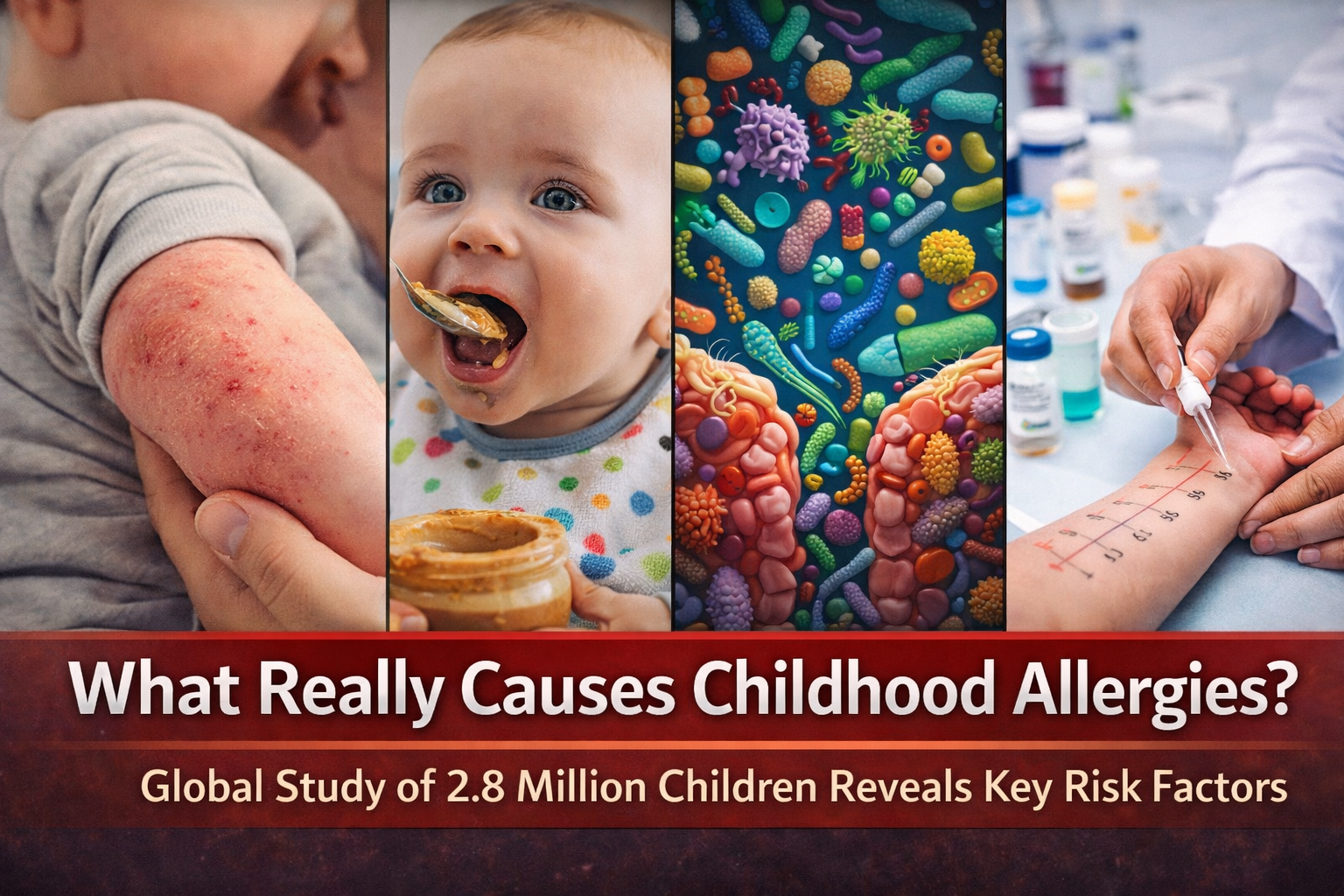
An innovative global study has established that childhood allergies cannot be attributed to one stimulus, but instead the complex set of factors that occur in the early days of life and interact to influence the development of the immune system in a child. The high-scale study, which is published in JAMA Pediatrics, used data of about 2.8 million children in over 40 countries, thus being one of the very first in-depth reviews of food allergy risk. The results are very convincing, which means that a combination of genetic, environmental, and biological factors in infancy is a perfect storm that predisposes a person to allergies to a great extent.
Food allergy has been an increasing international health problem. In the previous decades, food allergies in children have increased dramatically, especially in developed and high-growth countries. It is estimated that approximately 5 percent of children all over the world are afflicted with at least one of the food allergies by the age of six. Such allergies may be mild in nature, like skin rashes and intestinal discomfort, or severe and, in some cases, life-threatening anaphylaxis. The issue of the determinability of the increasing allergies has been a significant concern among researchers and healthcare practitioners.
It is stressed by the new work that there are no allergies that are caused by the genetic factors only. Although the presence of either or both parents with allergies predisposes a child to the condition, genetic predisposition is only half of the story. Scholars discovered that environmental exposures and early development of the immune system are equally significant. The interaction between hereditary factors and environmental circumstances at the time of early life seems to either make the child have an immune system devoid of tolerance towards some foods or have an antagonistic response towards the food.
Eczema in its early life has been found to be one of the strongest predictors of the study. The infants who acquire eczema during their first year of life are at a high risk of getting food allergies in the future. Eczema is a skin condition that is marked by dry, inflamed, and irritated skin that can impair the protective barrier of the skin. When the barrier is compromised, food allergens like food proteins are able to penetrate the body across the skin and cause an immune reaction. This is called sensitization, and this procedure might prepare the children to allergic reactions when they consume such foods in the future. The statistics indicate that children with eczema have triple or quadrupled chances of getting food allergies in comparison with children without the disorder.
The other important consideration of the study is the timing of allergenic foods introduction. Previously, parents were usually advised to postpone the introduction of certain foods, including peanuts, eggs and dairy products, to infants. Nonetheless, this study (as well as other recent studies) has provided signs to indicate that postponing the introduction of such foods can potentially cause a greater risk of allergy. Infants exposed to peanuts or eggs later on, post-12 months of age, exhibited a higher prevalence of allergy than those exposed earlier with proper guidance. A safe exposure at an early age can possibly make the immune system acknowledge that these foods are not harmful and develop tolerance.
The effect of the use of antibiotics during early life was also studied. Scientists discovered that a greater number of the infants who had been exposed to antibiotics in the initial month of life increased the chances of the infants developing food allergies. Antibiotics have the potential to deplete the ratio of beneficial bacteria in the gut, which is collectively referred to as the gut microbiome. The microbiome is extremely vital in the development of the immune system. When its balance is changed, it can influence the response of the immune system to foreign substances, and this can be associated with the risk of allergic states in particular. This observation reiterates the need to take caution on the use of antibiotics in infants since their use should have a medical justification.
Interestingly, the research also establishes some aspects that had been earlier suspected but not substantially proved by evidence. Indicatively, low birth weight, postnatal birth, maternal stress in pregnancy and duration of breastfeeding were not regularly or considerably related to food allergy risk in large datasets when they were combined. These results can eliminate certain myths that have existed over time and will leave parents who might have feared these variables with hope.
The scholars explain that allergy development is a condition shaped by interrelated biological mechanisms and not independent events. The early years of life have a highly adaptable immune system, which is affected by several exposures. Immune responses are shaped by skin health, bacteria of the gut, diet, infections, and environmental factors. When these factors interact in a particular manner, their effect can be more likely to cause the immune system to think that harmless food proteins are harmful. This interplay of factors is why allergies are found more prevalent in some groups of people and why there has not been a single prevention method that has been effective all the way across the board.
The increase in allergies can also be related to general environmental and lifestyle changes. Suggestions have been made in favor of urbanization, decreased contact with natural microbes, changes in diet, growth in pollution, and smaller family sizes. The contemporary lifestyle could be restricting the exposure of children to a wide range of microbes that are beneficial in training the immune system, and thus causing them to have increased sensitivity to allergens. Although the research was not purely on these macro-level factors, its results are consistent with the concept that variations in the early-life environments are affecting the immune construction at a global scale.
The research implications are great both to healthcare providers and parents. Early detection of at-risk infants, especially those with eczema or a family history of significant allergies, can be used to implement the specific monitoring and preventive measures. In most countries, pediatric practice has already started changing its attitude and practice by prescribing allergenic foods to be introduced early in infancy under medical guidance. Also, the efforts to preserve and maintain a healthy gut microbiome during infancy can become a central focus of attention in allergy prevention practices in the future.
In spite of the magnitude and depth of the study, it recognizes the fact that further studies are required to determine the interaction of these risk factors on a molecular scale. Although there are strong associations, it is still possible to conclude that further research is needed to establish precise mechanisms. The performance of clinical trials and post-cohort follow-ups will assist in improving preventive advice and establishing the most efficient interventions.
To sum it up, the historic world study validates that childhood allergy is caused by a perfect storm of childhood factors and not a single cause. There are interplay effects between genetic predisposition, early eczema, the introduction of food, exposure to antibiotics, and the development of the immune system to determine allergy risks.