
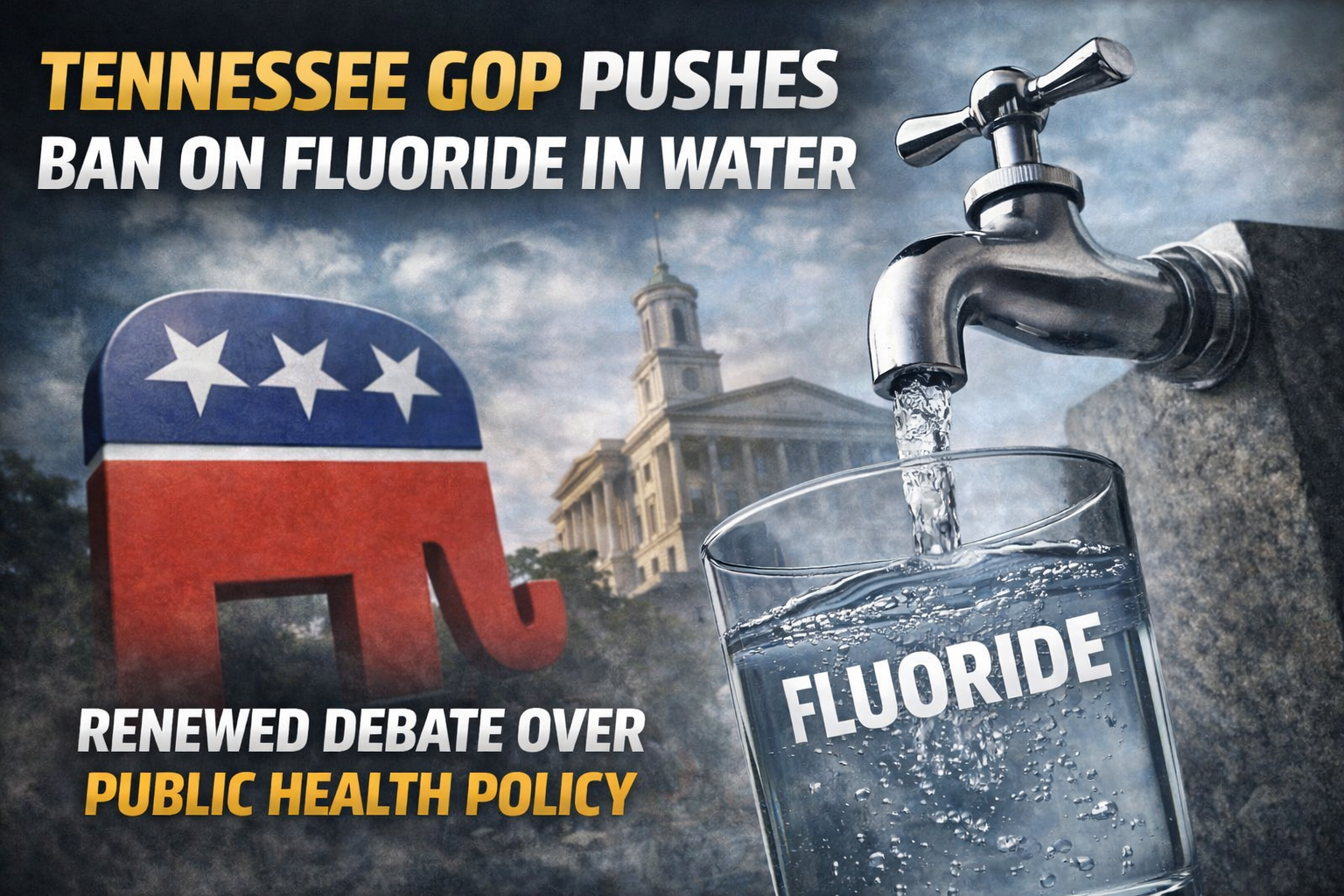
In Tennessee, the Republican legislators are working on a new bill that would outlaw the introduction of fluoride into the drinking water systems of the population, which is the revival of an old debate on the subject of public health policy, personal freedom, and scientific evidence.
Lawmakers, dentists and other experts in the field of public health within the United States have become interested in the proposal due to the decades of water fluoridation being a common practice of public health in the United States. The advocates of the bill believe that the action would revert the individual choice, whereas opponents are concerned that the action would be retrogressive to the years of gains made against tooth decay.
Prospective Bill publicity
The given legislation is under debate in the Tennessee General Assembly and consists of two bills presented to the two houses. With the adoption, the act would make it illegal to add fluoride to the public drinking water by the municipal water systems.
The advocates of the plan believe that the people must be given a choice on whether to drink fluoride or not, and it should not be automatically added via the community water sources.
The action has already started to go down through committee actions and a review in legislation. The proponents of the law argue that the aim is to create greater transparency regarding chemicals put in drinking water and to leave the choice of health to the citizens.
Critics, however, argue that the move would have unintentional side effects on the dental health of the community, especially in communities with low access to dental services.
The Rationale behind the Addition of Fluoride to Water
In the United States, fluoride began to be added to the drinking water of communities in the 1940s. A study carried out at the beginning of the twentieth century discovered that those communities where there is a natural occurrence of fluoride in their water experienced much lower levels of tooth degradation.
Consequently, as a preventive health measure, numerous municipalities started to add small quantities of fluoride to drinking water. The habit quickly became common in the country and was an accepted approach to decreasing the number of cavities in children and adults.
Water fluoridation has long been supported by major health organizations like the American Dental Association and the Centers for Disease Control and Prevention, and the organizations have termed it as one of the most effective public health interventions in the prevention of dental disease.
Research has always concluded that there are reduced cavity rates in communities where the water has fluoride as opposed to those where it does not.
Issues expressed by Health Specialists
The medical practitioners in the field of dentistry and other researchers in the field of health have indicated their worry concerning the possible impacts of the removal of fluoride from the drinking water system of the population.
The professionals are concerned that the fluoridation removal might contribute to the increased incidence of tooth decay, especially in children and those who might not have access to dental treatment on a regular basis.
According to the supporters of fluoridation of water, dental health can be enhanced through the use of simple and cheap methods, such as adding fluoride to the water of the whole community. In its absence, people might have to use the services of dental treatments more frequently, use fluoride supplements or special dental products.
It is also important to find out that water fluoridation benefits all people irrespective of their income, and thus it can be used to reduce health disparities by most dentists.
Arguments Provided by the Ban Proponents
Those who advocate the proposed ban argue that it does not necessarily mean that the proposed ban is aimed at denying science, but rather letting people make their own health choices.
Other legislators contend that fluoridating water is a kind of mass medication without any permission. They are of the opinion that it is upon the residents to decide whether to take fluoride by using other alternative like toothpaste or supplements.
The proponents of the bill also refer to the fact that there are still debates within the scientific circles regarding the level of exposure to fluoride and its possible long-term health impacts. Although the majority of health authorities indicate that the current levels of fluoride in the drinking water are safe, the proponents of the ban claim that there is a need to continue the extent of researches and debate among the people.
Another case that has been presented by the proponents is the promotion of better oral hygiene and education instead of using chemical additives in the common water systems.
A Subsection of a Greater National Conversation
The controversy that is occurring in Tennessee is also indicative of a larger national discussion on the involvement of the government in the health choices of the people.
Voters and local governments in certain communities in the United States have, in recent years, rethought the policies of fluoridation. Although most of the municipalities still promote fluoridated water, other municipalities have voted to withdraw the additive after local referendums or policy review.
These debates usually revolve around prioritizing both scientific advice and the general opinion and individual rights.
Health experts of the general population are raising an alarm that, in the event that more states start banning fluoridation, they stand to experience more dental health issues in the long run. The advocates of such policies, however, think that the matter will always be reduced to the choice and transparency of governmental practices.
What Happens Next
The proposed bill in Tennessee will still proceed through the legislative process, in which legislators will argue the pros and possible dangers tied to fluoridation.
Hearings in the committee and more votes would decide the bill on whether to proceed to the actual vote in the state legislature. The law would have a massive impact on the management of the public drinking water in Tennessee had it been passed.
The two parties are still at loggerheads as the debate goes on. The advocates focus on personal free will and the regulation of the healthcare governmental policies. In contrast, the opponents focus on the necessity to preserve the practice that has long been attributed to improved dental health outcomes.
The decision in the Tennessee case can also be taken as an example of what is expected in other states. Thus, it is a matter of close concern among policy-makers, health workers, and health organizations in the country.