
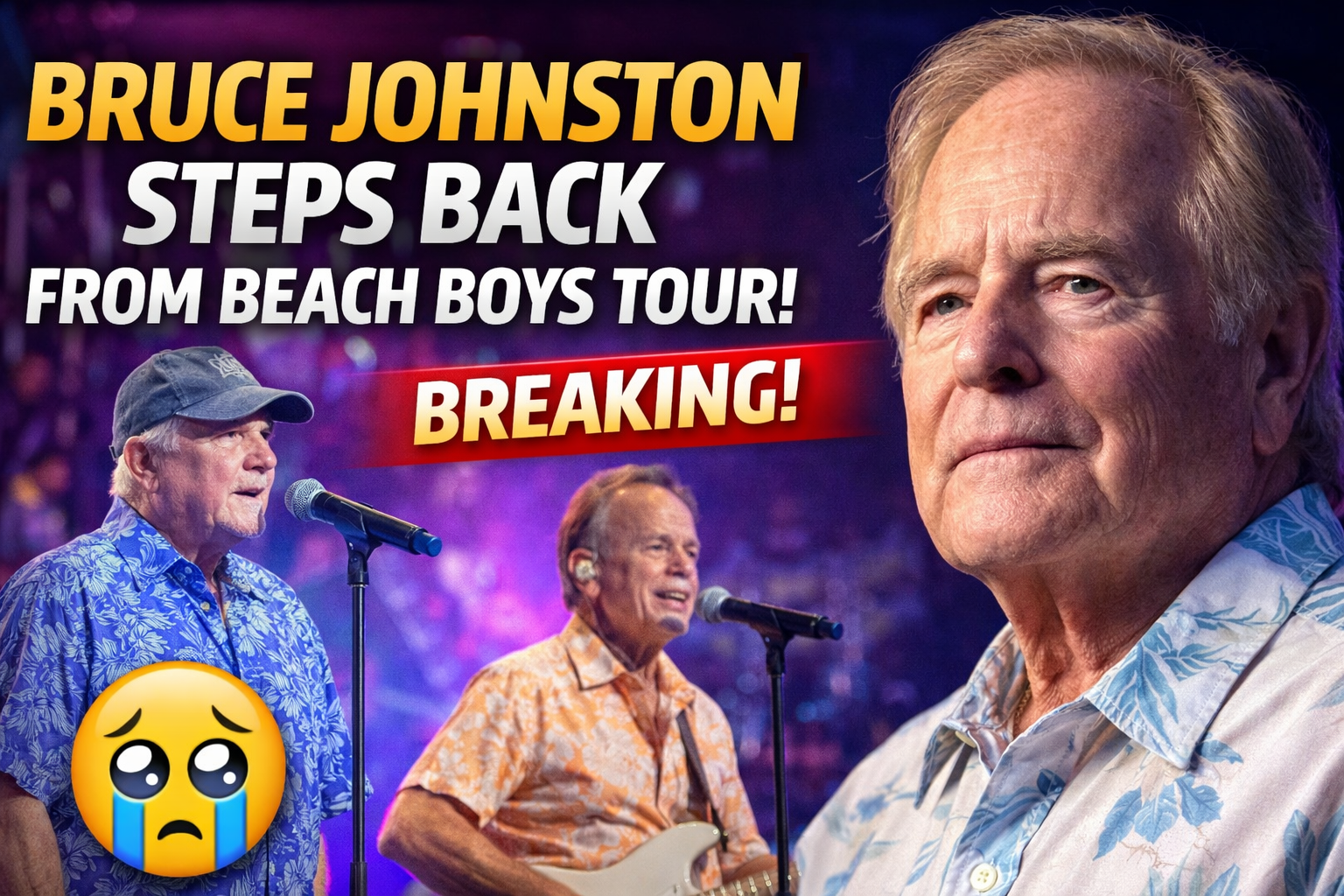
A prostituted singer, keyboardist and songwriter who made his way into the live lineup in 1965 and has remained with the group for nearly sixty years, Bruce Johnston, a longtime member of Beach Boys touring, announced this week that he will no longer be a regular participant in touring and will concentrate on the writing of songs and some live performances. The press release, issued in the form of a statement to Rolling Stone, and carried throughout the music press, positions the move as a planned shift into what Johnston described as Part Three of his musical career, which is writing, speaking and occasional onstage appearances instead of full-time touring.
Johnston, who became known as 83, has been with the band since he first subbedded co-founder Brian Wilson on live engagements in April 1965. During the years he played the lead and backing vocals, keyboard and bass, and was credited with songwriting on some songs by the Beach Boys and by his own records. In what can be called a partial reflection and a partial teaser of new material, Johnston indicated that he will dedicate more of his time to composition, but will still be willing to take special-event reunions with the band, such as a series of high-profile summer dates.
The move eliminates another thread in the touring vest of the Beach boys which has already worn and been rewoven several times over the decades. The band, which coalesced in the early sixties around the harmonies of Brian Wilson and Sun-soaked pop, has long since divided into several permutations of touring; in recent years, the most recognizable old member to be on the road has been Mike Love. It is not a full farewell development, as Johnston announced that he might accompany the band on special occasions. Still, it is nonetheless the end of a long and continuous touring experience of a musician who has been with the band through its greatest moments of glory and most tumultuous moments.
According to industry-watchers, the change is characteristic of artists in the generation of Johnston: losing the grind of the touring business but retaining the possibility of more selective live performing or guest work, or speaking work, which builds upon the long career of an artist. Johnston himself also mentioned the idea of stage storytelling and speaking appearances. He says that he has even been collaborating with friends and other performers to mold what it may appear like. In subsequent reports of his career post-1960s, as well as in other interviews, Johnston has expressed keen interest in composition and some studio work, which indicates that the creative itch and not burnout is the main motivational power.
To fans, the announcement of Johnston elicits both positive and negative emotive state. There is a feeling of gratitude and relief, gratitude that over six decades of the warm harmonies which he contributed to its perpetuation have not gone unappreciated, and relief that the breaking-up is going on nobly and not through compulsion. And there is also the acknowledgement that the Beach Boys on stage will be different: the mixture of voices and personalities that made the harmonies of the band sound so unique has always been something living and moving, and the constant absence of Johnston will be missed by those who link the band member to certain tones and live experiences. Memories of songs such as Disney Girls, I write the song (which Johnston has been known to perform during his concerts), and the numerous nuances in the sound of the band in the form of harmonic textures have flooded social feeds and fan forums this week.
Context matters. Johnston has spent his tenure with the band through some of the most successful eras in the history of the band, few musicians now on the circuit could claim: he was a member in the mid 60s when the band was at its peak, survived lineup and managerial issues in the early 1970s, and returned to the band in different capacities. His contributions to the writing and arranging of the music, which at times are eclipsed by the giant presence of Brian Wilson in the studio, enabled the Beach Boys to remain afloat in the shifting musical times both onstage and on record. The skill of Johnston to balance between being a sideman and the master of harmony and a writer has rendered him exceptionally time-proof in a band whose image to the public is nearly legendary.
Immediate consequences are practical implications. The future plans of the Beach Boys will have to factor in the lessening availability of Johnston; promoters and production teams have regularly collaborated with well-established artists to mould the appearances of this guest and replace the performers in such a manner that this does not affect the marquee dates. According to Johnston, there was an openness to attend key events and the summer shows of the band, including a run mentioned in various outlets, were identified as likely candidates for such returns. To the ticket buyers, the news will imply that they will watch keenly how they will be billed and the queues as the show dates approach.
The move by Johnston, as read by music historians, will be located as a part of a greater narrative concerning how legacy acts manage their own later years: how to compile a catalog, to strike a balance between the commercial requirements of nostalgia and the needs of the artist to continue to create, and to commercialize heritage and culture without it becoming a tourist souvenir. The fact that Johnston has indicated that he intends to pursue songwriting reminds him that the road does not end creative life. He has got a position that not many younger musicians have: the established name recognition and goodwill within an institution that can be used to release new content, narrate stories on stage in a speaking format, and even work selectively with others. That route, which was not so frantic and more refined, has become a typical template followed by 70s and 80s artists who wanted sustainable careers.
The most crucial aspect is the human factor. The literal and metaphorical voice of Johnston has been in the public consciousness of the Beach Boys’ generations. The blend of vocals of the band is not merely a technique, but the memory and identity of millions of people who grew up with their records. The announcement made by Johnston is thus a professional news and at the same time a personal cultural experience: the death of another stage in a narrative that is still being told with the help of its surviving members: colleagues and audience.
Editor’s Perspective
Johnston is a long-time legacy act follower, and this announcement strikes as conscientious and strategic. He has selected narrative control: positioning his action as an artistic turn and not a quitting. That would be important in the modern media world, where retirements and the farewells are usually used as box office-motives or badly-timed management decisions. The fact that Johnston chooses to focus on songwriting and managed appearances, safeguarding his reputation and leaving options, is a defending force. It also provides clarity to the Beach Boys organization in the area of planning and billing. The hope among the readers and fans should be easy: the hope that Johnston will get meaningful new projects and that the performances of the band will have the spirit of the harmonic magic they were characterized by. Overall, this is a respectable follow-up act – and one that does justice to the music and the audience.