
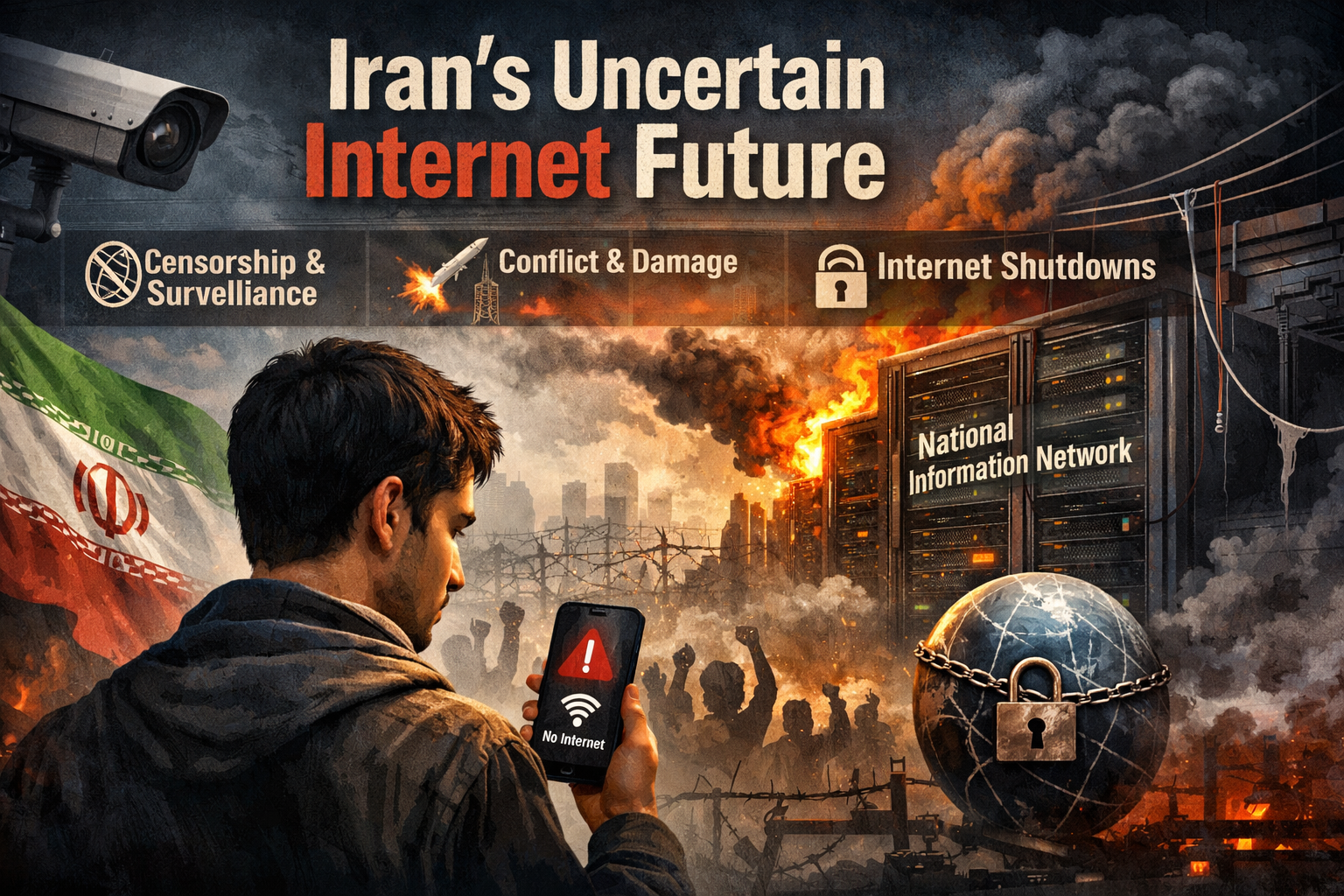
The control of access to the internet has been practiced in Iran for many years. Facebook, Twitter and YouTube, which are all popular worldwide, are blocked or severely censored within the country. Consequently, most of the users use virtual private networks (VPNs) and proxy software to circumvent these.
The officials of the government usually explain these restrictions by the fact that it preserves national security, and it avoids the distribution of bad information or violent content. Nevertheless, critics believe that such measures are mainly applied to regulating the circulation of information and curtail political dissent. When the number of protests or political tensions grows, the governments often react by decreasing the internet speed or even blocking it completely.
As per the latest news, Iran has recorded one of the worst internet outages in the country, where the internet connectivity slowed significantly. Millions of citizens could not use world sites, texting services, or social sites. These closures underscore the vulnerability of the internet in the nation and how quickly digital communication can be curtailed. Internet shutdowns are more than technical choices; they are potent political instruments. By restricting information access, the government can decrease the capacity of the citizens to arrange demonstrations, distribute videos, or communicate with other global audiences. This will enable governments to manage the narratives in sensitive times.
The National Information Network
The formation of the National Information Network (NIN) is one of the biggest digital ventures of Iran. It is a system of a domestic internet infrastructure that does a significant part of its work inside Iran. It enables some online services to operate even when the nation is not connected to the international network. The NIN enables some of the services like banking systems, government sites and some domestic applications to operate during internet outages. The government introduces the system as a means to enhance the digital country’s independence and safeguard the nation against external cyber threats.
Critics, however, take a different opinion of the network. They claim that the NIN is enabling the authorities to block the Iranian users of the World Wide Web and retain control over the information circulation within the nation. The citizens can still enjoy local facilities, yet they can have limited access to international news sources as well as freedom of communication with people outside the country.
The design establishes a kind of controlled internet atmosphere, as it is defined by many pundits. Citizens do not lose contact with each other; they are just a part of a network controlled and managed by the state.
Impact of Conflict and Infrastructure Damage
The internet scenario in Iran has been aggravated even more by recent geopolitical tensions. Military operations and airstrikes have been reported to have destroyed communication infrastructure, such as the network facilities and the data centers. In the case of the impact on critical infrastructure, it becomes far more challenging to reestablish stable internet access. Even if the authorities choose to permit the internet connection, damaged systems might lead to extended downtime or low speed. Certain areas are likely to have partial service, and others will not have any connection at all. These interruptions render citizens not to be able to depend on steady digital connectivity.
Damages in infrastructure, as well as intentional shutdowns, cause confusion to the users. The nature of internet interruptions is not easily established by many individuals as a result of technical, government restrictions or a combination of both. This ambiguity further complicates an already complicated digital space because the communication infrastructure is so vulnerable that future conflicts have the potential to easily cause further internet failures in the nation.
Economic and Social Consequences
Blockages and cessation of the Internet impact the economy with severe implications. Lots of Iranian companies rely on digital platforms to promote their businesses, communicate and make investments. Online stores, delivery services and small entrepreneurs depend on steady internet connections to access their customers, and their online businesses are likely to lose revenues instantly. Order processing becomes possible, communication with customers ceases, and online payment can become ineffective. Small companies and independent workers can lose a lot of money even in the case of a short shutdown.
Remote workers and freelancers, too, are impacted a lot. A large number of these experts engage in areas like programming, designing, marketing and consulting with international platforms which help to reach clients all over the world. They have a hard time sustaining projects or communicating with foreign employers without the help of a good internet connection. Social effects are also important. Through the internet, families are able to communicate with relatives in other countries. Communication during shutdowns is very hard, which brings anxieties and uncertainty to many individuals.
Online tools also affect journalists, activists and researchers since they rely on them to disseminate information and to track events. In case there is a lack of connectivity, it is more difficult to report correctly or circulate news that is important.
Digital Workarounds and Resistance
Despite strict controls, Iranian internet users have developed several methods to bypass restrictions. VPN services are widely used to access blocked websites and social media platforms. These tools allow users to connect through servers located in other countries, making it possible to avoid government filters.
Proxy servers and encrypted communication platforms also help individuals maintain access to restricted information. Many users constantly search for new technologies and software that can help them stay connected to the global internet. Encrypted messaging applications provide another important communication channel. These apps offer higher levels of privacy and security, making it harder for authorities to monitor conversations.
Some experts have suggested that satellite internet technology could provide an alternative solution. Satellite networks can deliver internet connectivity without relying entirely on domestic infrastructure. However, these systems require specialized equipment and are not easily accessible to the general population. Although these workarounds offer some relief, they do not fully eliminate the risk of nationwide shutdowns or government surveillance.
Editor’s Perspective: A Fragmenting Internet
From an editorial standpoint, Iran’s internet situation reflects a broader global trend toward digital fragmentation. The early vision of the internet was based on openness, global connectivity, and the free flow of information. However, many governments are increasingly trying to shape the internet according to national priorities.
Iran’s National Information Network is one example of how countries are attempting to build controlled digital ecosystems. These systems allow authorities to maintain essential online services while restricting access to international platforms and independent information sources.If more countries adopt similar models, the global internet could gradually evolve into a collection of separate national networks rather than a single open system. Each country may operate its own digital environment with unique rules, censorship policies, and surveillance mechanisms.
This trend raises important questions about the future of digital freedom and global communication. The ability of citizens to access information, express opinions, and connect with the outside world may increasingly depend on national policies rather than technological possibilities.
Iran’s experience demonstrates how the internet can become both a tool for connection and an instrument of control. The ongoing struggle between digital freedom and government regulation will likely continue to shape the country’s online environment in the years ahead.