
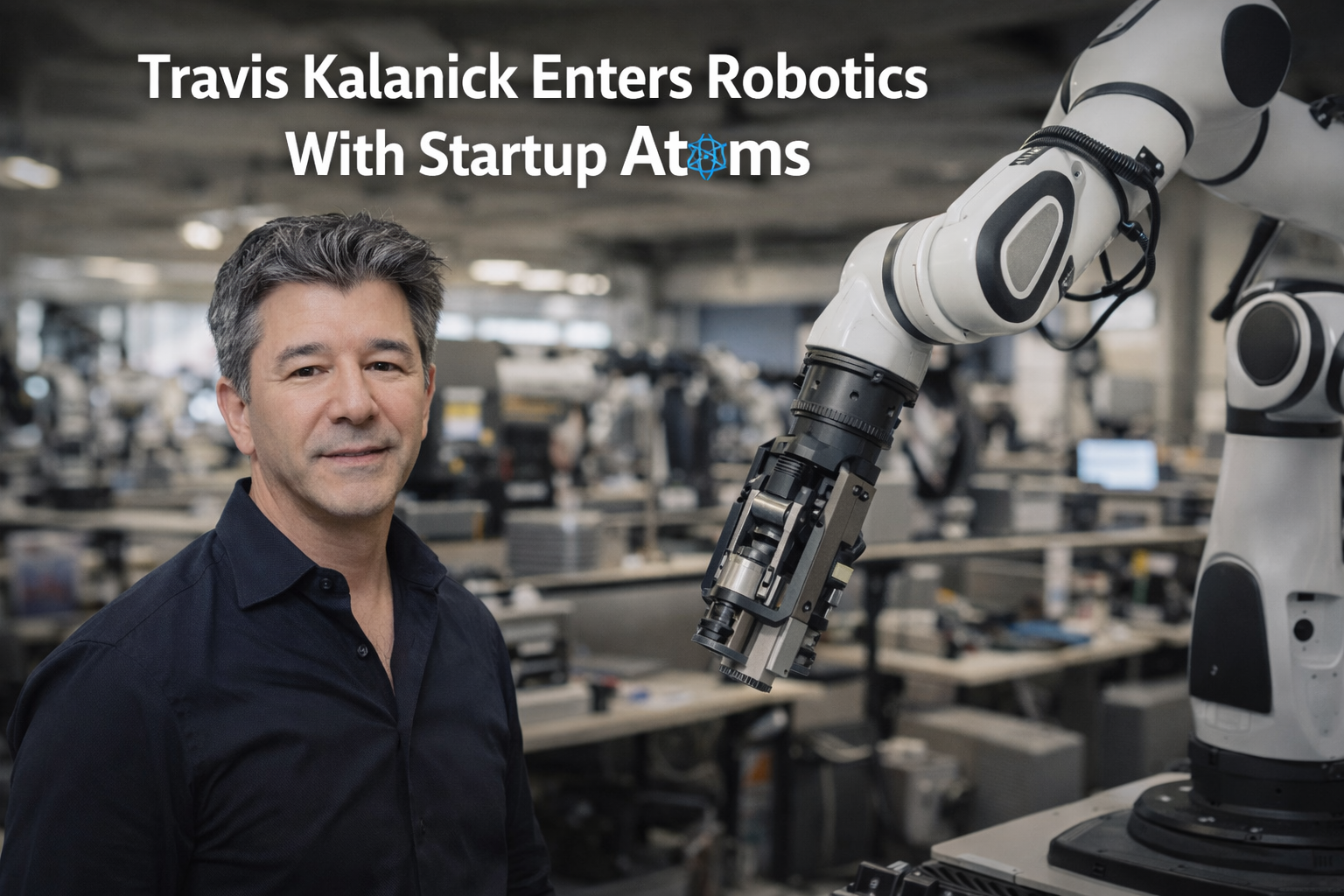
Tech entrepreneur Travis Kalanick, best known as the co-founder and former CEO of Uber, is once again making headlines with a new ambitious technology venture. After years away from the public spotlight following his controversial departure from Uber in 2017, Kalanick is stepping into the rapidly growing robotics industry with a startup called Atoms. Kalanick built his reputation as one of Silicon Valley’s most aggressive and visionary founders when Uber transformed the global transportation industry. The ride-hailing giant reshaped how people move around cities, creating an entirely new model for on-demand services. However, leadership controversies and pressure from investors eventually forced Kalanick to step down as CEO.
Now, nearly a decade later, the entrepreneur is attempting a comeback by targeting an even bigger technological frontier: automation of the physical world through robotics. Atoms represents Kalanick’s latest attempt to disrupt major industries, and if successful, it could reshape sectors such as logistics, mining, transportation, and food services.
From Cloud Kitchens to Robotics
The new company did not appear overnight. Atoms has actually evolved from another venture founded by Kalanick called CloudKitchens.CloudKitchens originally focused on building “ghost kitchens,” which are commercial cooking spaces designed primarily for food delivery services rather than dine-in customers. These facilities allowed restaurant brands to prepare meals efficiently for delivery platforms. Over time, the company expanded rapidly but maintained a relatively low public profile. Behind the scenes, however, Kalanick was building infrastructure, hiring engineers, and experimenting with automation technologies.
Atoms is now emerging from that ecosystem as a broader robotics initiative. Instead of focusing only on food infrastructure, the company aims to develop machines capable of performing practical tasks across multiple industries. This transition highlights a strategic shift in Kalanick’s thinking from digital platforms to the automation of real-world physical operations.
Building “Gainfully Employed Robots”
One of the most notable aspects of Atoms is its philosophy about robotics. Unlike many companies attempting to build humanoid robots that resemble people, Kalanick’s company is focused on specialized machines designed to perform specific industrial tasks.The concept is simple but powerful: create robots that are “gainfully employed.” In other words, machines that perform clear economic functions and deliver measurable productivity benefits.
Rather than developing one robot that can do everything, Atoms wants to design different robots for different industries. For example, a robot designed for a commercial kitchen would focus on food preparation and packaging tasks. Meanwhile, robots built for mining environments would focus on heavy equipment operation and material handling.This strategy could allow Atoms to bypass some of the technical challenges associated with general-purpose robotics. By focusing on narrow tasks, the company can optimize machines for efficiency, safety, and reliability in specific environments.
A Platform Approach to Robotics
Another key component of Atoms’ strategy is the development of a shared robotics platform.
Kalanick has described the idea as creating a foundational system—something like a “wheelbase” for robots. Instead of building every robot from scratch, the company plans to develop a standardized hardware and software architecture that can support many different robotic systems.This platform approach mirrors successful strategies seen in other technology sectors. For instance, smartphone platforms such as Android and iOS allowed thousands of developers to build applications on top of a common system.
If Atoms succeeds in creating a widely adopted robotics platform, it could accelerate innovation by allowing developers and companies to build specialized machines without reinventing the core technology each time.Such a system could become the backbone of industrial automation across multiple industries.
Automation in Food Service and Logistics
One of the first industries likely to be transformed by Atoms’ technology is food service. By integrating robotics with the existing infrastructure of CloudKitchens, the company could create highly automated restaurant environments.
In these kitchens, robots could assist with tasks such as ingredient preparation, cooking, packaging, and order organization. Automation could reduce labor costs, increase speed, and ensure consistent quality across food production processes. Food delivery has already been reshaped by digital platforms. The next phase could involve the automation of the kitchens themselves.
Beyond restaurants, Atoms is also exploring applications in logistics and transportation. Robotics systems could be used in warehouses, shipping centers, and supply chain operations where repetitive tasks are common. Automation in these sectors could significantly improve efficiency while reducing operational costs.
A Possible Reunion With Autonomous Vehicle Talent
Another interesting development surrounding Atoms is its potential collaboration with robotics and autonomous vehicle experts. Reports suggest that the company may acquire technology from Pronto AI, a startup founded by Anthony Levandowski. Levandowski previously worked on autonomous vehicle technology and was involved in some of the earliest self-driving projects in Silicon Valley.
The potential deal could bring advanced automation systems for industrial vehicles into Atoms’ ecosystem. Such technology would be particularly useful in industries like mining and construction, where autonomous equipment can operate more safely and efficiently than human operators. The possible partnership also signals Kalanick’s willingness to recruit experienced and sometimes controversial engineers to pursue ambitious technological goals.
The Growing Global Robotics Race
Kalanick’s move into robotics comes at a time when automation is becoming one of the most competitive areas in technology.Major corporations and startups are racing to develop machines capable of performing real-world tasks. Robotics has already transformed manufacturing and warehouse operations, but advances in artificial intelligence are expanding its potential into many new sectors.
Companies are now exploring robots for delivery services, healthcare support, agriculture, and construction.The demand for automation is being driven by several global trends. Businesses are facing rising labor costs and workforce shortages in many industries. At the same time, technological breakthroughs in AI and machine vision are making robots more capable than ever before.
These developments have created an environment where robotics startups can attract significant investment and attention.Atoms is entering this crowded field with a strategy focused on specialized industrial automation rather than consumer robotics.
Editor’s Perspective: A High-Risk, High-Impact Vision
From an editorial perspective, Kalanick’s latest venture is both ambitious and risky. Robotics is widely considered one of the next major technology frontiers. If Atoms succeeds in developing practical automation solutions, it could help transform industries worth trillions of dollars globally.
However, building hardware-based companies is far more challenging than launching software platforms. Robotics startups must deal with manufacturing complexities, expensive research and development, and long product testing cycles. Even well-funded robotics ventures have struggled to bring their technologies to large-scale commercial adoption.
Yet Kalanick has demonstrated in the past that he is willing to pursue bold ideas that others consider unrealistic. When Uber launched, many critics doubted that ride-hailing could scale globally. Today it operates in hundreds of cities around the world. Atoms may represent Kalanick’s attempt to apply that same disruptive mindset to the automation of physical labor.
Whether the venture becomes a transformative success or another ambitious experiment remains to be seen. But one thing is certain: the entrepreneur who once changed urban transportation is now aiming to reshape how machines work alongside humans in the modern economy.