
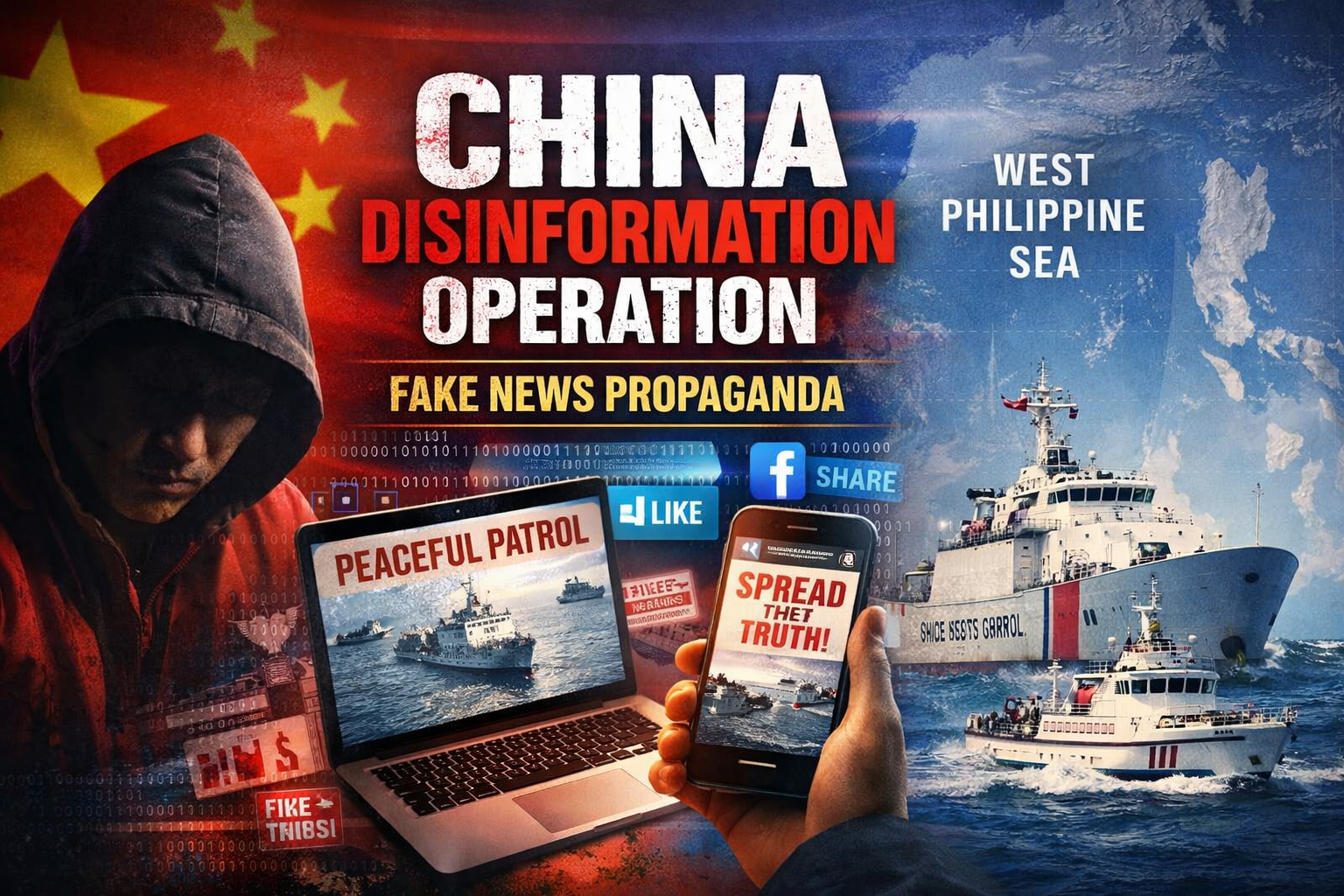
A suspected Filipino communist has emerged with allegations that he helped in propagating falsified stories on the West Philippine Sea as part of a larger disinformation campaign that is allegedly China-linked. This disclosure, which was initially carried by GMA Network, has also aroused fresh apprehension regarding the application of information warfare in the never-ending territorial differences in the Southeast Asian region.
The person is now under investigation as per the authorities, and he has confessed to engaging in actions that are aimed at influencing the minds of the people. His position was allegedly to produce and spread misleading information over digital media, and this was with the view of affecting the people of the Philippines regarding sensitive geopolitical aspects.
False Hype and Web Delusion
The suspect revealed that he was commissioned to come up with materials that would depict the activities of China in the troubled waters in a positive way at the expense of the claims by the Philippines. Such stories purportedly contained distorted photographs, misleading stories and inflated news about maritime activities in the area.
The plan seems to have been based on the extensive use of social media, where the information can go viral and reach a large audience. Such campaigns are intended to confuse people and influence their discussions by focusing on the emotional aspects of the problems: national sovereignty and security.
According to analysts, fake or distorted information is not a recent development, but it has grown in volume and advanced a lot over the past few years. The emergence of digital platforms has seen the coordination of campaigns run across borders, in most cases without being detected immediately.
West Philippine Sea Strategic Importance
The West Philippine Sea is a section of the South China Sea, which is within the Philippines exclusive economic zone. The region is strategically important as it possesses a lot of marine resources and serves as a major shipping pathway to world trade.
The situation in the region has long been strained, and there have been overlapping territorial issues between China and the Philippines, as well as other countries of Southeast Asia. The Philippines has long maintained its rights under international law, such as an arbitration decision in 2016, which disregarded the far-reaching claims of China.
Although this was ruled so, China has continued to occupy disputed territories, and this has resulted in recurrent sea conflicts. The cases of the coast guard ships and fishing boats have escalated the tension and attracted global attention.
Wider Perspective of Information Warfare
The purported activities of the suspect are in line with a larger scope of information warfare that is being witnessed around the world. The digital platforms have become more popular among governments and non-state actors to persuade opinions, propagate messages, and attain strategic goals without necessarily engaging in direct military action.
The Philippine situation is not new to concerns of foreign-funded disinformation efforts by authorities. These attempts usually include the use of networks of coordinated accounts that propagate certain stories and delegitimize the opposing ones.
These types of operations are even called cognitive warfare, in which the aim is to influence people’s thinking and perception of reality. Through telling stories, the actors are able to shape the political choices, popular opinion, and even foreign policy.
The Government Response and Continued Investigation
Philippine officials have initiated an investigation into the scope of the so-called network and the number of other people involved. Authorities are also investigating the process of recruitment of the suspect and whether there was any financial incentive or other types of coercion.
The case has seen a call to take more action against foreign interference. Legislators and security experts have stressed the importance of having better cybersecurity capabilities, more restrictive regulations over online material, and creating increased awareness of disinformation among the population.
The government agencies are also trying to liaise with social media in order to create and remove harmful content more efficiently. Nevertheless, it is a tough challenge, since the rate and magnitude of information diffusion on the internet is very high.
Effects on Trust and National Security
The proliferation of fake news has potentially dangerous consequences on social integrity and national security. False information may diverge the perception of people on issues, divide the society and undermine trust in institutions.
When it comes to the issue of the territorial conflict, disinformation may also affect the way the citizens view the stance and the course of their country. This is able to influence the popularization of government policies and hinder diplomatic activities.
Researchers emphasize that it is necessary to find not only technological solutions to disinformation but also to make the population more digitally literate. The education of citizens to be critical of the information sources is regarded as the main measure in mitigating the effects of fake news.
Implications in the Region and globally
The problem is not only in the Philippines, but it is a worldwide tendency when information is turned into an instrument of geopolitical rivalry. The entire world is struggling with such problems as disinformation, which is becoming more advanced and difficult to catch.
In Southeast Asia, where the rules of territory and strategic competitions are the rule of the day, the amounts at stake are high. Information warfare may further strain the situation and make it difficult to stabilize the situation in the region.
These challenges might require international collaboration in order to deal with them. This involves the exchange of intelligence, creation of a standardized point of reference for online platforms, as well as the encouragement of openness in information ecosystems.
Continuing Developments
As the probe continues, the police will provide more information regarding the supposed operation and its extent. The case has a high probability of staying at the center of attention regarding the issues of national security, digital governance, and the role of information in contemporary conflicts.
To date, the arguments of the so-called Filipino spy are a reminder of the speed with which the nature of conflict is changing. In addition to the physical conflicts, information and perception wars are becoming a much more central element in international life.