
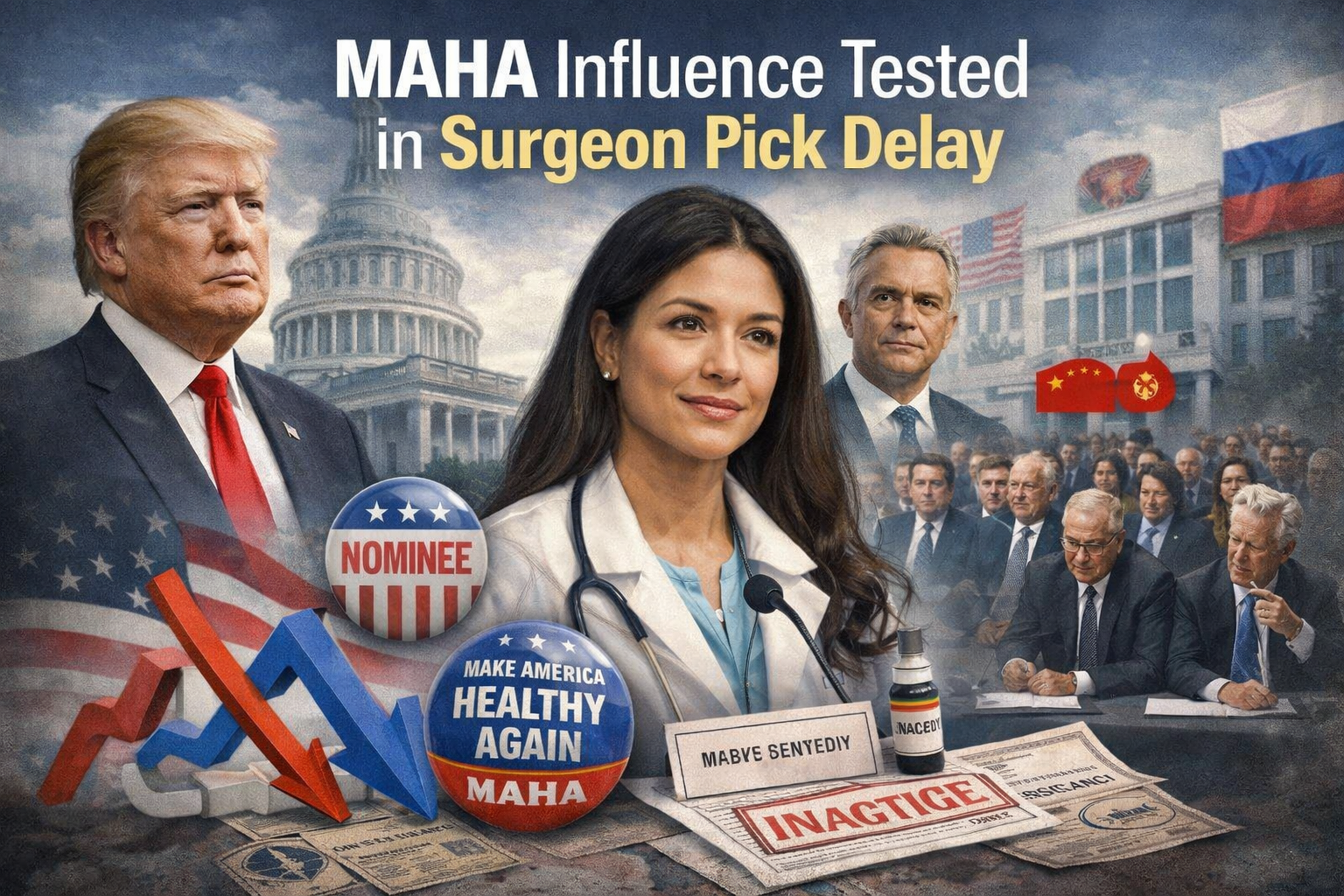
The rising political clout of the Make America Healthy Again (MAHA) movement is also under a critical trial in Washington, with the nomination of Casey Means to the office of U.S. Surgeon General yet to be passed by the Senate. What seemed to be a significant win on the movement side has now become a divisive political conflict, with ideology, the health of the people and the extent of foreign influence in governance as the areas of concern.
In May 2025, Donald Trump nominated a former physician, Dr Means, who is a wellness advocate, following the withdrawal of an earlier nominee. Means, who has been known to be associated with Robert F. Kennedy Jr and his overall health reform agenda, soon became a figurehead behind MAHA in its quest to confront the traditional healthcare systems and to advance lifestyle-driven solutions to chronic illnesses.
Means has, however, not been confirmed almost a year after her nomination. The stalemate is an indication of profound divisions in the senate, including disbelief among those who belong to the same party as the president. There have been questions regarding her qualifications in medicine, her stance on vaccination, and her criticism of traditional medical organisations.
Senate Resistance and Political Uncertainty
Confirmation has proven to be even more challenging than anticipated. The opinions of Men and her inability to provide unambiguous support for the popularity of vaccination programs raised some reservations among several Republican senators, including moderates. She made it clear in her Senate hearing that she placed emphasis on patient choice and consultation with doctors instead of making strong public health pronouncements.
Both sides of the political divide have critiqued this position. According to the argument of the public health experts, the position of Surgeon General needs to be strictly scientifically guided, particularly on matters like immunisation. In the meantime, other legislators have challenged her modus operandi as not being in line with medical consensus.
To make matters worse, her medical licence is questionable. In an action that critics believe will cast doubt on her credibility to assume one of the most high-profile medical advisory positions in the country, Means has put her licence in inactive status and failed to graduate from her surgical residency.
The MAHA Movement Comes into the Limelight.
The halted nomination has become a landmark for the MAHA movement, which has gained momentum through dietary changes, preventive healthcare, and scepticism towards treatments developed by pharmaceutical companies. Having one of its most vocal followers in Means, the movement is currently organising its base to affect the confirmation process.
Pro-MAH interest groups have also initiated lobbying efforts aimed at persuading the undecided senators, which is one indication that grassroots efforts would be relinquished to turn a political fight. This move is indicative of a more far-reaching effort to convert popular backing into institutional authority, which is typically a difficult process.
The main subject of this endeavour is Bill Cassidy, one of the crucial members of the Senate health committee, whose stand may be the deciding factor in the course of the nomination. This is due to his more cautious nature, and lawmakers should tread a fine line between political loyalty and responsibility to the health of the population.
A Wider Discussion of the Health Policy.
The issue of the nomination of Means reveals a more profound intellectual rift in American healthcare. On the one hand, some believe in traditional, evidence-based medicine justified by decades of research and institutional structures. In the other are reformists, such as those of MAHA supporters, who believe that the system is too much preoccupied with treatment at the expense of prevention and that the system has become excessively corporate.
In her views, Means has been a strong critic of the broken healthcare system and has stressed that diet, lifestyle, and environmental factors play a major role in the prevention of chronic illnesses. Although most scientists acknowledge the significance of these factors, they warn that they are not powerful enough to reverse complicated conditions like Alzheimer’s disease or infertility, whereby such allegations have come under questioning during her nomination.
This conflict is an indication of a larger problem in contemporary healthcare: avoiding compromising existing scientific practices to accommodate new points of view. As the nation’s foremost public health communicator, the Surgeon General must navigate this delicate balance.
Political Stakes Ahead
Means has serious political consequences for his nomination. Its confirmation would be a significant win for the MAHA movement and would indicate the shift of federal leadership towards other health perceptions. In case of rejection, it would be vulnerable to the limits of influence of movements and solidify the influence of traditional medical models.
The nomination is currently on hold, and there is no set date for a Senate vote. The ambiguity has made the political process of appointing a new Supreme Court Justice a high-profile political battle rather than a procedural one.
With this controversy still raging on, Casey Means is one example of how people have changed their views on health, science, and the way they are run. It highlights the extent to which healthcare has increasingly become politicized— and the extent to which some decisions in Washington can transform not only policy but also the lives of millions of people.