
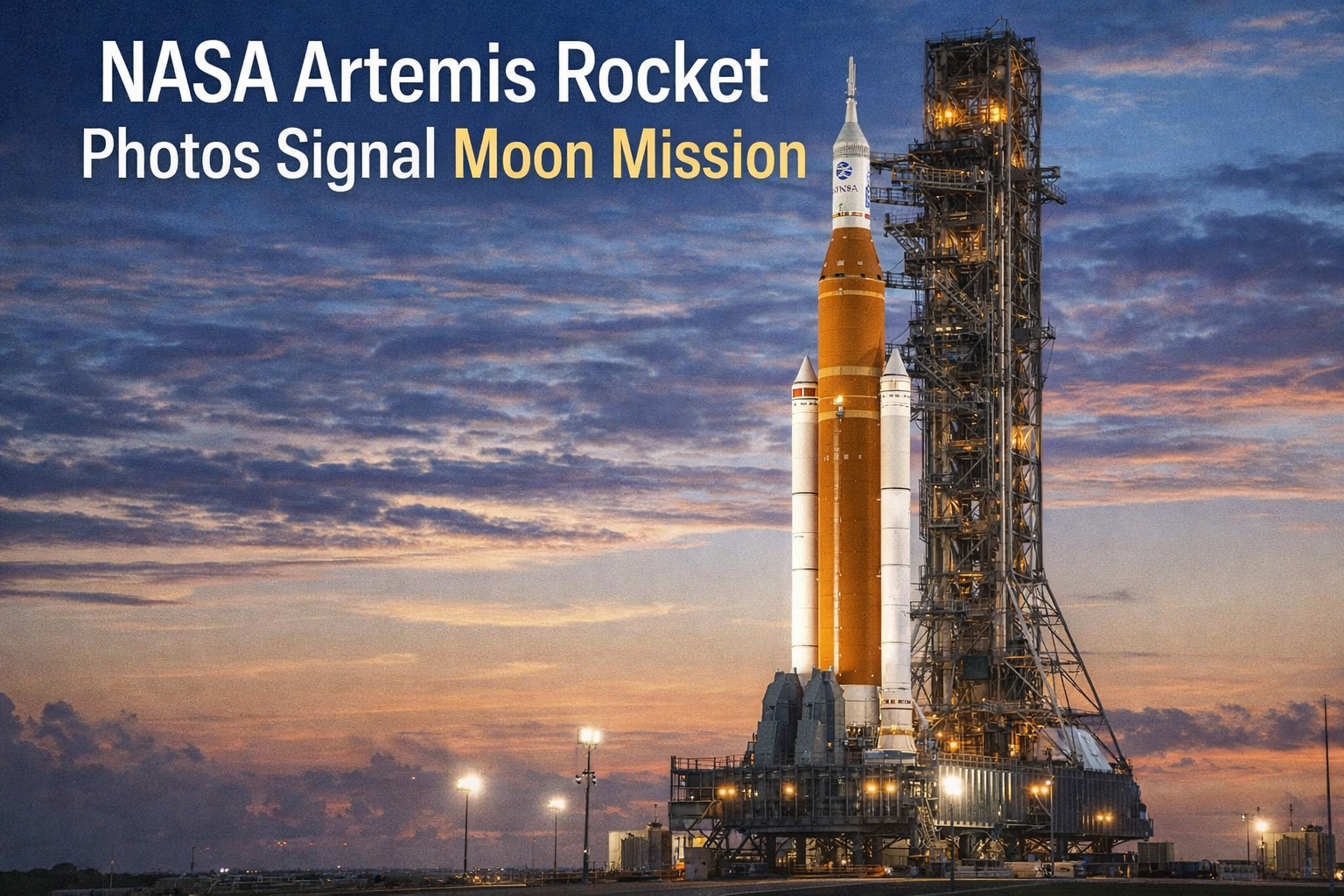
Striking new images of NASA’s Artemis rocket at the Kennedy Space Center have captured global attention, offering a vivid glimpse into the final preparations for one of the most anticipated space missions of the decade. The photographs showcase the towering Space Launch System (SLS) rocket standing at the launch pad, symbolizing humanity’s renewed push toward the Moon under NASA’s ambitious Artemis program.
These images, taken in the days leading up to launch preparations, reveal not only the immense scale of the rocket but also the complexity of the infrastructure supporting it. As NASA moves closer to launching the Artemis II mission, the first crewed lunar mission in more than 50 years, the photos serve as both a technical record and a cultural moment—one that reflects the return of human space exploration beyond low Earth orbit.
A Closer Look at the Artemis Rocket
At the center of the photographs is the Space Launch System (SLS), NASA’s most powerful rocket ever built. Standing approximately 322 feet tall, the rocket is designed to carry astronauts aboard the Orion spacecraft on deep-space missions. The SLS represents a new generation of launch vehicles, combining heritage technologies from the Space Shuttle program with modern engineering innovations. Its massive core stage, powered by four RS-25 engines, and two solid rocket boosters generate the thrust needed to propel the spacecraft beyond Earth’s orbit. The images highlight the rocket’s vertical integration atop the mobile launcher platform, a configuration that allows NASA engineers to conduct final checks before liftoff. From its base to the pointed launch abort system at the top, every component reflects years of design, testing, and refinement.
The Journey to the Launch Pad
Before reaching the launch pad, the Artemis rocket undergoes a carefully orchestrated rollout process from the Vehicle Assembly Building, one of the largest buildings in the world by volume. Transported by NASA’s crawler-transporter, the rocket travels approximately 4 miles to the launch pad at a maximum speed of less than 1 mile per hour. This slow journey, which can take up to 12 hours, is both a logistical necessity and a symbolic milestone. The photographs capture this process in detail, showing the rocket inching forward along the crawlerway, surrounded by support crews and infrastructure. The rollout is more than just transportation—it marks the transition from assembly to launch readiness, bringing the mission one step closer to liftoff.
Launch Complex 39B: A Historic Site
The Artemis rocket is positioned at Launch Complex 39B, a site steeped in space exploration history. This launch pad has been used for some of NASA’s most iconic missions, including the Apollo program and the Space Shuttle era. Today, it has been модерnized to support the SLS and future Artemis missions. The images show the rocket connected to the launch tower, with access arms and service structures in place. These components provide critical support during pre-launch operations, including fueling, crew access, and system monitoring. The juxtaposition of the modern SLS rocket against the historic backdrop of Launch Complex 39B underscores the continuity of NASA’s exploration efforts—from the first Moon landings to the next generation of missions.
Artemis II: The Mission Ahead
The Artemis II mission is expected to be the first crewed flight of NASA’s Artemis program, carrying four astronauts on a journey around the Moon. The mission will follow a 10-day trajectory, testing the Orion spacecraft’s life-support systems and deep-space capabilities. This mission is particularly significant because it marks the first time humans will travel beyond low Earth orbit since Apollo 17 in 1972. The photographs of the rocket ahead of launch serve as a visual reminder of the mission’s importance. They capture not just a vehicle, but a moment in history—one that could redefine humanity’s relationship with space.
Technical Preparations and Challenges
Behind the scenes, NASA engineers are conducting a series of critical tests and inspections to ensure the rocket is ready for launch. These include fueling tests, system diagnostics, and simulations known as “wet dress rehearsals,” which replicate the countdown sequence without actual liftoff. Recent preparations have not been without challenges. Engineers have addressed issues such as hydrogen leaks and helium flow anomalies, which required the rocket to be rolled back for repairs before returning to the launch pad. The latest images reflect a system that has undergone extensive testing and refinement, demonstrating NASA’s commitment to safety and reliability.
The Role of Photography in Space Exploration
The release of these Artemis rocket photos highlights the important role that imagery plays in space exploration. Photographs serve multiple purposes:
- They document technical progress and engineering achievements.
- They engage the public and inspire interest in science and exploration.
- They provide historical records for future generations.
In the case of Artemis, the images also serve as a bridge between past and future, connecting the legacy of Apollo with the ambitions of modern spaceflight. The visual impact of the towering rocket against the Florida sky reinforces the scale and significance of the mission.
Public Interest and Global Attention
The Artemis program has generated widespread public interest, and the release of these photos has only intensified that excitement. For many, the images evoke memories of the Apollo era while also representing a new chapter in space exploration. The mission’s goals extend beyond a single flight. Artemis aims to establish a sustainable human presence on the Moon and eventually pave the way for missions to Mars. As a result, the photographs are not just snapshots of a rocket—they are symbols of a broader vision for the future of humanity in space.
The images capture the culmination of years of effort by thousands of engineers, scientists, and technicians. They also highlight the complexity and scale of launching humans beyond Earth’s orbit. What makes this moment particularly compelling is its historical context. For more than five decades, human spaceflight has been largely confined to low Earth orbit. The Artemis program represents a deliberate shift back to deep space, with ambitions that extend far beyond the Moon. At the same time, the challenges faced during preparation—technical delays, system issues, and rigorous testing—serve as a reminder that space exploration remains inherently difficult. Yet it is precisely these challenges that make the achievements meaningful. Each successful test, each resolved issue, and each step toward launch brings humanity closer to a new era of exploration.