
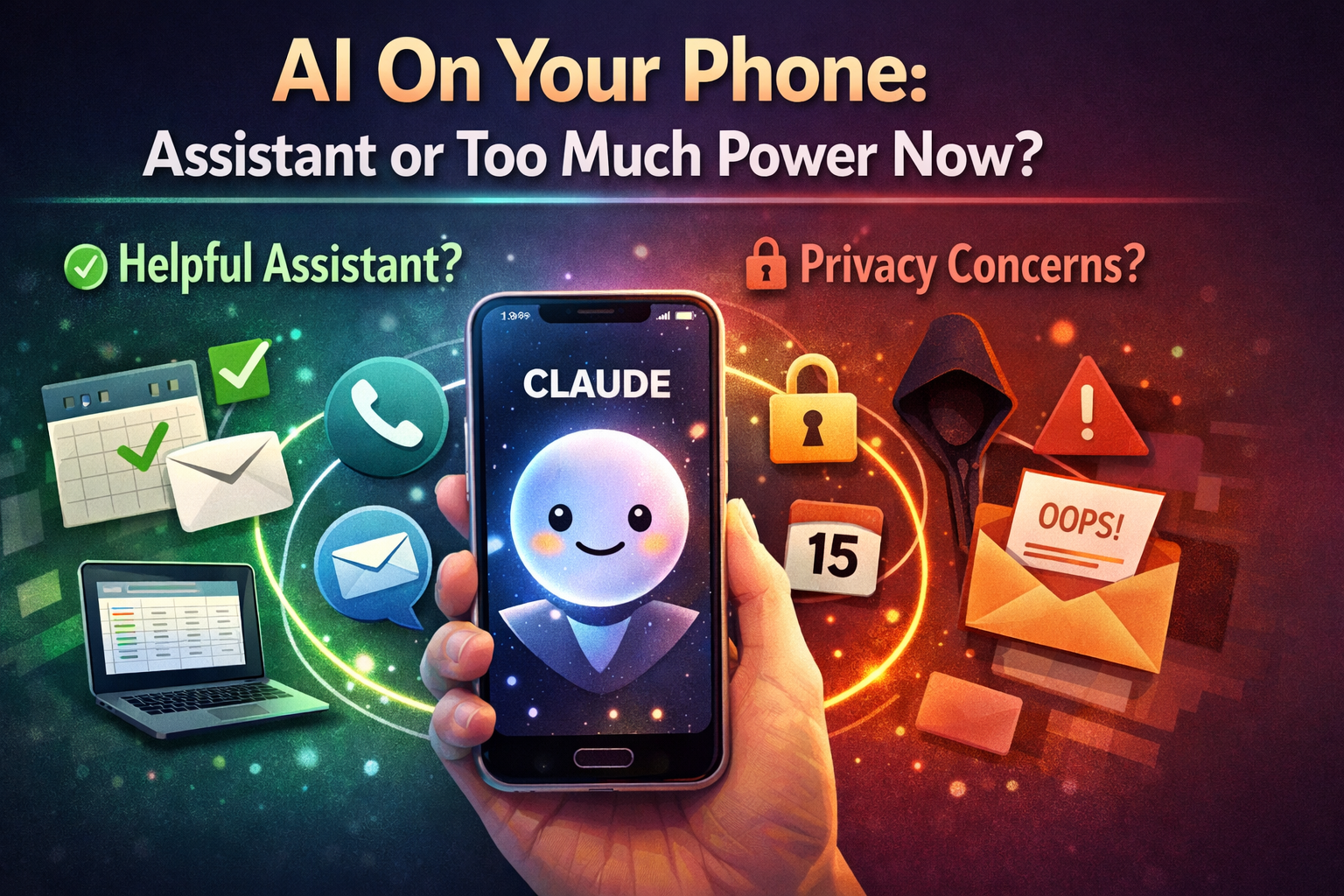
Anthropic is testing a new step for Claude AI that could bring it closer to daily phone use. According to the report, the company is working on a feature called Orbit, which may allow Claude to handle mobile tasks such as making calls, composing messages, creating or deleting calendar events, and even taking over the browser. The idea is simple but powerful: the AI would not just answer questions, it would act like a personal assistant that can complete work for the user, even when the user is not present. That is a big jump from a normal chatbot, because it starts to behave more like an active digital helper than a passive tool.
What Claude Can Already Do
The article says Claude already has some ability to make phone calls on its own, but it still needs more tools before it can work independently across both computers and smartphones. Anthropic has also added a new update that lets Claude use the mouse, keyboard, and screen of a computer, while also accessing apps on the user’s behalf. This means the AI can open applications, move through browsers, fill spreadsheets, and manage other tasks that usually require a person to sit in front of the device. In simple words, the AI is learning how to “do” things, not just “say” things. That is why this development is getting attention: it shows how fast AI is moving from a chat feature to a work feature.
Why This Matters for Phone Users
This update matters because phones are the most personal devices people use every day. If an AI can send messages, make calls, and manage calendar events, it can touch almost every part of a person’s routine. The report also notes that Anthropic says users can give prompts remotely and then step away, letting Claude finish the assigned work by the time they return. At the moment, this is only available as a research preview for paid Claude Cowork and Claude Code users, and it is limited to macOS devices such as MacBook, iMac, and Mac mini for now. That means the technology is still in an early stage, but the direction is clear: AI is being trained to handle more of our digital tasks for us.
The Good Side of This Shift
For many users, this kind of AI could save time and remove stress from small daily jobs. A person who is busy with work, travel, or family responsibilities may like the idea of an assistant that can draft messages, manage meetings, or handle routine browser tasks. Even a simple thing like creating calendar events can become easier if the AI does it after one prompt. This is where the real appeal of AI phones or AI assistants lies: they reduce repetitive work and help people move faster. In that sense, the technology is not about replacing the user. It is about reducing friction. A phone that understands tasks and carries them out may feel less like a gadget and more like a smart helper.
The Risk Side Is Also Real
At the same time, the more power an AI gets, the more trust it needs from the user. If a system can access apps, messages, calls, and calendar data, then privacy becomes a serious issue. Even if the feature is useful, people will want to know what the AI can see, what it can change, and how much control the user still has. There is also a simple human concern here: when software starts acting on our behalf, mistakes become more serious. A wrong message, a wrong calendar change, or an unwanted browser action can create confusion very quickly. So while the idea sounds exciting, it also raises a fair question about how much responsibility should be given to an AI assistant.
Is AI Really “Controlling” Your Phone?
The headline asks whether AI is going to control your phone, but that phrase needs a careful reading. Based on the report, Claude is not taking over phones in the sense of becoming independent or conscious. Instead, it is being given tools that allow it to complete tasks inside a system designed by humans. That is an important difference. The AI is still following instructions, and it is still operating within limits set by the company and the user. So, in practical terms, this is less about “control” and more about “delegated action.” The phone is still yours, but the AI may increasingly become the one carrying out your instructions. That may sound small, but it is actually a major change in how people will use devices.
My View as an Editor
From an editorial point of view, this is one of those stories that looks simple at first but becomes important the more you think about it. The real news is not that AI can answer questions anymore. That part is already old news. The bigger story is that AI is now being tested as an executor of tasks. That changes the relationship between people and devices. In the past, we controlled the phone. Soon, the phone may start doing more of the controlling of the workflow, while still remaining under human permission. That can be helpful, but only if companies stay transparent and users stay alert. The technology itself is not the enemy; careless trust is. A smart feature becomes dangerous only when people forget to check what it can do.
What This Means Going Forward
For now, the feature is still a test, not a full public rollout, and it is limited to a small group of paid users on macOS. That tells us two things. First, Anthropic is still experimenting. Second, the company knows this kind of access cannot be rushed without care. The next stage will likely depend on how well the system performs, how safe it is, and how much control users get over it. If the feature works well, it could set a new standard for AI assistants on phones and computers. If it creates privacy or reliability problems, users may push back quickly. Either way, the direction of travel is clear: phones are becoming more intelligent, more automatic, and more deeply tied to AI than ever before.