
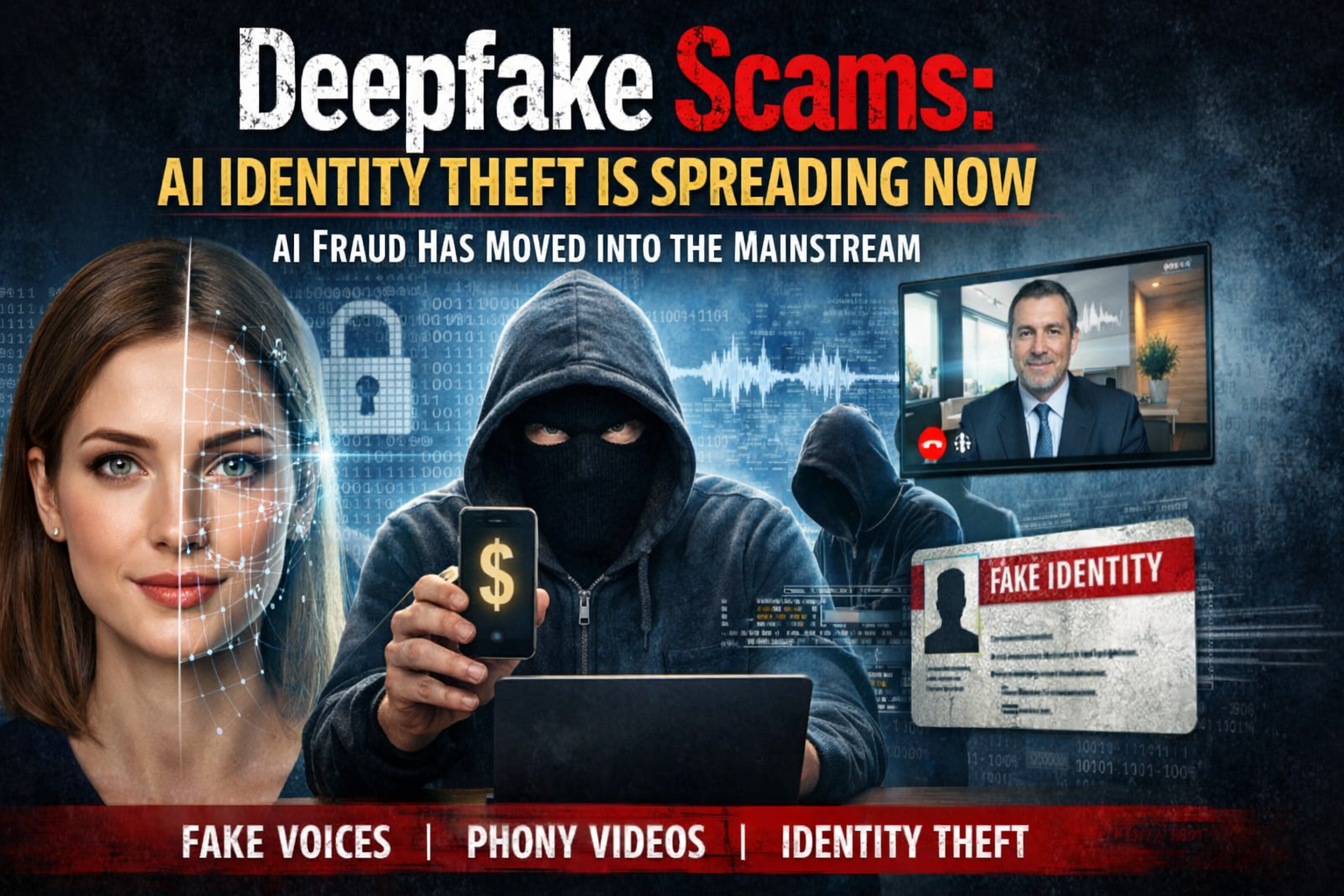
A recent deepfake experiment has revealed the extent to which artificial intelligence has gone with fraudsters. What used to pass as a niche technology issue has since become a viable crime-solving device: in minutes, AI can replicate faces, synthesize voices, and create convincing fake identities. Cybersecurity analysts report that AI is increasingly being employed in an increasing proportion of scams, such as identity theft, fake businesses, and impersonation (CBS News California Investigates). The bigger admonition is plain yet grave: fraud is being expedited, reduced in cost and made very persuasive.
How the Scam Works
The case of the CBS demonstration revealed the ease with which a consumer application could change the look of a person in real time. In this case, the image of a reporter was altered into a Taylor Swift doppelganger in a few minutes, and the outcome was realistic to the extent that a person who was not acquainted with her could hardly have detected the alteration. It is precisely what makes deepfakes so dangerous: there is no longer an obvious glitch or poor editing. They are fast to generate, the tools are common and easy to operate.
Why Scammers Love Deepfakes
The fact that deepfakes eliminate the previous obstacles to fraud makes deepfakes appealing to criminals. Attackers can now fake an identity of an executive, job applicant, family member, or customer without having technical expertise or underground contacts, or even costly equipment, through off-the-shelf applications. According to Trend Micro, deepfake-enabled crime has now progressed beyond hypothetical possibility into actual abuse, which it cites as business fraud, extortion, and identity theft. Entrust continues to add that employees are now being pressured by the use of fake executives and manipulated video or audio calls to pay out money or sensitive information. That is, the scam does not rely just on the fake email anymore; it can come in the form of a face, voice, and with a sense of urgency.
The Trust Problem Is Bigger Than the Technology
The most alarming part of this story is not only the technology itself, but the collapse of trust it creates. For years, people were told that a quick video call or a familiar voice could help verify identity. That advice is becoming less reliable. The World Economic Forum notes that a major deepfake fraud case involving engineering firm Arup led to $25.5 million being transferred after a worker believed they were on a legitimate video call with senior colleagues. That incident matters because it shows how deepfakes exploit routine business habits, not just careless behavior. When a scam can imitate the normal look and feel of a workplace conversation, trust becomes the target.
Why Detection Is So Difficult
Deepfakes are hard to catch because the tools behind them are improving quickly. The old warning signs, such as unnatural blinking, awkward lip movement, or strange audio timing, are less dependable than they used to be. Both Trend Micro and Entrust warn that synthetic media is now realistic enough to bypass some identity checks, especially when criminals use virtual cameras, face swaps, or manipulated video streams to defeat verification systems. The technology is also scaling fast, which means the threat is no longer limited to a few sophisticated attackers. It is becoming a repeatable fraud method that can be copied, automated, and spread widely.
My View as a News Editor
My view is that deepfake fraud is no longer just a cybersecurity story. It is a trust story, a business story, and eventually a public safety story. The pace of progress is outrunning public awareness, and that gap is exactly where scammers operate. People still think fraud should look suspicious, but modern deepfakes are designed to look normal, familiar, and urgent. That makes education just as important as software defenses. Companies should train employees to verify unusual requests through a second channel, and individuals should treat unexpected video or voice messages with caution, even if they seem personal. The real editorial lesson here is that we are moving into an era where “seeing” is no longer enough. Verification will have to become a habit, not an afterthought.
What Happens Next
The likely future is not a world where deepfakes disappear, but one where fake content becomes more common and harder to distinguish from the real thing. That is why experts are calling for stronger identity checks, better employee training, and more advanced detection systems built to spot synthetic media. The deeper problem is cultural as much as technical: once people stop trusting what they see online, every digital interaction becomes a test of verification. The CBS demonstration is important because it shows that this future is already here. The threat is not abstract anymore; it is practical, scalable, and ready to be used against ordinary people and organizations alike.