
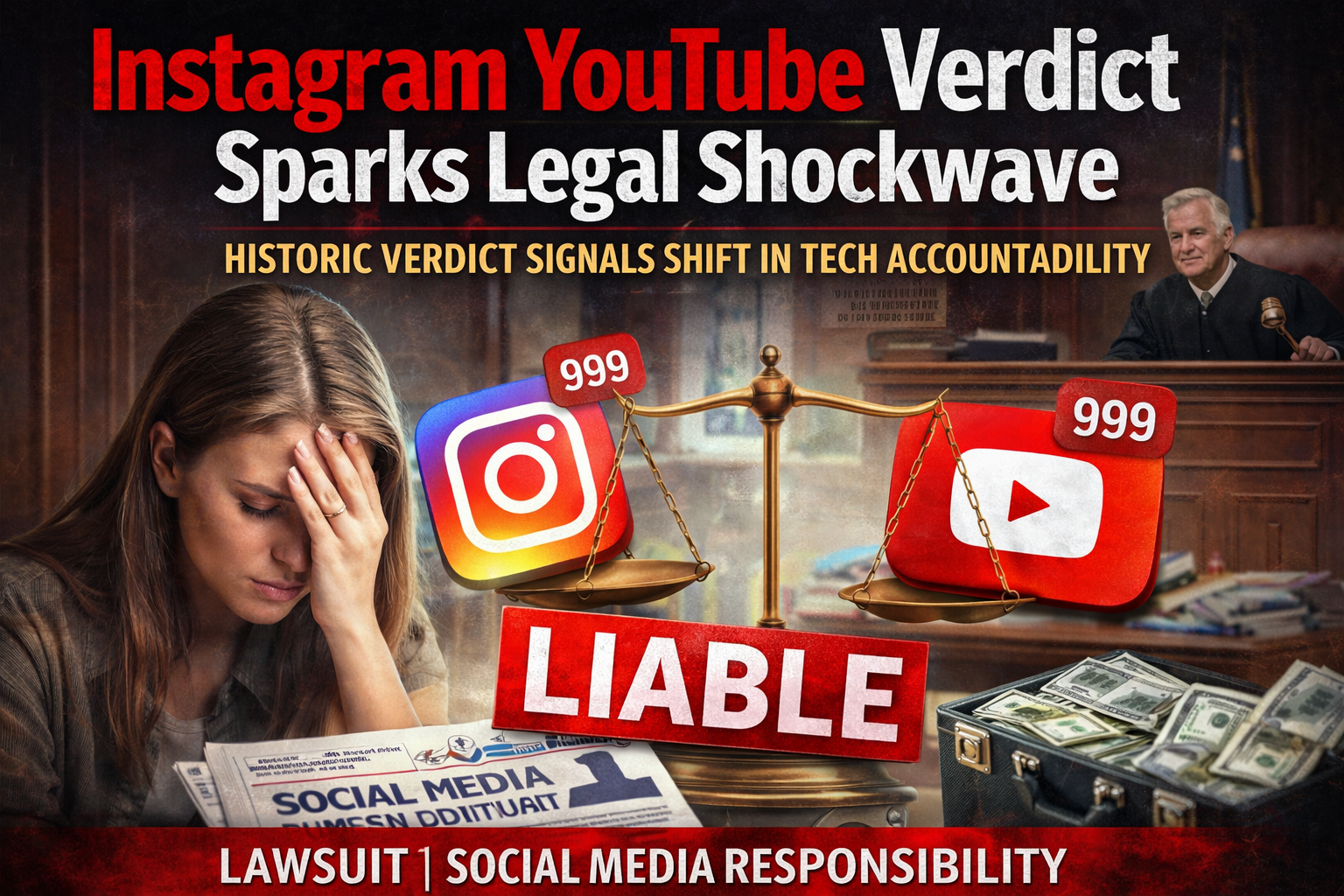
In a groundbreaking decision, a jury has found Instagram and YouTube liable in a major social media addiction case, marking a significant shift in how courts view the responsibility of digital platforms. This verdict is being seen as a turning point because it challenges the long-standing belief that tech companies are not responsible for how users interact with their products. Instead, the jury recognized that the design of these platforms can directly influence user behavior and, in some cases, contribute to harm. The ruling sends a strong message that companies may now be held accountable not just for content, but for the way their platforms are built to engage users.
Background of the Case
The lawsuit centered on a young woman who claimed that her prolonged use of social media from an early age led to serious mental health issues, including anxiety and depression. According to the case, she began using YouTube as a child and later became highly active on Instagram, spending significant amounts of time scrolling and engaging with content. Her legal team argued that this level of usage was not accidental but the result of deliberate platform design choices that encouraged compulsive behavior. The case highlighted how early exposure to such platforms can have long-term psychological effects, especially on young and impressionable users.
Arguments Presented in Court
During the trial, the plaintiff’s lawyers argued that both platforms were intentionally engineered to maximize user engagement. Features such as infinite scrolling, autoplay videos, and algorithm-driven recommendations were presented as tools designed to keep users hooked for as long as possible. They claimed that these features exploit human psychology, particularly among teenagers, making it difficult for users to disengage.
On the other hand, the defense argued that mental health issues cannot be attributed solely to social media use. They emphasized that multiple external factors, such as family environment, personal experiences, and offline influences, also play a role. Additionally, the companies pointed to safety features and parental controls, arguing that users and guardians share responsibility for managing screen time and usage habits.
Jury Decision and Damages
After reviewing the evidence, the jury sided with the plaintiff and found both companies liable for the harm caused. The decision included a financial penalty of several million dollars in damages. While the amount itself may not significantly impact large tech companies financially, the symbolic importance of the ruling is far greater. It establishes a legal precedent that could influence many similar cases currently being filed against social media platforms. This outcome suggests that courts may increasingly recognize the role of platform design in shaping user behavior and its potential consequences.
Broader Debate on Social Media Addiction
This case has reignited the ongoing debate about whether social media can truly be classified as addictive. Some experts argue that excessive use shares similarities with behavioral addiction, while others believe it should be described as problematic usage rather than clinical dependency. Regardless of terminology, the core issue remains the same: when users spend excessive time on platforms to the point that it affects their well-being, the design of those platforms comes under scrutiny.
The trial also brought attention to how algorithms prioritize engaging content, often without considering its impact on mental health. This raises important questions about whether companies should be required to design systems that promote healthier usage patterns rather than simply maximizing user engagement.
Why This Case Matters
The significance of this verdict extends far beyond a single lawsuit. It challenges the idea that social media platforms are neutral tools and instead suggests they are active participants in shaping user experiences. This could lead to stricter regulations and increased pressure on companies to redesign their platforms with user safety in mind. Features that were once seen as harmless, like endless scrolling, may now be viewed as potentially harmful if they contribute to compulsive usage.
Moreover, this case could open the door for more lawsuits from individuals and families who believe they have been negatively affected by social media. As a result, tech companies may face growing legal and financial risks if they fail to address these concerns.
Editorial View: A Turning Point for the Digital Age
From an editorial perspective, this verdict represents a critical moment in the evolution of the digital world. For years, discussions about the negative effects of social media have remained largely theoretical. This case turns those concerns into a legal reality. It highlights the need for a more balanced approach where innovation is matched with responsibility.
However, it is also important to recognize that social media is not entirely harmful. It has created opportunities for communication, learning, and global connection. The real challenge lies in finding a middle ground where platforms can continue to grow while minimizing risks to users, especially young people.
In my view, this case is not about blaming technology but about redefining accountability. Companies must acknowledge that their design choices have consequences, and with that comes a responsibility to protect users from harm.
What Lies Ahead
The companies involved are expected to challenge the verdict, meaning the legal process is far from over. Appeals could reshape or even overturn parts of the decision. Nevertheless, the impact of this case is already being felt across the tech industry. Policymakers, regulators, and advocacy groups are likely to push for stronger protections for users, particularly minors.
Looking ahead, this case may serve as the foundation for a new era of digital regulation, one where user well-being becomes just as important as user engagement. Whether through legal action or policy changes, the message is clear: the future of social media will depend not only on innovation but also on accountability.