
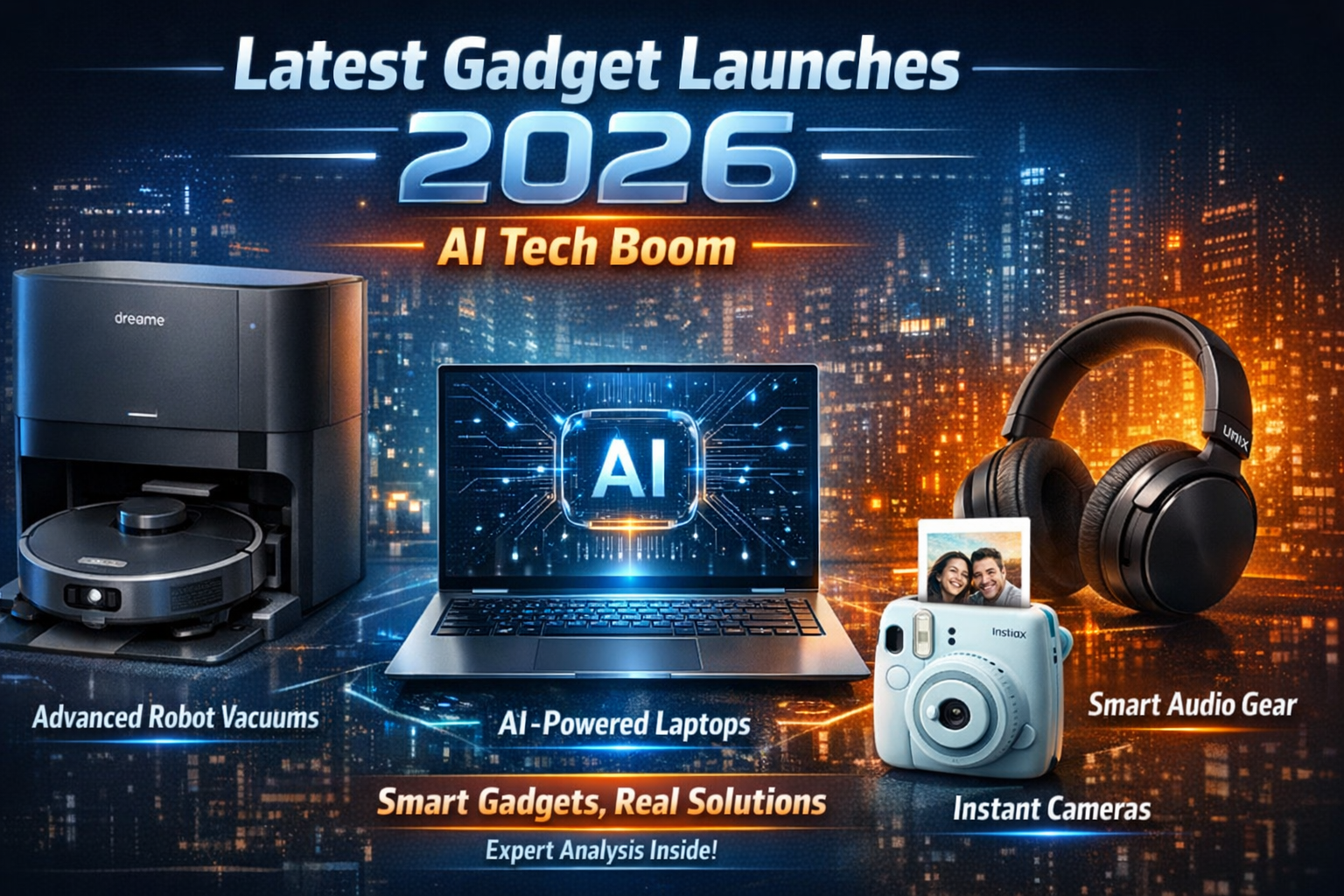
The year 2026 is shaping up to be a landmark period for consumer technology, marked by a wave of innovative gadget launches that highlight how deeply artificial intelligence and automation are becoming embedded in everyday life. From advanced robot vacuum cleaners to AI-powered laptops and smart audio devices, the latest products reflect a shift away from flashy, experimental tech toward practical, user-focused solutions. These developments signal a broader transformation in the tech ecosystem, where convenience, efficiency, and seamless integration are now at the forefront of innovation.
Smart Homes and the Rise of Robot Vacuums
One of the most prominent trends emerging this year is the rapid evolution of home automation, particularly in the segment of robot vacuum cleaners. Devices such as the Dreame L40 Ultra AE and D20 Ultra are redefining what consumers expect from household appliances. These machines go far beyond basic cleaning tasks, incorporating features like AI-driven navigation, real-time mapping, and automated self-maintenance systems. With capabilities such as self-emptying dustbins, mop extension technology, and obstacle detection, these devices are designed to operate almost entirely independently.
This represents a significant leap toward fully autonomous home management systems, where users can rely on technology to handle routine chores without constant supervision. From an editorial perspective, this category stands out as one of the few where robotics has genuinely delivered on its promise. Unlike humanoid robots, which are still largely conceptual, robot vacuums have found a clear and valuable purpose in everyday life.
AI Laptops: The New Age of Computing
Parallel to advancements in home automation is the rise of AI-integrated computing devices, particularly laptops. The launch of the Samsung Galaxy Book 6 series underscores how artificial intelligence is no longer just a software feature but a core component of hardware design. Equipped with next-generation Intel Core Ultra processors and enhanced graphics capabilities, these laptops are engineered to handle AI-driven tasks directly on the device.
Features such as intelligent content selection, automated note-taking, and performance optimization illustrate how computing is becoming more intuitive and responsive to user behavior. This transition toward on-device AI processing is crucial, as it reduces reliance on cloud-based systems, improves data privacy, and enhances speed. However, from an editorial standpoint, the challenge for manufacturers lies in demonstrating tangible benefits to users. While the term “AI-powered” is widely used in marketing, its true value will only be realized when it significantly enhances productivity and simplifies complex tasks.
Automation Beyond Homes: Industrial Innovations
Beyond consumer-focused gadgets, there is also a notable push toward industrial and commercial automation. Products like the Milagrow Spaze cleaning robot highlight how similar technologies are being adapted for large-scale environments such as hospitals, offices, and public spaces. These machines are capable of handling extensive cleaning operations using advanced mapping systems and multi-functional capabilities.
Their introduction signals a broader shift toward automation in industries where efficiency and consistency are critical. From an economic perspective, such innovations have the potential to reshape labor dynamics, reducing the need for manual intervention while increasing operational efficiency. This aspect of technological advancement often receives less attention compared to consumer gadgets, yet it may have a far greater long-term impact.
Nostalgia Meets Innovation
Interestingly, not all innovations in 2026 are focused solely on cutting-edge technology. There is also a resurgence of products that blend nostalgia with modern functionality, as seen in the launch of the Fujifilm Instax Mini 13 instant camera. This device combines the charm of instant photography with updated features like improved exposure control and a user-friendly design.
Its popularity reflects a growing consumer desire for tangible, experiential products in an increasingly digital world. From an editorial viewpoint, this trend underscores an important insight: technology is not just about efficiency but also about emotional connection. As devices become smarter and more automated, there is still a strong market for products that offer a sense of simplicity and personal engagement.
Affordable Audio Tech Gets Smarter
In the audio segment, advancements are focused on enhancing the everyday user experience rather than introducing entirely new categories. The Unix Havana wireless headset, for instance, offers features such as active noise cancellation, extended battery life, and fast charging at an accessible price point.
This indicates that premium features are gradually becoming standard across different price ranges. As competition intensifies, brands are focusing on refining user experience, comfort, and reliability rather than relying solely on technical specifications. From an editorial perspective, this democratization of technology is a positive development, making advanced features more widely available to consumers.
The Bigger Trend: Invisible Technology
A key underlying theme across all these innovations is the concept of “invisible technology.” Devices are increasingly designed to operate in the background, minimizing the need for user intervention while maximizing efficiency. Whether it is a robot vacuum that cleans autonomously or a laptop that anticipates user needs, the goal is to create a seamless experience where technology integrates effortlessly into daily routines.
This shift reflects a broader evolution in consumer expectations, where ease of use and reliability are valued more than novelty.
Editorial Perspective: Reality vs Hype
From a critical standpoint, it is important to approach these developments with a balanced perspective. While the integration of AI and automation offers significant benefits, there is also a risk of over-reliance on technology and the potential for exaggerated marketing claims. Not every product labeled as “AI-powered” delivers meaningful innovation.
Speaking candidly, the current wave of gadget launches feels more grounded and practical compared to previous years. The industry appears to be moving beyond the phase of experimentation and toward real-world application. Products like robot vacuums and AI laptops are not just technological showcases; they are tools designed to simplify life and improve productivity.
Sach kahu toh AI ka hype abhi bhi hai, lekin ab woh dheere dheere real use cases me convert ho raha hai. Jo gadgets aaj aa rahe hain, woh sirf dikhawa nahi, balki daily life ko genuinely easy bana rahe hain. Lekin companies ko ab proof dena padega—sirf “AI-powered” bolne se kaam nahi chalega.