
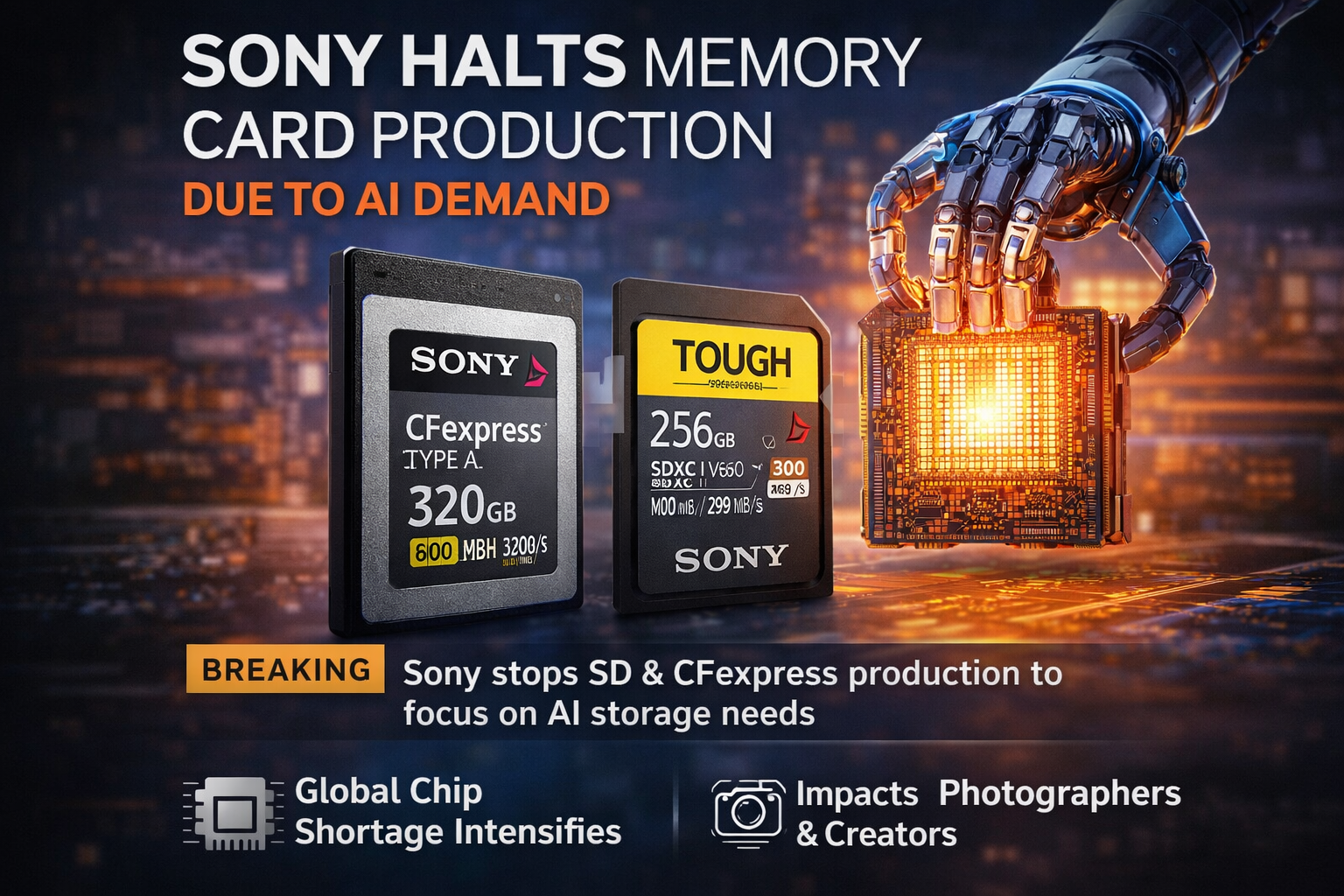
In a major development within the tech industry, Sony has temporarily halted the production and shipment of its SD and CFexpress memory cards. This decision, reported widely, including by IGN, highlights a growing disruption in the global storage market. What initially appears to be a supply-chain issue is, in reality, tied to a much larger transformation driven by artificial intelligence (AI).
Sony’s move signals how even well-established consumer products are being impacted by shifting technological priorities, where AI infrastructure is beginning to dominate resource allocation.
What Products Are Affected
The halt affects a wide range of Sony’s storage products, including SD cards and high-performance CFexpress cards, which are commonly used in professional cameras and video equipment. These products are essential for photographers, videographers, and content creators who rely on fast and reliable storage for high-resolution files.
By suspending shipments and orders, Sony has effectively paused the availability of these products in the market. While some limited inventory may still exist in retail channels, no clear timeline has been provided for when normal production will resume. This uncertainty is creating concern among users who depend on Sony’s storage ecosystem.
The Role of AI in the Crisis
The primary reason behind this disruption lies in the explosive growth of artificial intelligence. AI technologies require massive amounts of high-speed data storage to function efficiently, particularly in data centers that process large volumes of information.
As a result, manufacturers are redirecting resources like NAND flash memory used in both enterprise storage systems and consumer memory cards toward AI-related applications. This shift means that consumer products such as memory cards are receiving lower priority in production.In simple terms, AI is consuming a significant share of global memory resources, leaving less availability for traditional uses. This growing demand is reshaping the entire supply chain and forcing companies like Sony to make difficult decisions.
Global Semiconductor Shortage Worsens the Situation
The issue is further intensified by an ongoing global shortage of semiconductors and memory components. Limited production capacity, combined with rising demand, has created a supply imbalance that is difficult to resolve quickly.
Factors such as manufacturing constraints, supply chain disruptions, and increasing costs have all contributed to the shortage. Memory prices have already begun to rise, and availability is becoming more restricted. Sony’s decision reflects these broader challenges, indicating that the company is struggling to secure enough components to sustain its usual production levels.
Impact on Creators and Professionals
For photographers and content creators, this development could have immediate and practical consequences. Memory cards are essential tools, particularly for those working with high-end cameras that generate large files and require high-speed storage. With Sony stepping back from production, users may face rising prices, limited availability, and fewer options in the market. Professionals who rely on Sony’s CFexpress cards, in particular, may need to explore alternatives or adjust their workflows. This disruption could also slow down creative production, especially in industries where storage reliability and speed are critical.
Broader Industry Implications
Sony’s decision may not be an isolated case. As AI continues to grow, other manufacturers could face similar challenges, leading to a wider impact across the consumer electronics industry. The shift toward enterprise-focused production suggests that companies may prioritize high-demand, high-margin sectors over consumer products. This could result in fewer choices, higher prices, and slower innovation in everyday tech accessories like memory cards. Over time, this trend could reshape the market, pushing companies to rethink how they balance consumer needs with industrial demands.
Editorial Perspective: A Shift in Tech Priorities
From an editorial perspective, this situation represents a turning point in the technology landscape. For years, consumer electronics drove demand and innovation. Now, AI is taking center stage, influencing how resources are allocated across industries.
Sony’s decision highlights a growing imbalance where essential tools for everyday users are being sidelined in favor of large-scale technological advancements. While AI offers immense potential, its rapid expansion is clearly creating pressure on existing systems.
The key concern is sustainability. If AI continues to dominate resource consumption at this pace, industries that rely on shared components may face increasing disruptions. Companies will need to find ways to balance these competing demands to avoid long-term instability.
Temporary Pause or Long-Term Change?
It remains unclear whether Sony’s move is a short-term response or part of a larger strategic shift. While the company has described the halt as temporary, the underlying factors suggest that the situation may persist for some time. If memory shortages continue and AI demand keeps rising, companies may permanently adjust their priorities. This could lead to a future where consumer storage products become less accessible or more expensive. Sony’s decision may therefore be an early indicator of a broader transformation in how the tech industry operates.
Overall Outlook
The suspension of memory card production by Sony reflects a deeper change in the global technology ecosystem. It is no longer just about supply shortages, it is about how resources are being redistributed in an AI-driven world. For consumers and professionals alike, this serves as a reminder that even the most common tech products are vulnerable to larger industry shifts. As AI continues to expand, its influence will likely extend further, reshaping markets in ways that are only beginning to become visible.