
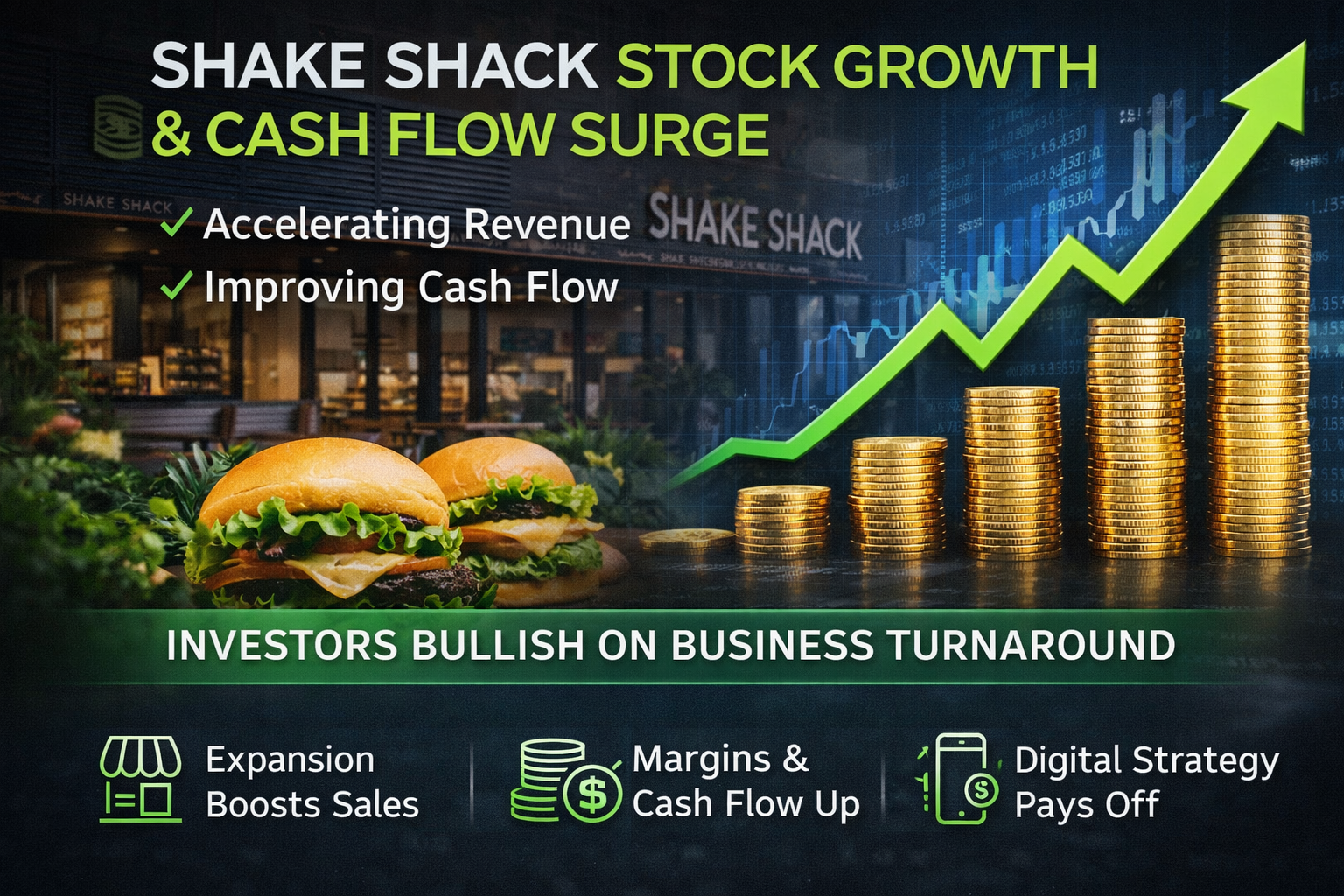
Shake Shack Inc. is gaining renewed attention in financial markets as its improving fundamentals, accelerating revenue growth, and strengthening cash flow position reshape investor sentiment. After years of focusing heavily on expansion and brand building, the company now appears to be entering a phase where growth is increasingly supported by operational efficiency and profitability.
The fast-casual restaurant chain, known for its premium burgers and modern dining experience, has been steadily expanding its footprint while refining its business model. Recent developments indicate that Shake Shack is not only growing but also becoming financially stronger, a combination that could influence its long-term valuation.
Expansion Strategy Driving Revenue Growth
A key driver behind Shake Shack’s improving outlook is its aggressive yet strategic expansion plan. The company continues to open new locations across domestic and international markets, targeting steady unit growth. This expansion is designed to increase market presence while leveraging the brand’s strong recognition among consumers.
New restaurant openings are contributing significantly to revenue growth. The company has reported strong year-over-year increases in sales, supported by both new outlets and improved performance at existing locations. Same-store sales growth has also shown resilience, reflecting sustained consumer demand and effective pricing strategies.
Importantly, Shake Shack’s expansion is not purely about increasing the number of outlets. The company is focusing on optimizing store formats, selecting high-performing locations, and improving operational efficiency at each unit. This approach ensures that growth remains sustainable rather than purely volume-driven.
Improving Unit Economics and Profitability
One of the most encouraging aspects of Shake Shack’s recent performance is the improvement in unit economics. Restaurant-level profitability has increased, indicating that individual locations are generating stronger returns.
Higher average unit volumes, combined with better cost management, have contributed to this improvement. The company has been able to enhance operational efficiency through better staffing models, streamlined processes, and technology integration.
As a result, margins at the restaurant level have shown signs of expansion. This is particularly significant in the restaurant industry, where profitability is often challenged by rising input costs and intense competition.
Cash Flow Inflection Marks a Turning Point
A major highlight in Shake Shack’s financial progress is the shift toward positive and improving cash flow. In previous years, the company’s aggressive expansion strategy required substantial capital investment, limiting its ability to generate free cash flow.
However, recent financial data suggests that Shake Shack is now entering a new phase where cash flow generation is becoming more consistent. This inflection point reflects the maturation of earlier investments and improved operational efficiency.
Positive cash flow provides several strategic advantages. It allows the company to fund future growth initiatives without relying heavily on external financing. It also enhances financial stability and provides flexibility to invest in innovation, marketing, and customer experience improvements.
For investors, the transition to stronger cash flow is a critical milestone, as it indicates that the company’s growth strategy is becoming more self-sustaining.
Digital Transformation Enhancing Customer Experience
Digital innovation has become a central pillar of Shake Shack’s strategy. The company has significantly expanded its digital ecosystem, including mobile applications, online ordering, and loyalty programs.
These digital initiatives have led to increased customer engagement and higher order frequency. By encouraging customers to use its own platforms, Shake Shack reduces dependence on third-party delivery services, which often come with high commission costs.
Digital ordering also improves operational efficiency by streamlining the ordering process and reducing wait times. Additionally, it enables the company to collect valuable customer data, which can be used to personalize marketing campaigns and improve overall service.
The shift toward digital channels aligns with broader industry trends and positions Shake Shack to compete effectively in an increasingly technology-driven market.
Cost Management and Margin Expansion
Despite facing challenges such as rising food and labor costs, Shake Shack has made notable progress in managing expenses. The company has implemented various cost-control measures aimed at protecting margins.
These measures include optimizing supply chain operations, negotiating better pricing with suppliers, and improving logistics efficiency. By diversifying its sourcing strategies, the company is better equipped to handle fluctuations in commodity prices, particularly for key ingredients like beef.
In addition, Shake Shack is focusing on operational improvements within its restaurants. This includes better workforce management, improved kitchen efficiency, and the adoption of new technologies to streamline operations.
Together, these efforts are contributing to gradual margin expansion, which is essential for long-term profitability.
Competitive Position in the Fast-Casual Segment
Shake Shack operates in a highly competitive segment of the restaurant industry, where it faces competition from both traditional fast-food chains and other fast-casual brands. However, the company has managed to differentiate itself through its premium positioning and strong brand identity.
The emphasis on high-quality ingredients, unique menu offerings, and a modern dining experience has helped Shake Shack build a loyal customer base. This brand strength provides a competitive advantage, particularly in urban markets where consumers are willing to pay a premium for quality and experience.
Furthermore, the company’s ability to innovate—whether through menu additions, digital initiatives, or store design—ensures that it remains relevant in a rapidly evolving industry.
Risks and Challenges
While the company’s outlook appears promising, several risks remain. One of the primary concerns is the impact of rising commodity prices, especially beef, which can significantly affect margins.
Macroeconomic conditions also play a critical role. Changes in consumer spending patterns, particularly during economic downturns, could impact demand for premium dining options.
Additionally, rapid expansion carries execution risks. Opening new locations requires careful planning and operational consistency. Any missteps in site selection, staffing, or quality control could affect overall performance.
Regulatory changes, labor market dynamics, and increasing competition further add to the complexity of the operating environment.
Market Outlook and Investor Sentiment
The combination of accelerating growth, improving margins, and stronger cash flow is contributing to a shift in investor sentiment toward Shake Shack. The company is increasingly being viewed as a business that can balance growth with profitability.
As financial performance continues to improve, there is potential for a reassessment of the company’s valuation. Investors often reward companies that demonstrate both strong growth and sustainable earnings potential.
Shake Shack’s ability to execute its strategy effectively will be a key determinant of its future performance in the stock market. Continued focus on operational efficiency, digital innovation, and disciplined expansion will be critical in maintaining momentum.