
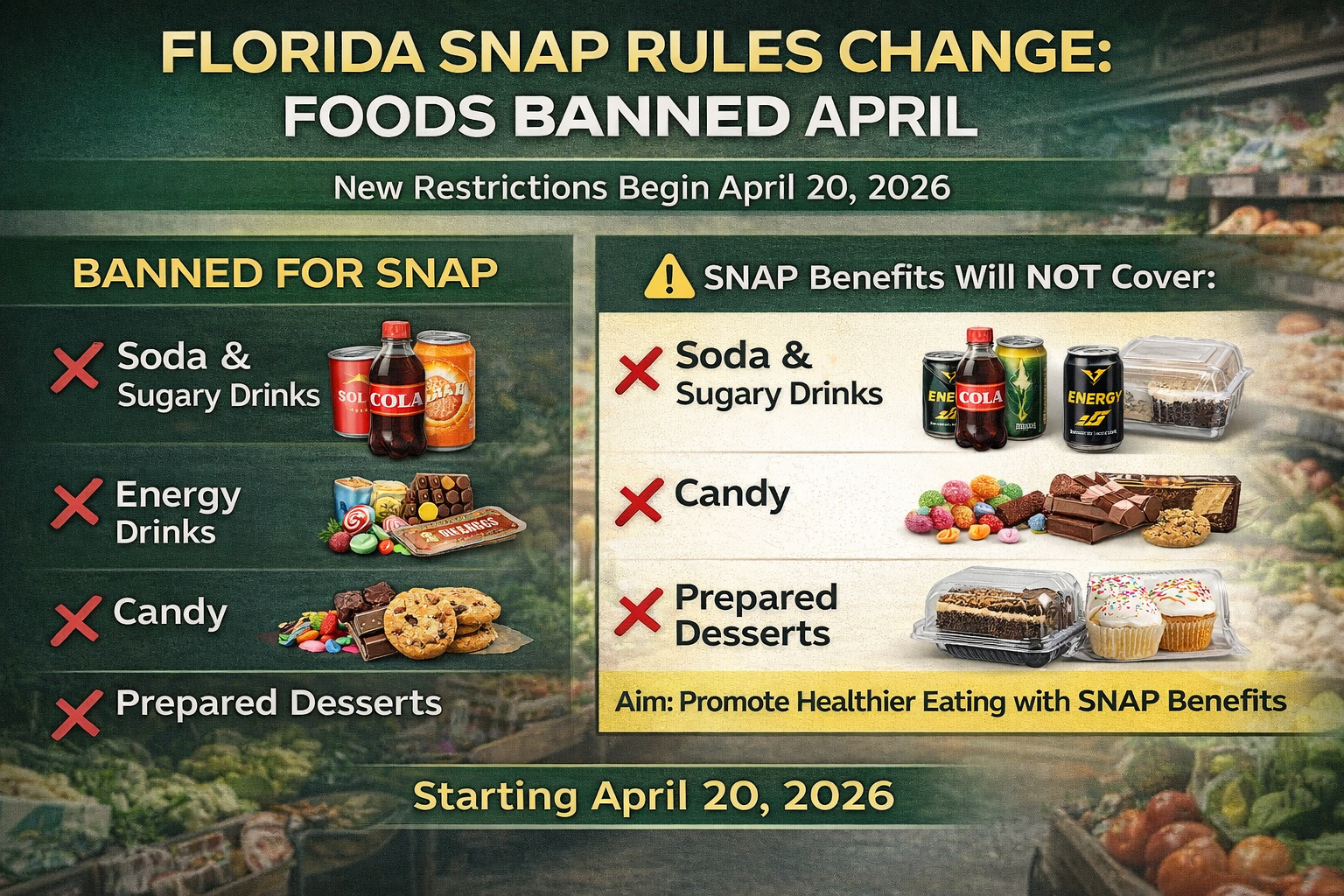
Florida is set to implement significant changes to its Supplemental Nutrition Assistance Program (SNAP) beginning April 20, 2026, marking a major shift in how food assistance benefits can be used. Under the new rules, recipients will no longer be allowed to purchase certain categories of food items considered to have little or no nutritional value.
The policy, introduced under a federal waiver approved by the U.S. Department of Agriculture, is part of a broader effort to promote healthier eating habits among low-income households. The changes reflect a growing national movement to align public assistance programs with nutrition-focused objectives.
Key Items to Be Banned
Starting April 20, SNAP recipients in Florida will be restricted from purchasing four major categories of products:
- Soda and sugar-sweetened beverages
- Energy drinks
- Candy and confectionery items
- Ultra-processed, shelf-stable prepared desserts
These restrictions specifically target products that are high in sugar, artificial additives, and empty calories. According to state guidelines, soda includes beverages made with carbonated water and added sweeteners such as high-fructose corn syrup or artificial sugar substitutes.
Energy drinks are also included in the ban if they contain at least 65 milligrams of caffeine per eight ounces and are marketed as performance or stimulation beverages. Candy is defined broadly, covering items made from sugar or artificial sweeteners combined with chocolate, fruits, or nuts in forms such as bars, gummies, or hard candies.
Prepared desserts refer to ready-to-eat packaged sweets that require no additional preparation and are typically highly processed. These include shelf-stable items commonly found in grocery stores.
What Remains Allowed
Despite the restrictions, several similar items will remain eligible under SNAP. For example, plain or naturally flavored carbonated water is still permitted, as it does not contain added sugars. Beverages that contain more than 50% fruit or vegetable juice are also allowed, as are drinks with minimal added sugar content.
Additionally, traditional beverages such as coffee and tea are not considered energy drinks under the new definition and can still be purchased using SNAP benefits. Many breakfast items, including certain granola bars and toaster pastries, will also remain eligible despite containing sweeteners, provided they do not fall into the category of ultra-processed prepared desserts.
These distinctions highlight the state’s attempt to balance nutritional goals with practical considerations for consumers.
Purpose Behind the Policy Change
Florida officials have emphasized that the primary goal of the new policy is to improve public health outcomes. By restricting access to sugary and highly processed foods through SNAP, the state aims to encourage healthier dietary choices among beneficiaries.
The initiative is part of a broader strategy to combat obesity, reduce diet-related diseases, and ensure that taxpayer-funded assistance programs are aligned with nutritional priorities.
State authorities argue that SNAP should be used to support access to essential, nourishing foods rather than products that contribute little to overall health. The policy is also expected to influence purchasing behavior by nudging recipients toward healthier alternatives.
A Pilot Program with National Implications
The changes in Florida are being implemented as part of a two-year pilot program approved by federal authorities. The waiver allows the state to modify the definition of eligible food items under SNAP, something that was previously standardized across the country.
The program will run through April 2028, during which time state officials will collect data and evaluate the impact of the restrictions on consumer behavior, health outcomes, and program efficiency.
Florida is not alone in adopting such measures. Several other states, including Iowa, Indiana, Nebraska, and West Virginia, have already implemented similar restrictions, while others are expected to follow.
This broader trend reflects a shift toward state-level control over SNAP policies, allowing individual states to tailor the program to their specific public health objectives.
Implementation Timeline and Rollout
Although the restrictions were initially expected to begin earlier in 2026, the rollout has been finalized for April 20. The delay allowed for adjustments to the policy framework and provided time for retailers and beneficiaries to prepare for the changes.
Retailers will be required to update their systems to ensure that prohibited items cannot be purchased using SNAP benefits. This may involve reclassifying products and adjusting point-of-sale systems to comply with the new rules.
The transition period is expected to present logistical challenges, particularly for smaller retailers who must manually implement these changes. However, state officials have indicated that guidance and support will be provided to ensure compliance.
Impact on SNAP Recipients
The policy is expected to affect a large number of SNAP recipients across Florida, many of whom rely on the program for their daily food needs. The removal of certain commonly purchased items could significantly alter shopping habits and meal planning for beneficiaries.
While the restrictions aim to promote healthier choices, they may also limit flexibility for individuals who prefer or rely on these items due to cost, convenience, or personal preference.
Some advocates have raised concerns that the policy could create confusion among recipients, particularly regarding which items are allowed and which are not. Clear communication and education will be essential to ensure a smooth transition.
Broader Debate Around Food Assistance Policies
The introduction of food restrictions within SNAP has sparked ongoing debate at both state and national levels. Supporters argue that such measures are necessary to address public health challenges and ensure responsible use of government resources.
Critics, however, contend that restricting food choices may undermine the autonomy of SNAP recipients and complicate the program’s implementation. There are also concerns about the potential administrative burden on retailers and the risk of inconsistent enforcement.
Despite these differing perspectives, the move signals a significant shift in how food assistance programs are being designed and implemented. By focusing on nutrition as a central objective, policymakers are redefining the role of SNAP in addressing both food insecurity and health outcomes.