
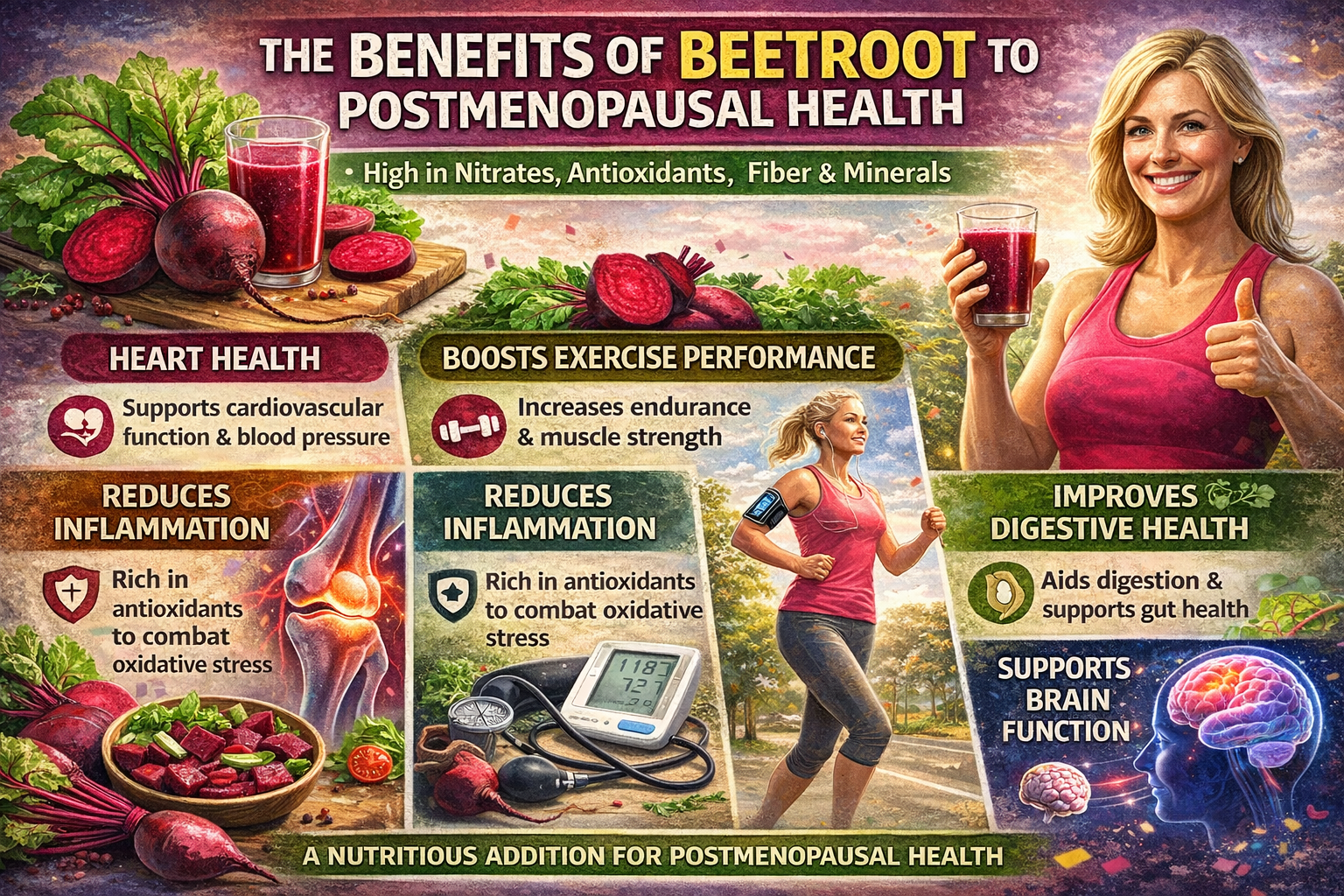
The world of women’s health is discovering a renewed interest in beetroot, which has long been valued in the world of women because of its earthy taste and its bright color. In the case of postmenopausal women, especially, this modest root vegetable can have a significant impact on health, with the support of growing research. Since menopause hormonal changes are prone to cardiovascular disease, metabolic issues, fatigue, and muscle weakness, nutrition forms a very important line of defense. Having a lot of dietary nitrates, antioxidants, fiber, and essential minerals, Beetroot is increasingly being considered a nutritional supplement that is easy but powerful to add to the postmenopausal diet.
Although no food item can substitute medical services and exercise regimen, the ever-rising scientific curiosity of beetroot has led to it being looked at beyond just a sidebar in the produce section.
Heart Health after Menopause
Cardiovascular disease is one of the health issues that becomes the most significant among post-menopausal women. Estrogen, which contributes to keeping blood vessels safe and arteries pliant, is reduced considerably at the time of menopause. This transformation puts the patient at risk of high blood pressure, stiffening of the arteries, and heart disease.
Beetroot is a natural source of nitrates, which can be transformed by the body into nitric oxide. Nitric oxide assists in loosening and dilation of blood vessels to enhance circulation and alleviate heart overwork. The enhanced blood vessel functioning implies an enhanced supply of oxygen in the whole body and possibly reduced cardiovascular risks in the long-term.
It has been demonstrated by clinical research that the beetroot juice that contains a high concentration of nitrates can potentially enhance the functioning of the vasculature and also may help decrease the stiffness of the arteries of postmenopausal women. These impacts are particularly important since future heart issues are highly anticipated to be foreseen by arterial stiffness. Beetroot is a potential support to women seeking natural ways of supplementing heart-healthy habits.
As an editorial, it is a breath of fresh air that the researches are done on cheap foods that are accessible, not on costly supplements. Beetroot is accessible and can be added to daily meals, so it is a convenient suggestion.
Natural Blood Pressure Management
After menopause, the high blood pressure tends to increase. Increasing numbers may be a result of weight gain, hormonal changes, and decreasing physical activity. Stroke and heart attack prevention rely on the management of blood pressure.
The nitrate of beetroot also has an important role here. Several studies have indicated that consuming beetroot juice may result in quantifiable systolic blood pressure decreases several hours after consumption. Continuous consumption can lead to long-term effects.
But moderation and medical advice take place. Women who already take blood pressure medication would need to speak with a healthcare professional about adding large doses of beetroot juice to their diet, since the combination of the two might cause excessive blood pressure decrease.
Practically, the inclusion of beetroot in a balanced diet with the help of physical exercises, stress management and low sodium intake can reinforce the overall blood pressure control methods.
Increasing Exercise Performance and Muscle Strength
The other issue faced by postmenopausal women is reduced muscle mass and endurance. Low levels of estrogen may impact muscle performance, energy and post-exercise recovery. It is important to remain active, yet it is not always easy to be motivated and stay persistent.
Studies have shown that beetroot juice taken before physical activity can increase aerobic capacity and boost endurance. Nitric oxide enhances the supply of oxygen to the muscles, enabling them to work more effectively. Certain studies in post menopausal women have reported an increase in walking distance and enhancement in the heart rate recovery with the combined supplement of beetroot and exercise.
This is a very positive discovery. It implies that the most basic of things, like a small glass of beetroot juice prior to a workout, might assist women in deriving more out of their workout. As time goes on, better stamina will help to provide support for independence, mobility and overall living standards.
In a larger perspective of health journalism, this relationship between nutrition and physical performance is an eye-opener that aging does not imply that a person has to decline. Cognizant eating habits can lead to resilience.
Oxidative Stress and Inflammation are harmful and must be counteracted
Beetroot is rich in betalains, which are potent antioxidant that makes it red. These substances assist in combating oxidative stress, which is a situation in which damaging free radicals destroy cells. Aging is associated with oxidative stress, which leads to chronic illness, including heart disease, diabetes, and some inflammatory disorders.
Hormonal alterations in postmenopausal women can increase oxidative stress. It is possible to overcome this imbalance by including antioxidant-containing foods such as beetroot. Also, the anti-inflammatory effect of betalains can contribute to the health of joints and the general immune system.
Although beetroot cannot be regarded as a panacea, it has an antioxidant profile, which is why it is an excellent addition to a colorful and plant-based diet. Together with green vegetables, fruits, nuts, and whole grains, beetroot is part of an entire anti-inflammatory diet.
Improving Digestive and Metabolic Health
The common post menopausal conditions are weight gain and decreased rate of metabolism. Beetroot contains dietary fiber, which helps promote digestive health, as well as promote the feeling of fullness. Another benefit of fiber as an ingredient is that it will help keep the body’s sugar levels below normal, and this is a key factor in averting insulin resistance.
Besides fiber, beetroot has other vital nutrients, including folate, potassium, and manganese. Potassium helps in the maintenance of fluid levels and heart rate, and folate helps in repairing the cells and in general well-being.
Beetroot can facilitate metabolic stability when it is taken in combination with balanced food items, without adding extra calories. Simple methods of incorporating it into daily meals are roasted beetroot in salads, it can also be blended in smoothies, or it can be lightly sautéed with greens.
Cardiovascular and Brain Health
There is emerging evidence of dietary nitrates having a beneficial effect on the brain as well, due to the improved blood flow in the body. Increased circulation may affect cognitive functions and alleviate mental fatigue associated with old age. Various studies have yet to be conducted in specific cases of postmenopausal women, but general evidence suggests that improved vascular functioning favors the health of the brain.
Since women are more susceptible to some types of neurodegenerative diseases in the later stages of life, healthy circulation becomes even more important. The beetroot and its effects in supporting blood flow may indirectly help in cognitive wellness in the long term.
Managing Energy and Fatigue
Fatigue is one of the most commonly reported complaints during and after menopause. Nutritional gaps, poor sleep, and hormonal shifts can all contribute to low energy levels.
Beetroot contains iron and folate, nutrients essential for red blood cell production and oxygen transport. While it may not dramatically increase energy overnight, regular inclusion in the diet can contribute to improved overall vitality.
Many women also report feeling more energized when combining beetroot intake with regular physical activity. This synergy between diet and exercise underscores the importance of holistic health strategies.
Practical Ways to Include Beetroot
Incorporating beetroot into the diet does not require complicated recipes. Fresh beetroot can be roasted, grated into salads, or blended into smoothies. Beetroot juice is another popular option, with research often using approximately 150 to 250 milliliters per day.
However, moderation is important. Beetroot is naturally high in oxalates, which may contribute to kidney stone formation in susceptible individuals. It can also cause harmless reddish discoloration of urine, known as beeturia.
As always, dietary changes should align with personal health conditions and professional medical advice.