
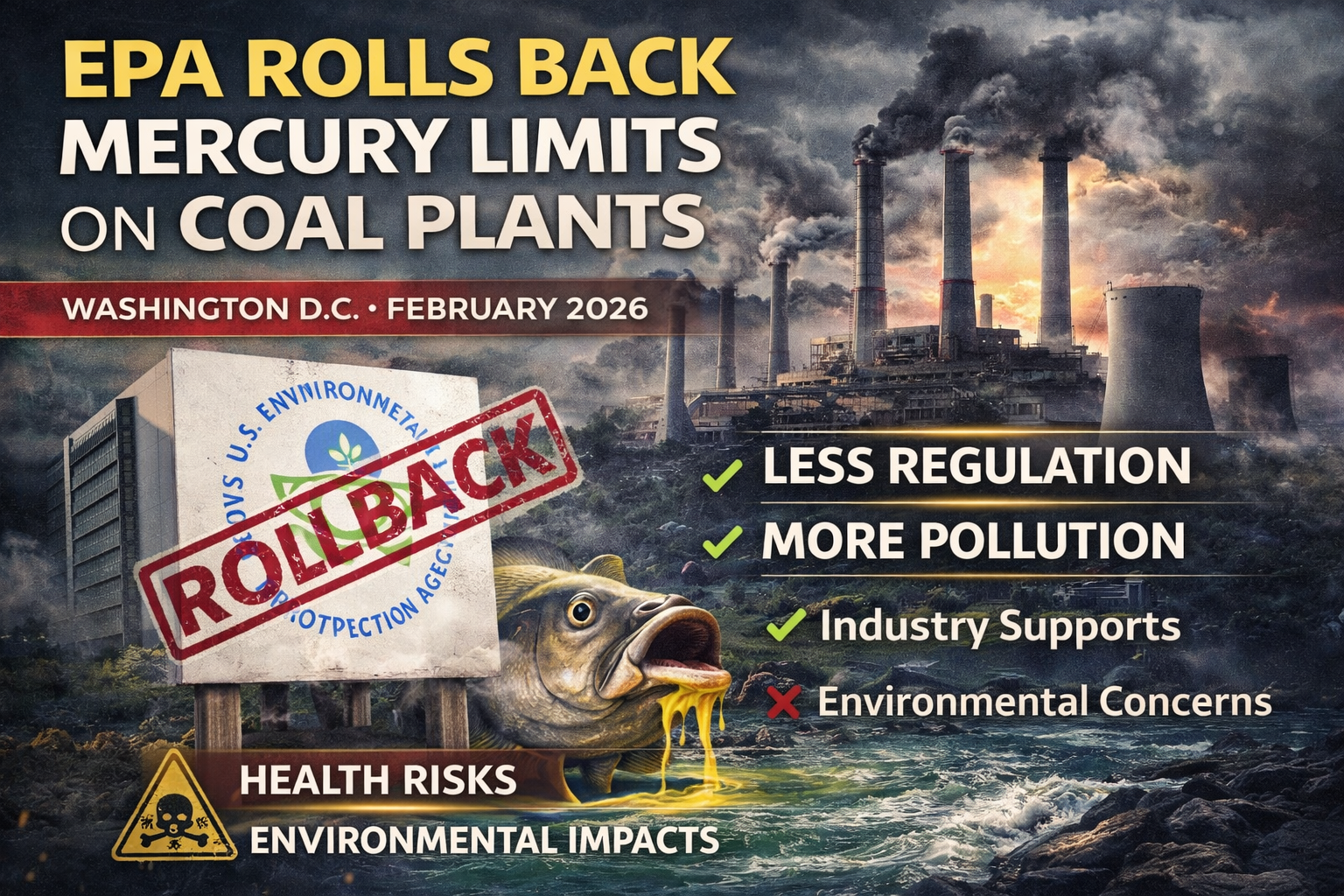
Washington, D.C., February 2026, the U.S. Environmental Protection Agency (EPA) has drawn back tougher mercury emission regulations that were reinforced under the Biden administration on coal-fired power stations. The ruling restores previous thresholds of the Mercury and Air Toxics Standards (MATS), which were initially concluded in 2012. The relocation is a major change in federal environmental policy and caused severe responses among legislators, industry executives, and environmental activists.
History of the Mercury Rule
The United States Environmental Protection Agency initially enforced the Mercury and Air Toxics Standards during the Obama administration. The regulation was to curb emissions of air pollutants that were hazardous, like mercury, arsenic, and acid gases, into the air by the coal and oil-powered power plants as required in the Clean Air Act. In 2024, the Biden administration rolled out stricter requirements that will entail increased pollution limits and stricter monitoring of emissions.
According to the updated decision of 2026, the EPA has lifted the new 2024 restrictions and returned to the 2012 standards. According to authorities, the previous system already offered adequate health safeguards to the population and operational freedom to energy generators.
The Rollback Rationalization by the Government
According to the EPA officials, the rollback is aimed at lessening the regulatory burden on energy producers and the possible rise in the cost of electricity. The agency statements have indicated that higher operational costs would have been incurred due to the implementation of more pollution control technologies by some coal plants to meet the more stringent 2024 standards.
The federal regulators pointed out that most coal plants already had pollution-controlling systems that could adhere to the 2012 requirements. They were of the opinion that the rollback guarantees energy security at a period when the nation is experiencing an increase in electricity demands.
Those who supported the ruling, including a majority of Republican legislators, said the new tougher requirements were needless economic pressure on coal-reliant communities and energy providers.
Health and Environmental Issues
The decision has raised concern among environmental organizations and public health groups. Mercury is a poisonous metal that may accumulate in the water bodies and fish, which may later be incorporated in human food chain. Mercuial exposure has been associated with damage to the nervous system, particularly among infants and young children.
According to advocacy groups, stricter standards of emissions were aimed at decreasing the amount of toxic air pollutants and enhancing the monitoring standards. They argue that the relaxation of these measures would result in the augmentation of emissions in some areas, especially areas with maturing coal-powered power facilities.
According to medical experts, the emissions of coal plants include other dangerous substances such as fine particulate matter and heavy metals, which can generate respiratory and cardiovascular diseases.
Impact on the Energy Sector
The rollback will also offer relief on costs to power plants that use coal as their fuel source, which would have incurred extra compliance costs. Representatives of the industry believe that the move will help to prolong the lifespan of some of the facilities and enable grid reliability in areas that continue to use coal as the baseload power.
Nevertheless, Eve and Onolini (2021) and other analysts note that coal is losing market share to natural gas and renewable energies in terms of its presence in the electricity mix in the United States. Despite the absence of new and more stringent policies on mercury, the economic pressures and market forces over the long term still affect the retirement of plants.
Energy analysts observe that a lot of utilities have already put in place state of the art pollution control technologies, and so the rollback might not result in a significant drop in the emission levels at all the facilities.
Legal and Political Response
Environmental groups are likely to challenge the policy change in court, claiming that the new rule reduces protection to requirements stipulated in the Clean Air Act. The future of the rollback might be subject to a future alteration upon court appeals, or it might be disapproved.
Politically, the move underscores the current debates on environmental control and energy policy. The proponents package the move as a regulatory reform to create economic stability, and the opponents see it as a step backwards in the face of tougher pollution controls.
Broader Policy Context
The turnaround coincides with the larger national arguments on how to balance environmental protection, economic growth, and energy security. The federal energy policy is constantly developing as the nation struggles with increased electricity consumption, the development of technologies, and long-term climate issues.
Although the EPA asserts that the reinstated 2012 standards will still protect the health of people, environmental organizations are still pressing the government to ensure more stringent protection against air pollutants.
The long-term consequences of the rollback, such as the effect on emissions, the health of the population, and the power sector, might also be more evident in the years to come as regulatory, legal, and market changes will take place.