
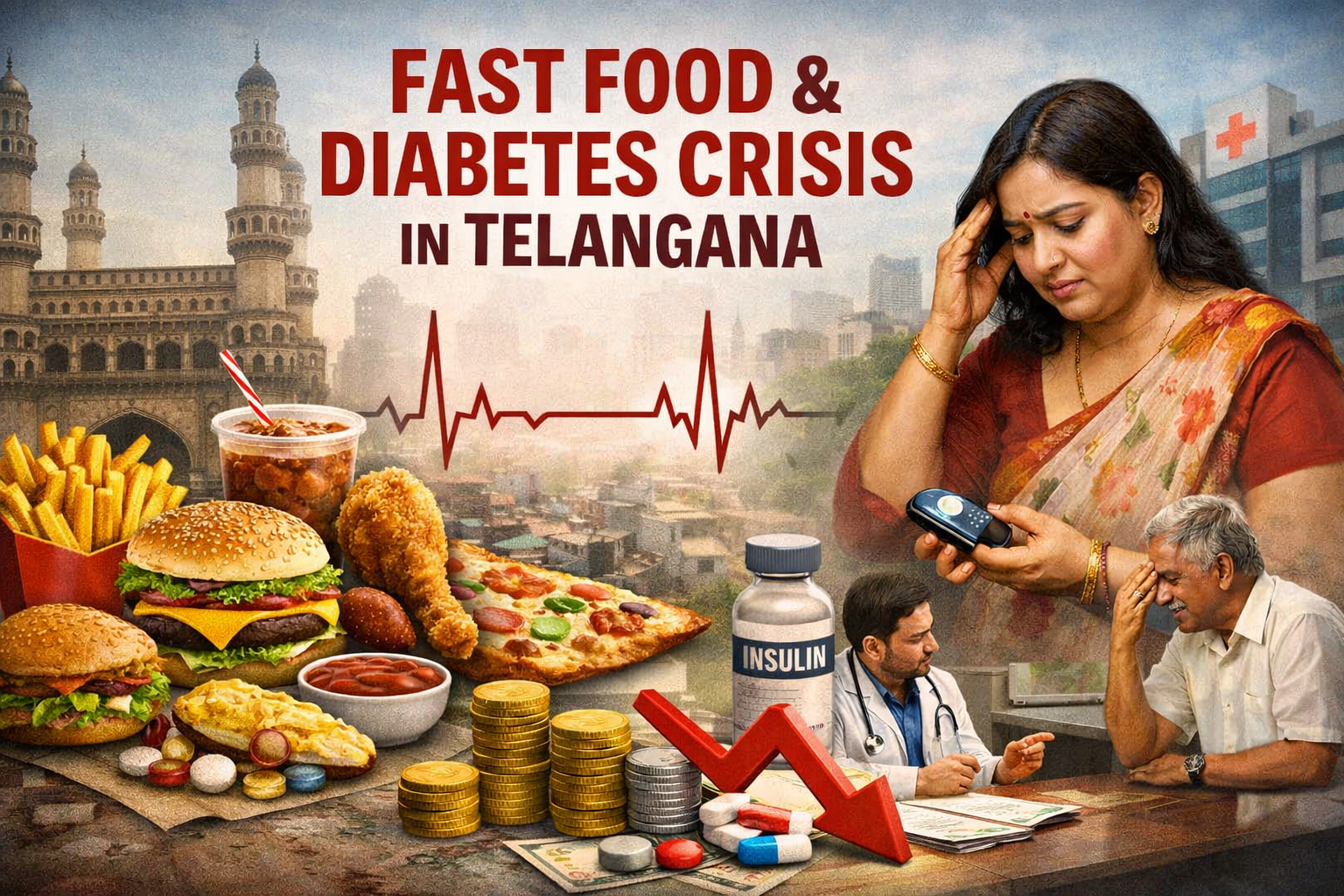
There is an alarming population health trend in the southern part of India, especially in Telangana, which is witnessing an increased reliance on fast food, which is being associated with a dramatic increase in Type-2 diabetes. A recent study conducted in the Indian Journal of Medical Research (IJMR) has uncovered that nutritional change of habits, particularly in the urban centres such as Hyderabad are putting the population on the verge of a severe metabolic health crisis.
This research was named Fast-food Attributed Diabetes Index Study (FADIS) and was carried out by researchers who were international and Indian, including Mayo Clinic and Siddhartha Medical College. It mentions an important change in the food consumption patterns where traditional and home-cooked meals are starting to be substituted with ultra-processed foods (UPFs).
Diet Makeover that has Repercussions
The findings have shown that, as per the results, people in Telangana and other southern states are using almost a quarter of their monthly food spending on fast foods. This is an average of: 1,000-1,450 per person of the monthly food spending of approximately 4,120.
These foods, ready-to-eat meals, sweet drinks, and snacks, that are packaged, are usually rich in refined carbohydrates, fatty foods that are unhealthy, sugar, and salt. Such eating habits in the long run lead to weight gain, insulin resistance and eventually diabetes.
The cause of the trend that is of great concern is its rate of substituting conventional diets that are rich in grains, vegetables and natural ingredients. Experts have defined this change as a nutritional transition, a phenomenon that is common among urbanising societies where convenience is increasingly becoming more important than nutrition.
Urban India at the Epicentre
The researchers determined that there was a high and significant correlation between fast-food intake and diabetes in cities. In some cities, such as the City of Hyderabad, diabetes prevalence rates are already reaching 3.8-per cent among men, which is on the higher side of the rates witnessed in the study.
Interestingly, this rapport is significantly lower in the rural areas. Researchers explain such a difference by the fewer fast-food stores and the active lifestyles in villages.
This city-country gap brings to the fore a very important matter: modernization and economic development, although enhancing living conditions, are also bringing lifestyle hazards, which were not very widespread in the past, to the conventional environment.
There is another type of risk to Women.
Gender-specific health risks are also revealed in the study. This has made obesity the most influential indicator of diabetes among women. Indeed, the prevalence of obesity among women in the southern states is even higher than the current rate of diabetes, suggesting that there are a significant number of women who are prone to the illness in the future.
This is an indicator that the crisis can deteriorate in the next few years unless preventive measures are employed within the next few months. The late onset of diabetes in such situations poses a latent symptom- one that can break the healthcare systems to pieces unless addressed.
Southern States on the Forefront of the Trend
Out of the 18 states that were examined, the southern states dominate the charts when it comes to fast-food expenditure. Tamil Nadu has the top position, followed by Karnataka and Telangana. Conversely, most of the states in the north and northeast record much lower consumption rates, usually less than 15 percent of overall food spending.
This geographical gap highlights that economic growth, urbanization and changing lifestyles are changing health outcomes in India in different ways. Telangana boasts of its fast-paced urbanisation and evolving consumer trends and can be considered a high-risk area.
The Road Ahead
India is in a compromise between economic development and the health of the population. The case of Telangana is a wake-up call to other fast urbanising states in the nation.
When the trends remain, the weight of diabetes and other lifestyle conditions may become overwhelming, as not only individuals but also the system of healthcare and the economy may be impacted. Today, this can be prevented by taking action, building awareness, policy reform, and lifestyle changes to prevent a significantly greater crisis in the future.
Finally, it is difficult to redefine convenience. Fast food can be seen to save some time, but the cost paid in health is too high in the long run.
To make this issue more worrisome, one cannot disregard the economic consequences of the increased cases of diabetes. Since the number of people with chronic illnesses caused by unhealthy eating patterns is on the rise, the rate of healthcare expenditures in both domestic and national contexts is bound to rise dramatically. The financial pressure on families may be severe in the long term because of the continuous treatment, medication, lack of productivity, and the need to strain the public healthcare system. This forms a circle in which lifestyle diseases, in addition to the effect on the physical health of people, affect the economic stability and efficiency of the working population. As such, the consumption of fast food is not only a health concern but an economic one to ensure sustainable development.