
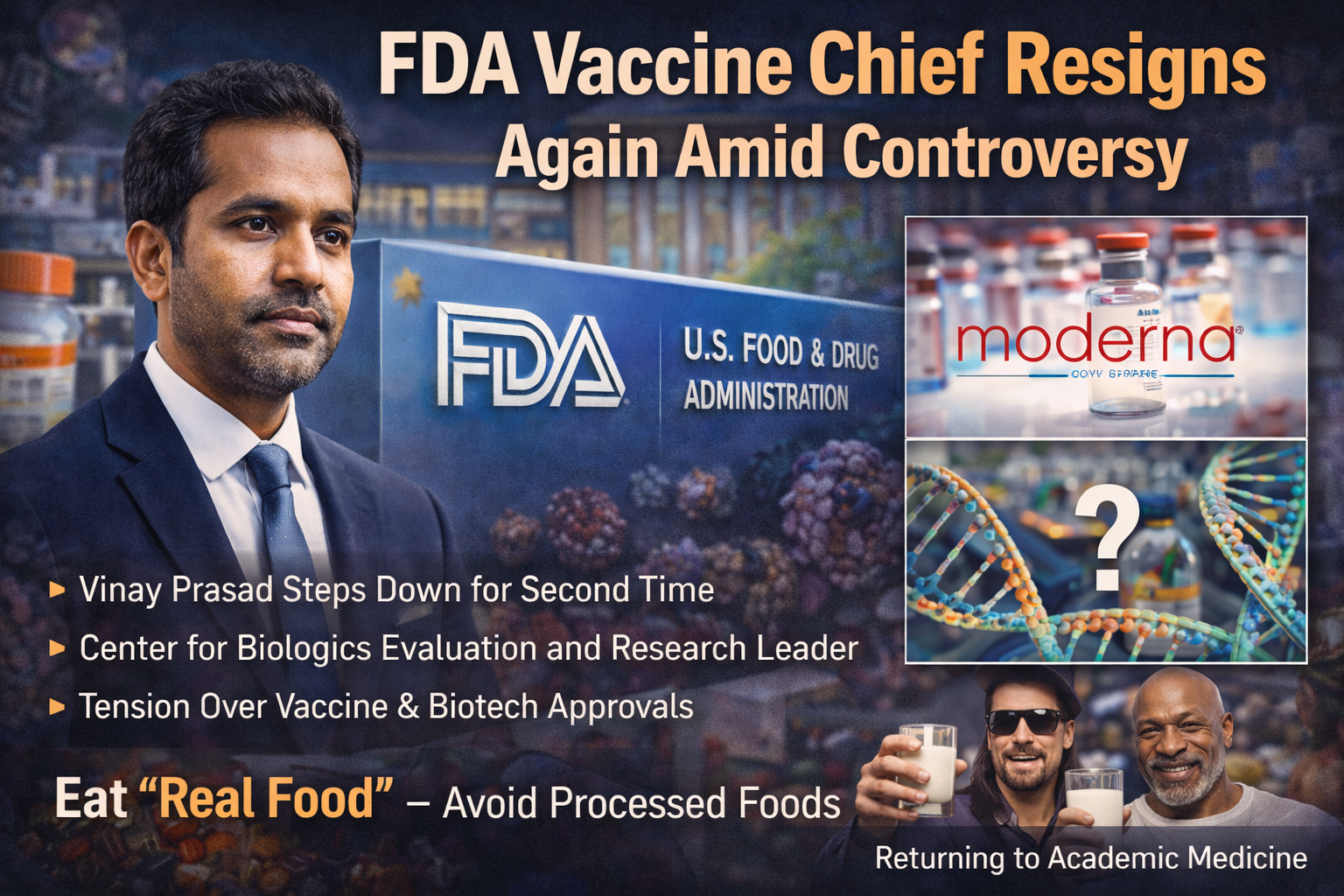
A new leadership is again being experienced in the United States Food and Drug Administration (FDA) following the second announcement by its senior vaccine regulator, Vinay Prasad, that he will resign the office. The growing trend has attracted the attention of the international medical community, pharmaceutical companies, and policymakers with a close interest in the agency in charge of approving vaccines and biologic drugs.
Prasad is the present head of the Center of Biologics Evaluation and Research (CBER) which is the section of the U.S. Food and Drug Administration (FDA) that reviews vaccines, gene therapies, blood products and other biologic treatment. He is also reported to be leaving the agency by the end of April and get back to academic work at the University of California, San Francisco, where he previously served as a physician-scientist.
The announcement is also another step in the uncertainty surrounding the FDA vaccine oversight division at the time when the biotechnology industry is fast growing and the policy of toxication of the population is also under the stringent review.
A Short but Eventful Tenure
The FDA has been characterized by a number of policy disputes and regulatory controversies during the tenure of Prasad. He was an outspoken figure on evidence-based medicine, and had a history of establishing himself as a critic of what he perceived to be a poor body of clinical evidence behind certain drug approvals.
Having joined the FDA, Prasad tried to bring more rigid scientific approaches to the process of assessment of some vaccines and therapies. Such decisions frequently put him at cross swords with pharmaceutical firms and patient lobbying organizations that were exerting greater pressure on experimental treatment approval processes.
Perhaps one of the most popular controversies was connected to Moderna, the biotechnology company that is recognized to develop mRNA vaccines. Prasad had first rejected the review of an experimental mRNA influenza vaccine citing that the clinical data provided was not adequate to be considered by the regulatory authorities. It was a controversial decision that brought debate in the pharmaceutical industry and the agency rethought the decision after consultation within the agency.
In the episode, it has been pointed out that there are stress points within the FDA in ensuring that their safety standards are upheld at all costs and at the same time the promising medical innovations get into the hands of patients as soon as possible.
Controversies With Gene Therapy Approval
In addition to vaccines, the biologics division of the FDA also regulates gene therapies and treatment of rare diseases approvals. Under his rule, his office was under fire in seeking further clinical trials on some of the therapies that treat rare neurological disorders.
Biotech companies that were engaged in creating cures to diseases like Huntington disease claimed that the additional trial procedures would be a setback in potentially life-saving treatments in the patients who had limited medical options. Meanwhile, regulators justified the action by saying that gene therapies should be thoroughly reviewed prior to approval due to the safety and efficacy of these therapies.
These conflicts also demonstrate how complicated the setting in which contemporary drug regulators have to work is, as the scientific prudence is to be contrasted with the pressing medical demands.
Political and Policy Dynamics
Prasad also worked at FDA during the period when there was increased political discussion around the subject of vaccines and regulation of health among the population. The policy of vaccinations has been a highly divisive issue in the United States after the COVID-19 pandemic.
In this background, Prasad developed more stringent requirements to some vaccine approvals and booster recommendations. Other professionals favored these actions because they felt that scientific rigor was being strengthened but others were concerned that abrupt change in regulations would confuse health care professionals and the general population.
The discussions about the policy were conducted with the Commissioner of FDA, Marty Makary, who affirmed that Prasad would still leave the office and wished him a goodbye in the field of regulatory science.
Market and Industry Reaction
The biotechnology industry was shaken by the news of the departure of Prasad. The change of leadership at the FDA is carefully tracked by investors and pharmaceutical companies as the regulatory decisions made by the FDA can lead to the substantial impact of the drug development schedule and financial markets.
After the announcement of the exit various biotech firms in the process of gene therapies and biologic drugs experienced a rise in investor activity. Analysts assume that the industry can have a more consistent regulatory environment in the future when a new leader is chosen to head the biologics Division.
Nevertheless, professionals observe that a change of leadership at leading regulatory bodies is the source of temporary confusion since new leaders may need time before they can set their priorities in policy-making.
Revival into Academic Medicine
Prior to his tenure in the FDA, Prasad was an academic physician. He was a hematologist-oncologist and a researcher who published many articles that assessed clinical trials and effectiveness of cancer drugs.
He also made headlines on the promotion of greater scientific proofs in the authorization of new medication. Numerous of his scholarly works were devoted to the necessity to have a more high-quality standards in clinical research and the necessity of better transparency in pharmaceutical studies.
Following his departure of FDA, Prasad is likely to go back to the University of California, San Francisco and continue with his research and teaching work. The possibility of his re-entry into the academic world can enable him to keep participating in discussions regarding drug regulation and medical evidence.
Transitional Leadership at the FDA
The FDA is yet to have a permanent successor to the position of head of the Center of Biologics Evaluations and Research. According to agency authorities, the agency will still have an interim leadership structure as a search to get the next director is undertaken.
The post can be regarded as one of the most powerful jobs in the global public health as the decisions made in the biologics division influence the distribution of vaccines, biotechnology innovations, and international standards of regulations.
With the transition that the FDA is undertaking, analysts feel that the agency will be concerned with keeping regulatory balance steady even as the agency still monitors the creation of novel vaccines and therapies.
The next vaccine chief will be keenly observed to the pharmaceutical industry, the healthcare givers and the patients. Scientific rigor, trust in the scientists and the accelerated speed of medical innovations that is constantly defining the future of healthcare globally will have to balance against this position.