
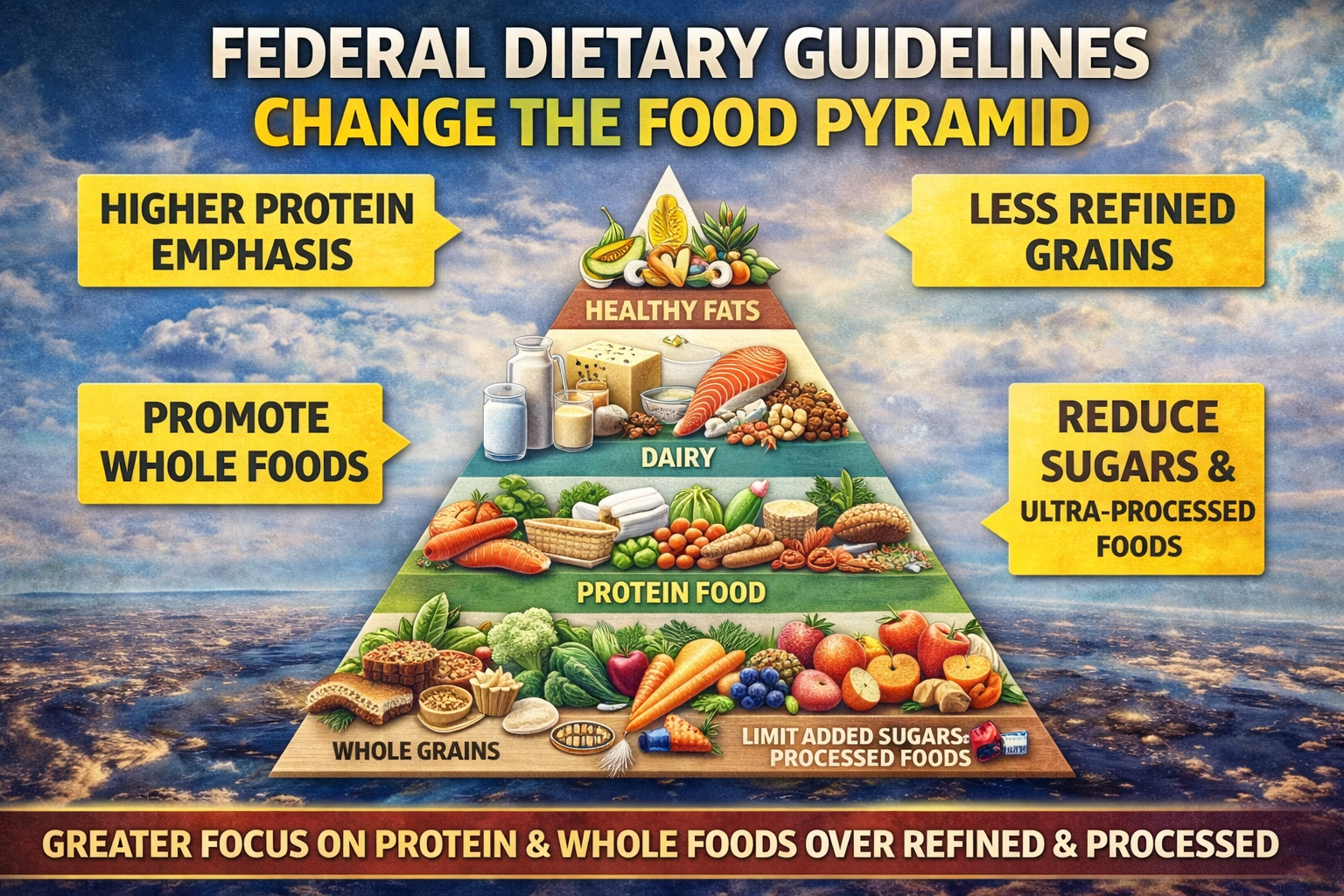
The federal government of the U.S. has recently released new Dietary Guidelines with a new version of the food pyramid. It is a major shift in national nutrition guidelines in decades. The new framework is an indication of a shift in the traditional dietary models by placing emphasis on whole foods and protein-based foods and less emphasis on grains and highly processed foods. The officials indicated that the changes are aimed at handling the increased cases of chronic illnesses in the nation, which are attributed to nutrition.
The new guidelines take into consideration the discoveries on the quality of food, metabolism, and nutrition and concerns that previous recommendations have not done enough to prevent the increase of obesity, diabetes type 2 diabetes, and heart disease.
A New Alternative to Organizing Daily Dining
The new food pyramid is quite unlike the others, which placed bread, rice, cereals and pasta at the bottom of the diet. The new version is founded on nutritious foods, including vegetables, fruits, high-protein foods, dairy, and healthy fats.
Whole grains are no longer the dominant part of a healthy diet, yet they remain a part of the diet. Refined grains and processed carbohydrates should be avoided, particularly where they do not supply a lot of nutrients and only some additional calories. The new building will encourage balanced foods, where emphasis will be laid on food quality as opposed to quantity.
More Pay More Attention to Adequate Protein
The new guidelines emphasized protein a lot. Adults are supposed to consume adequate protein during the day to maintain the well-being of their muscles, good functioning of the metabolism, and their overall health. The recommendations emphasize animal and plant-based sources of protein, including fish, poultry, eggs, beans, lentils, nuts, seeds, and dairy products.
The recommendation states that protein makes you feel fuller, it helps you maintain your blood sugar level steady and age well. Rather than instructing people on a specific diet, the guidelines emphasize flexibility, allowing the person to attain the required protein amount in a manner that is suitable to them, their culture and health objectives.
Strong Focus on Whole and Minimally Processed Foods
One of the main aspects of the new rules is that they focus a lot on consuming less ultra-processed foods. A combination of high amounts of added sugar, processed starches, sodium and fake ingredients, these kinds of foods are linked to a higher risk of chronic disease when consumed in high amounts and on a regular basis.
The guidelines advise Americans to consume more foods that are less processed by machines and closer to their natural state. Eating better can be achieved by cooking at home, buying fresh or frozen fruits and vegetables, and reading the labels of ingredients.
New Advice on Dairy and Fats
The new recommendations indicate that the perceptions of fats in the diet have been transformed among people. You are also supposed to consume healthy fats in foods such as nuts, seeds, avocados, and olive oil as a component of a balanced diet. These fats are said to be beneficial to the heart and assistance to the body in absorbing nutrients.
It is no longer the unanimous opinion of the population to recommend against the fatty dairy products. Rather, dairy is also considered to be a good source of protein and calcium, among other valuable nutrients. The guidelines emphasize moderation and balance, which are generally placed on the general eating habits rather than strict fat restriction.
Stricter Regulations on Added Sugars
The new regulations continue to pronounce that added sugars are one of the main issues. The recommendations advise Americans to reduce significantly on sugar, particularly soft drinks, sweets, and packaged food. Consumption of excessive amounts of sugar may cause weight gain, insulin resistance, dental problems and increased risk of acquiring a chronic illness.
The guidelines emphasize that reducing intake of added sugars will help improve your diet in general without losing vital nutrients, in particular when you substitute them with whole foods.
New Way of Drinking Alcohol
The new guidance considers the concept of alcohol consumption in a broader manner. To preserve their health in the long-run, the guidelines indicate that individuals ought to have as little alcohol consumption as possible rather than limit it daily. This action is informed by an increasing number of studies that alcohol consumption, even in small doses, can be detrimental to the health of some individuals.
The recommendations emphasize that people should make informed decisions and that individuals should also consider their health when they are consuming alcohol.
Impact on the population health programs and institutions
Most of the publicly available programs are affected by federal dietary regulations, including the military food systems, school lunch and breakfast rules, nutritional regulations of healthcare and social assistance programs, as well as programs financed by the government. The new food pyramid will most likely alter the way individuals organize their food, purchase and gain knowledge on nutrition throughout the nation.
It will require policymakers, teachers, healthcare workers, and food service workers to cooperate to do so. The adoption level of the rules in various communities will be determined by the ease of acquiring them, their price and their applicability in various cultures.
The Nutrition Community response
Since its publication, nutritionists and specialists in the field of health have been discussing the new recommendations. Videos and public opinion support the emphasis on natural food and eating less processed food as a measure in the right direction to address the long-term issue of nutrition. The necessity to personalize nutrition and not simplify dietary science is emphasized by others.
Although there are varying views, the majority of people concur that the quality of the food can be enhanced to reduce the chance of developing chronic illnesses, as well as encourage long-term health.