
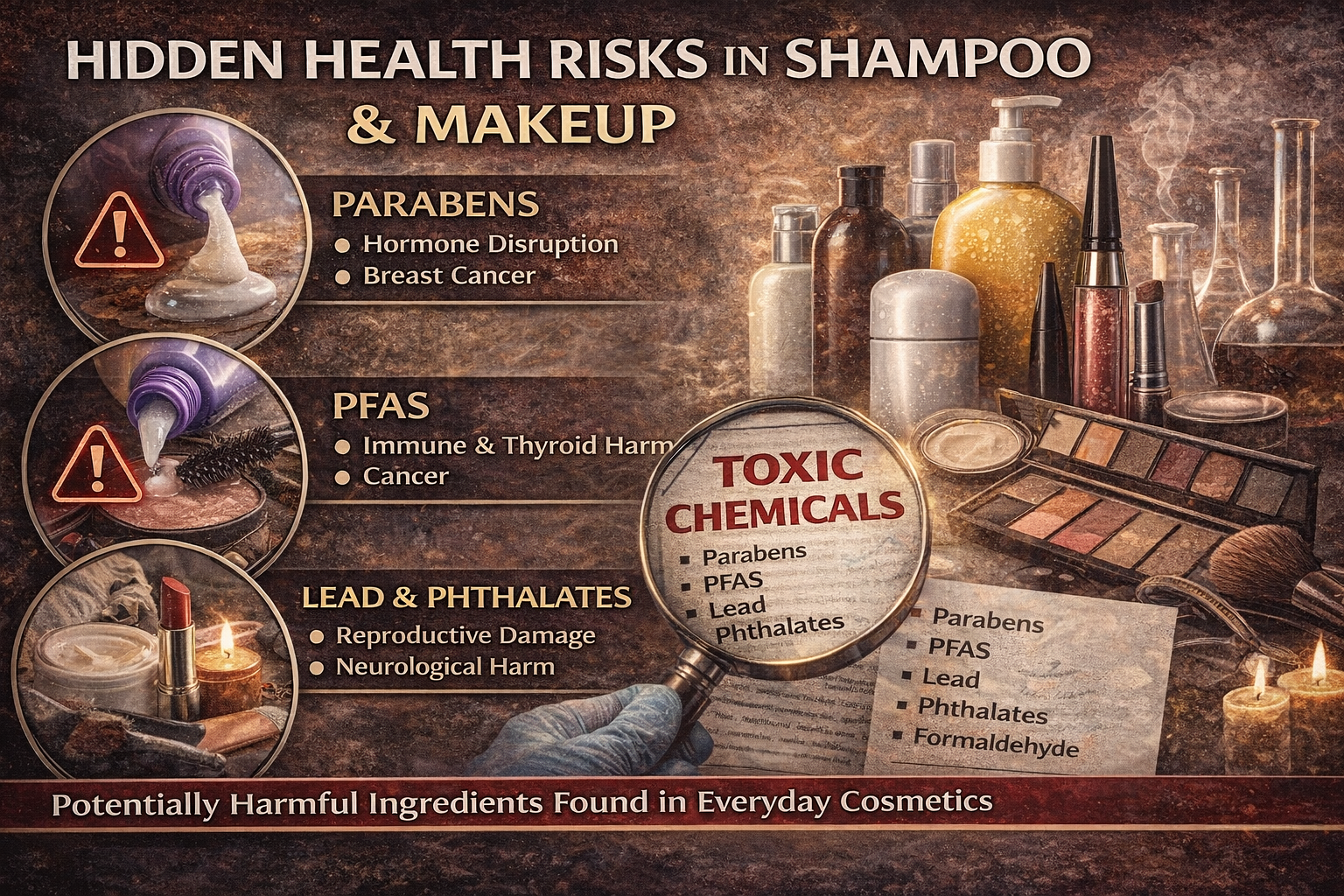
The majority of the population applies shampoo, lotion, deodorant, and makeup without taking into consideration what ingredients are applied every day. The recent study by Consumer Reports has exposed that most of the products that are popularly used in their beauty segment could be having some of the substances that are really harmful to their health. These chemicals have been associated with disruption of hormones, reproductive injuries, immune system and even cancer. Personal care and cosmetic products sold throughout the United States contain thousands of chemicals. Most of these ingredients are not thoroughly tested on their safety prior to being put into the products and this is a cause of concern as to what the long-term effects may be on the consumer who is taking a variety of products in daily life.
Regulatory Gaps Leave Consumers Vulnerable
The cosmetic regulations of the U.S. have not changed much in decades. Although the Food and Drug Administration (FDA) will make cosmetic manufacturers register their products and disclose ingredients, this method will not ensure that all ingredients will be well tested to be safe before they are put on sale. Cosmetic products are not pre-tested in the market to check safety as is the case with pharmaceuticals. A lot of personal care products contain the phrase fragrance on its labels. But this word has the ability to conceal dozens or even hundreds of untold chemicals. A group of these unexposed chemicals is that of the phthalates which is linked to the disruption of the endocrine system. Endocrine-disrupting chemicals disrupt the hormone system of the body, which may have implications on the reproductive health, development of the fetus, and long-term health.
Ingredients of Concern
Consumer Reports has proposed a number of categories of ingredients that are commonly used in personal care and raise a number of health issues. Phthalates are frequently concealed in the fragrance category and are applied to lengthen the scent duration in shampoos, lotions, and deodorants and to enhance the feel in these products. Research indicates that the chemicals could disrupt reproductive hormones, lower fertility, and lead to developmental problems in children. Parabens are used as the preservatives in various cosmetic products such as shampoos, body washes, and makeup. There have also been studies that parabens may resemble estrogen and this may cause reproductive damage and lead to the development of some cancers. The exposure to parabens is very common since it is contained in diverse products that people use every day. PFAS is the so-called forever chemicals that are applied to products to make them water- and stain-resistant. They are highly stubborn within the environment and may be accumulated in the human body.
PFAS has been reported to cause immune system suppression, thyroid problems, liver damage, and some cancers. Most PFAS chemical substances in cosmetics are not regulated and this has also posed a great concern regarding safety. Hair dyes, eye-makeup, and a few lipsticks contain coal tar dyes. They may induce allergic skin reactions and in high-level exposures or occupational exposures, may raise the risk of cancer. Consumers might not know about these dyes as they are usually contained in a generic code as opposed to chemical name. It can also happen that some of the products are contaminated with harmful substances like lead, benzene, and mercury. These substances are not added deliberately but may occur as a result of manufacturing processes or as a result of contamination of raw materials. Lead is a popular neurotoxin, benzene a carcinogen and mercury can influence the functioning of the nervous system.
Common Product Examples
Consumer Reports has put to the test the products that are readily available in the stores and have disclosed the concealed dangers in the ordinary product. Even so-called natural or sulfate-free conditioners and shampoos include parabens or phthalates. PFAS chemicals may be used as foundations and concealers in order to be long-lasting and water-resistant. In a different study synthetic braiding hair, a type of hair commonly used in salons and at home, was found to contain carcinogens in all cases that were tested, and was found to contain lead in many cases. The following examples indicate that exposure to chemicals is not confined to the high-end or the industrial products but happens in ordinary and everyday products that can be found at supermarkets or drugstores.
Challenges in Labeling
Even mindful customers probably cannot escape the harmful chemicals since the labeling system allows firms to make some of the ingredients undisclosed. Such words as fragrance, flavor, proprietary formulas may hide dozens of chemicals, and the consumers will not know what they apply. Consumer Reports suggests using ingredient-checking apps and databases, including Clearya and SkinSafe that enable a shopper to scan a product and determine the potentially damaging chemicals. Such sites give ingredients ratings and provide safer alternatives. Product label checking, putting off generalized terms, and utilizing online databases may assist consumer make decisions and minimize long-term exposure to unhealthy chemicals.
Practical Advice for Consumers
Consumer Reports recommends embarking on products that are most frequently used. Shampoos, lotions, deodorants, and makeup are used daily items that cause the largest contribution to chemical exposures. The first step is to choose the products that are written in the phthalate-free, paraben-free, and formaldehyde-free. Shopping in well-known retailers will help in minimizing the chances of fake or contaminated products. Another factor to be considered by consumers is rotating or reducing the use of products that contain high-risk chemicals to reduce cumulative exposure. The shift to products with a good transparency of ingredients where a chemical is listed separately will help consumers to escape potentially harmful substances more efficiently.
Industry Response
The cosmetic makers insist that their goods are safe according to the standards that are already in place and that chemical concentrations are safe. Most of the companies also claim to keep track of new science and that they will willingly reformulate a product where there are safety issues. In spite of these arguments, health campaigners in the public would stress the fact that no one is aware of cumulative and long-term effects of various chemicals in various products. Stricter laws which provide pre-market safety testing and full disclosure of ingredients are also demanded by the regulators, consumer groups and researchers. The concern over federal regulatory inefficiencies is manifested in state-level legislation like the legislation outlawing dozens of harmful chemicals used in the manufacture of personal care items in California. Such laws are meant to help provide a safer choice to the consumers and also to make companies reformulate products with less harmless ingredients.
Scientific Perspective on Exposure Risks
It should be mentioned that not all products that contain these chemicals will damage the person at once. There has been limited research on the association between cosmetics and chronic conditions like cancer and this is mainly because it is challenging to produce long-term low dose exposures. Some substances, though, including the heavy metals or the benzene, are known to be toxic even in low doses and may build up in the body in case of repeated exposure. The reactions of people with sensitive skins, or those who already have underlying conditions, or have unique sensitivities, to some cosmetic ingredients may have no effect on other people. Research efforts also note that concomitant exposure to a variety of products could lead to an event of increased adverse health effects and thus the need of simplicity to select the right products and to be aware of ingredients content.