
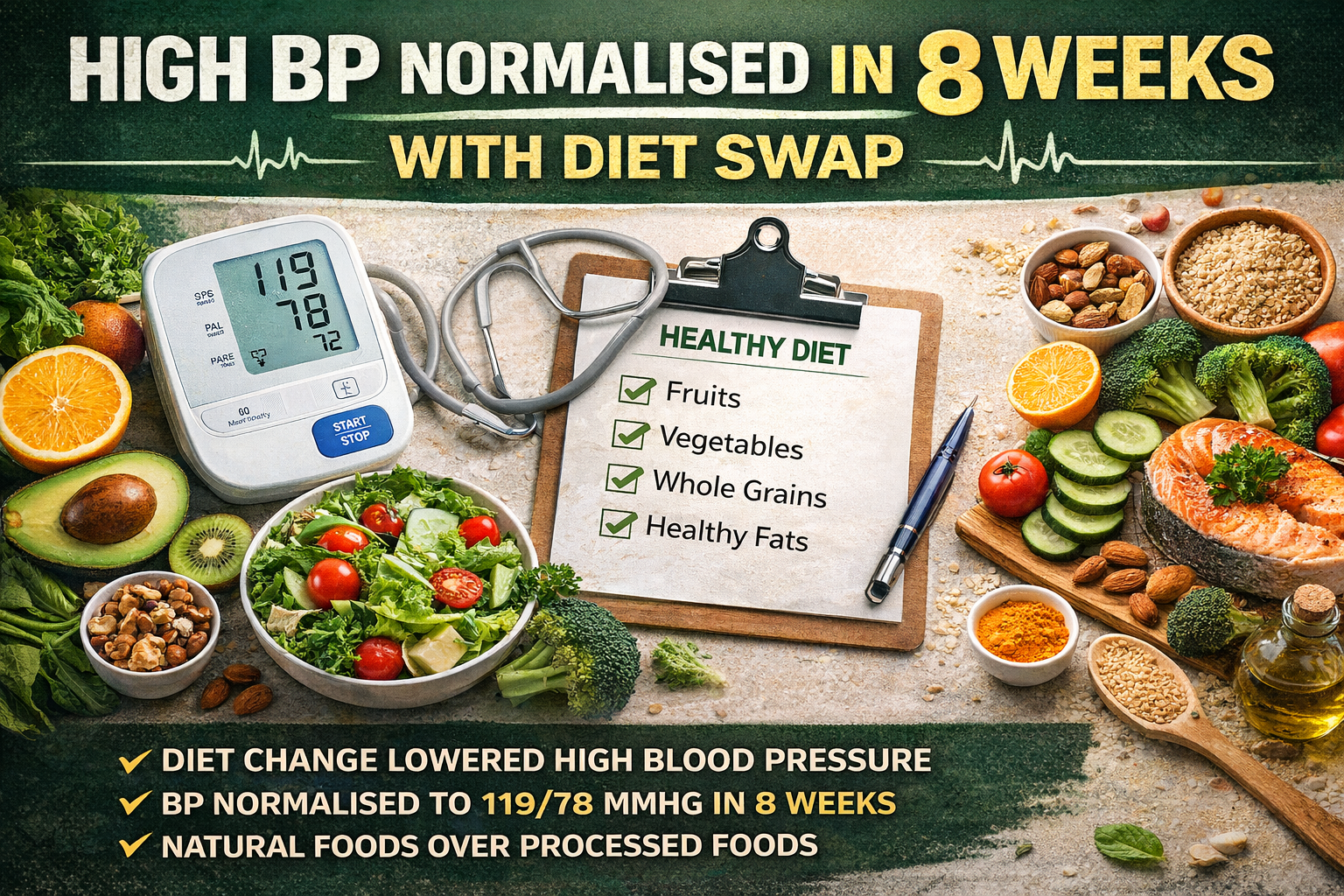
An article on health posted by The Indian Express recently reveals how a basic change in diet led to the normalisation of high blood pressure in just eight weeks. The subject matter of the case is a 42-year-old adult working professional who had been reporting higher-than-normal blood pressure levels in spite of leading what he perceived to have been a fairly healthy lifestyle. His readings were 140/90 mmHg, which is the initial level of hypertension. Despite working out and being active all the time, his blood pressure was high, and it was not going down.
This seemed to be the turning point as he sought the advice of an expert in nutrition who critically looked at his daily food intake. Although he was not overeating, the quality of what he was eating showed that he was following a common trend in urban residents: the use of convenience foods, processed snacks, refined carbohydrates, and restaurant meals. These eating habits, convenient as they were, were making him very high-blooded.
Learning about the Hidden Causes of Everyday Meals
The daily routine of the man was breakfast consisting of toast and butter, canteen or take-out lunch, packaged evening snacks, and dining out at the restaurant two or three times a week. Superficially, such a diet did not appear to be excessive. Nevertheless, it contained a lot of hidden sodium, fats, and refined sugar and low amounts of fiber, potassium and essential micronutrients.
One of the dietary causes of high blood pressure is excess sodium. It contributes to the retention of more water in the body and therefore increases blood volume and exerts additional strain on the walls of arteries. With time, this chronic tension may cause long-term hypertension. Ready-made meals, bakery products, processed meat products, sauces, and packaged food have much more salt than what is prepared at home.
Also, refined carbohydrates and sugars may have an indirect impact on blood pressure, enhancing weight gain, insulin resistance and systemic inflammation. A diet that is not balanced with fruits, vegetables, whole grains, and lean proteins denies the body nutrients that automatically help in balancing the vascular functions.
The Easy Diet Replacement That Changed It
The nutrition expert did not prescribe drastic restrictions but rather gave realistic and sustainable changes. It was emphasized on the quality of food instead of the tremendous reduction of calories.
This person substituted processed breakfast with balanced meals that incorporated whole grains, protein, and fresh fruits. Lunches were changed to homemade foods that contained a sufficient amount of vegetables, pulses, and moderate amounts of carbohydrates. Uses of evening snacks were also altered, where packaged chips and biscuits were replaced by fruits, nuts or homemade versions. Dinners in restaurants were minimized, and the amount of salt consumed was controlled instead of being abolished.
Notably, the method did not presuppose absolute elimination of salt because its over-restriction may also lead to stress in the body. In its turn, the focus was on the minimization of processed sodium in the background and balanced seasoning in freshly cooked products.
After two weeks, he complained that he felt lighter and less bloated. During the fourth week, his blood pressure levels started decreasing. His blood pressure had normalised at the eight-week stage without any further changes in medication.
The Importance of a Nutrient Balance
Studies have always demonstrated that heart-healthy diets are made up of fruits and vegetables, legumes, whole grains, and thin proteins. These foods are also a source of potassium, magnesium, calcium and antioxidants, which are nutrients that have been known to relax blood vessels and enhance blood circulation.
Lifestyle changes are still the initial line of defense against hypertension in accordance with the recommendations of the American Heart Association. The dietary modifications may have a great impact in reducing systolic and diastolic blood pressure, particularly among those that are suffered by mild and moderate cases of hypertension.
The importance of potassium in the body is to maintain the sodium level. Magnesium helps in vascular tone and relaxation of muscles. Fiber assists in controlling cholesterol and enhancing metabolic conditions. The consistent intake of all these nutrients in day-to-day meals produces a protective effect on cardiovascular functioning.
Mistakes that are likely to be made when treating high blood pressure
There are a lot of people who try to control their blood pressure and commit errors that negate their efforts. Among the typical mistakes that are made is that people only concentrate on lowering salt intake as per its appearance, but not processed foods. Although we may restrict intake of table salt, the sodium in packaged foods may be present in a hidden form, leading to higher than recommended daily intake.
The other error made is extreme crash diets. Extreme starving may cause hormones that induce stress, including cortisol, which will, in turn, raise blood pressure. Being sustainable does not mean starving, but having a balanced diet.
Some overestimate the effects of exercise and underestimate the effects of diet. Exercise is necessary, but it cannot entirely replace a diet that is always rich in sodium, trans fats, and refined carbohydrates.
The Urban Lifestyle Factor
Life in the city usually promotes the consumption of convenience food because of time limits and hectic work schedules. Quick solutions can be offered by office canteens, food take-out and packaged snacks, which in many cases negatively affect the quality of nutrition.
Stress also plays a role. Comfort foods, sweetened drinks or salted snacks are some of the coping mechanisms that busy people engage in. Stress itself, when it is chronic, leads to increased blood pressure via the hormonal pathways. The risk is increased when it is combined with poor dietary choices.
The case mentioned in the report represents a greater population health issue. Hypertension is not only a problem in the older population but also a growing trend among the younger adults. The combination of a sedentary lifestyle, excessive use of screens, unpredictable sleep, and an unhealthy diet predisposes a group of risk factors, which hastens the load on the cardiovascular system.
The Wider Health Effect of Dietary Change
Although the patient had the primary objective of blood pressure control, there were other positive effects. The dietary change was accompanied by improved digestion, increased energy levels and slow stabilization of weight. Such adaptations suggest that the blood pressure was improved as a broader metabolic reestablishment.
Good nutrition habits usually have trickle-down effects. Enhanced gut performance, better blood sugar control and decreased inflammation play a role in cardiovascular health. In the long run, the effects reduce the risk of heart disease, stroke, and complications of kidney diseases.
Noteworthy, the eight-week period proves that significant changes do not take years. Regular eating changes have the capability of affecting quantifiable health modifications in a comparatively brief duration.
Monitoring and Medical Guidance Remain Essential
Although diet may be of great importance when it comes to blood pressure, regular monitoring is important. Patients with high blood pressure must involve medical care providers first before undertaking significant changes, especially when using medication.
In certain situations, lifestyle modification can help to decrease the dosages of medications prescribed, yet abruptly withdrawing prescribed medications is not recommended without medical assistance. Nutrition, physical activity, stress management, and regular check-ups are the most effective and safest approaches to take.