
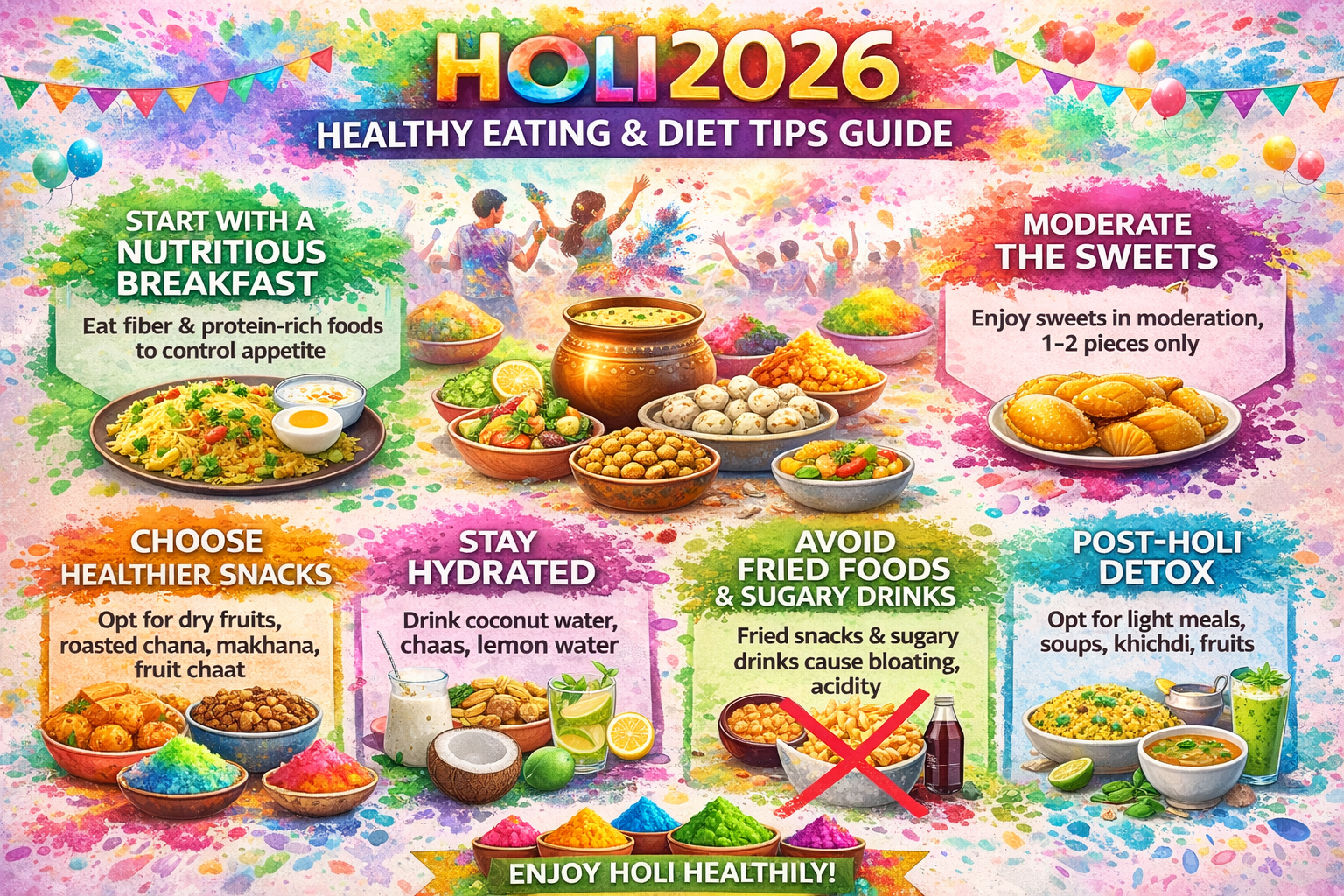
The festival of colours, or holi is one of the most vivid and happy events in India. The festival is also characterised by the high quality of sweets, snacks, fried foods and drinks given in connection with the colours, music and togetherness. Although it is a celebration to partake in the traditional delicacies, it is better to eat heavy and sugary food in moderation as it poses the risk of causing digestive unease, acidity, bloating and fatigue. With Holi 2026 near-at-hand, health professionals recommend a balanced dietary approach in order to ensure that the celebrations are not dull.
The significance of Digestive Care in Holi
The celebrations of Holi usually start early in the morning and go on. Exercise, sun, and eating patterns and eating too much food can upset the digestive system. Fried foods, sweets with sugars and fatty drinks slow down digestion and can bring about gastric complications.
Being digestively healthy during Holi not only means escaping discomfort but also ensures an appropriate level of energy. Conscious eating will make sure that there are no health issues that are caused by celebrations after they are over.
Breakfast Like a Queen
An error that many people usually make is skipping breakfast during Holi. Most individuals go out to play with colours without having proper meals, only to binge later on. A healthy breakfast ensures that the appetite is controlled and the level of sugar in the blood is checked.
Protein and fiber-rich foods that can be eaten as a good breakfast on Holi might be vegetable poha, upma with nuts, besan chilla with curd, boiled eggs, multigrain toast, or oats with fruits and seeds. The foods create lasting energy and do not lead to overeating in the later part of the day. It is better not to begin the day with sweets or deep-fried products, as they may make the person feel heavy and slow.
Rational Snacking at Parties
Holi parties are known to have a large variety of snacks, such as namkeen mixtures, fried pakoras and chips. Rather than just avoiding snacks, find less heavy options and moderate the amount to eat.
Healthier options are roasted chana, makhana (fox nuts), peanuts, dry fruits, fruit chaat and baked snacks. It is more appropriate to eat in small portions at frequent intervals than to eat much at once. Slow consumption of food also contributes to digestion and avoids overeating.
Savor vintage Cakes in Moderation.
A Holi is incomplete without gujiya, malpua, laddoo and other sweet dishes. These common sweets are rich in sugar, ghee and refined flour, which means that they contain high amounts of calories and are hard to digest.
Moderation is key. You do not have to sample numerous sweet pieces, but rather one or two. Where feasible, use homemade ones made using less sugar or more healthy products like jaggery, dry fruits and whole wheat flour. Consumption of sweets at the beginning of the day, as opposed to the end of the day, also assists in digestion.
Be Mindful of Festive Drinks
Holi is popular with thandai and other celebratory drinks. Although conventional thandai can be healthy with nuts and spices, commercial or highly sweetened thandai products can have too much sugar and other artificial additives.
Select new drinks that are prepared with controlled amounts of sugar. Good substitutes for fresh fruit juices and buttermilk are coconut water, lemon water, and fresh fruit juices and buttermilk. It is also important to remain hydrated, especially during Holi, as celebrations in the open air may cause dehydration.
In case of drinking cold drinks, do not drink them directly after large meals because this is likely to disrupt digestion.
Foods to Avoid During Holi
- Some foods may also pose a risk of digestive issues during the festival:
- Deep-fried foods: Surplus oil slows down the digestive process, which may result in acidity and bloating.
- Too much sugar: When consumed in large amounts, sugar adds to blood sugar levels and slows energy.
- Very hot meals: Spicy food can cause irritation of the stomach lining.
- Unhygienic street food: Street food that has come into contact with dust and contamination due to open celebrations can cause foodborne diseases.
- Night-time fatty food: Consuming heavy food during the night can disrupt sleep and digestion.
- One should not have a lot of heavy dishes on the same day, as it will overload the digestive system.
Hydration Is Essential
People in Holi are more concerned with food than water. Outdoor activities with colours expose one to a greater risk of being dehydrated. Dehydration may slow down the digestion process and trigger a headache or fatigue.
Take a lot of water during the day. Herbal teas, mint or lemon-infused water, and chaach (buttermilk) can help in the digestive system and keep a person hydrated. Caffeinated drinks and sweetened drinks should also be kept to a minimum.
Eating Too Much? Digestive Remedies
Nevertheless, precautions do not always ensure that overindulgence cannot occur. In this situation, the discomfort can be alleviated with the help of simple remedies:
- Lemon water, which is mixed with warm water, can help to stimulate digestion.
- Ajwain (carom seeds), together with a pinch of black salt, can help relieve gas and bloating.
- A digestion can be enhanced by the use of Fennel seeds (saunf) post-meals.
- A brief stroll following a large dinner is in favor of easy digestion.
- Lying down is not a good idea soon after eating, and this can aggravate the acidity.
Special Treatment of the Health Conditions
Diabetics, heart disease, hypertension and chronic digestive illnesses are one group that should take special care. Sweets and salty snacks contain a lot of sugar and can interfere with medical conditions.
Low-glycemic or sugar-free desserts are available to diabetic people. Salty snacks should be restricted for people who have hypertension. The dietary options can be controlled with the assistance of a consultation with a healthcare professional prior to the festival.
Maintain Physical Activity
Holi is a natural exercise of dancing, walking and playing. Exercise in moderation assists in the burning of calories as well as enhancing digestion. Nonetheless, fatigue can be brought about by over-exercising and a lack of hydration.
Moderate exercise is the key to balancing the food with the digestion of the festive excesses, since the body can absorb the feasts better.
Post-Holi Detox and Recovery
Many individuals are lethargic after eating a lot of food during Holi. To make the body recover, it will be possible to resort to a simple, light diet for a day or two. Add khichdi, soups, steamed vegetables, fresh fruits and lots of fluids.
Do not crash diet after the post-festival. Rather, slowly rebuild a healthy eating habit and physical exercise.
Holi with Health in Mind
Holi is a festival of colour, happiness and unity. Food is also a part of the culture, which unites families and friends. Nevertheless, conscious eating makes it more enjoyable because it helps to avoid unpleasant feelings and gives one energy.
Healthy eating, keeping hydrated, avoiding fried and sweetened foods, and being temperate can help one celebrate Holi in 2026 without damaging the digestive system. This will make the celebration lively and stress-free since it is a balanced approach.