
Coffee is a part and parcel of the morning routine of millions of people. Its caffeine content brings about increased energy, enhances alertness, and concentration during the day. Nevertheless, recent debates by health experts indicate that some consumers might be consuming more caffeine than they probably know. One beverage could also provide much of the recommended daily intake of caffeine, as coffee drinks get larger and more concentrated.
Health experts underline that caffeine can be considered relatively safe, provided that one takes it in moderation. Nonetheless, overconsumption may lead to undesirable side effects, especially for those people who are allergic to stimulants. Due to this fact, it has become more important to know the amount of caffeine in daily drinks.
Caffeine Content Varies in Different Coffee Beverages
The large difference in the caffeine content in the different beverages is one of the biggest causes that makes people overestimate their caffeine consumption. The quantity of caffeine in a cup of coffee varies depending on the nature of coffee beans, the method of coffee brewing, and the size of the cup.
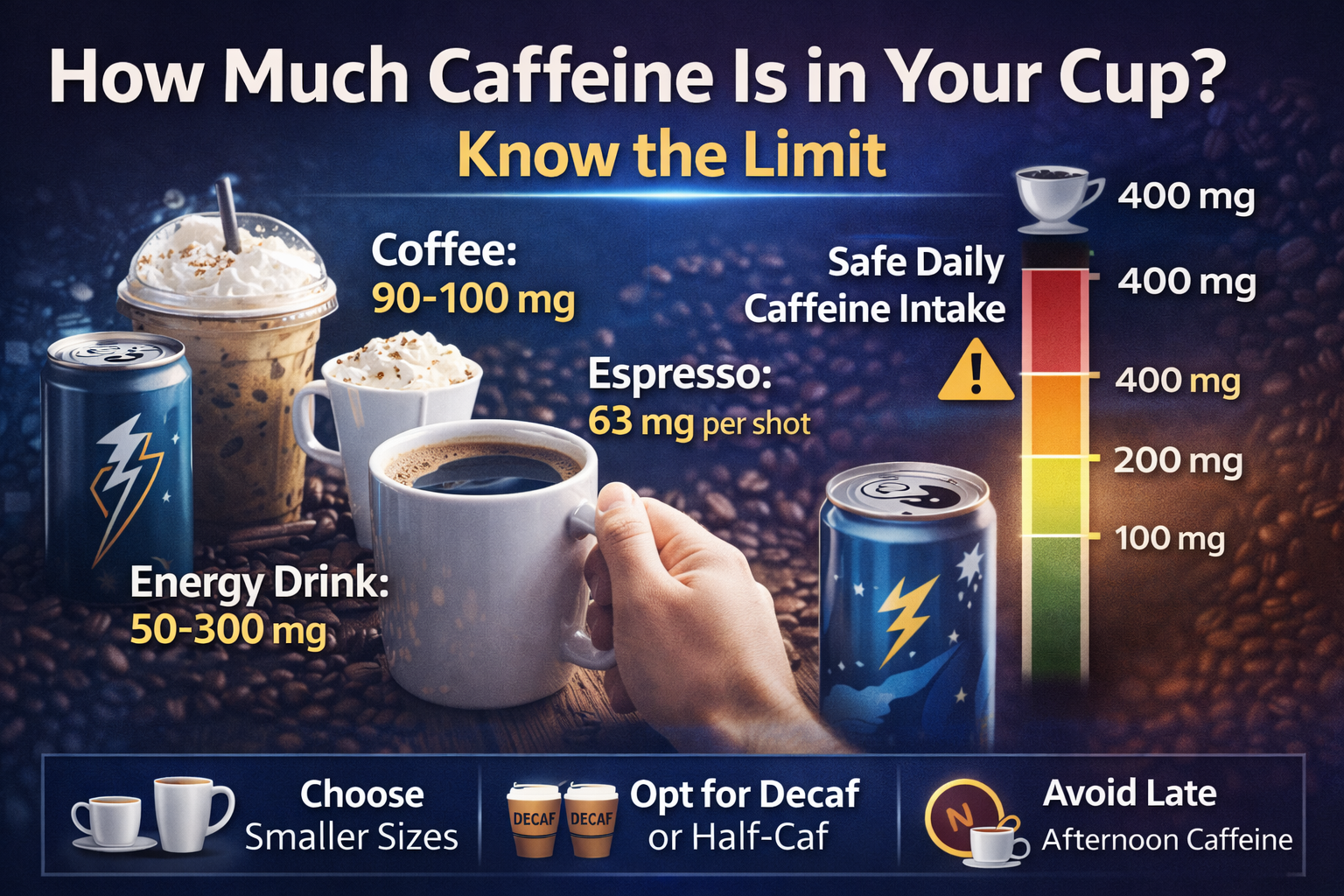
Approximately 90 to 100 milligrams of caffeine is commonly found in a usual 8-ounce coffee cup that is brewed. Nevertheless, coffee shops offer very large beverages than this conventional serving size. Cold brew and specialty coffee drinks may have much more caffeine since they brew with more vigor and higher quantities of coffee grounds.
Drinks based on Espresso can also be very varied. One shot of espresso can have less caffeine than a regular cup of coffee, yet drinks that have more than one shot of espresso can add up to very high levels of caffeine.
Suggested Maximum Caffeine Intake
Most of the healthy adults are usually advised by health organizations to take up to approximately 400 milligrams of caffeine daily without negative aftereffects. This is about the amount of a few cups of regular coffee, though, of course, it will be a different number depending on the strength of each of the drinks and the size.
Some population groups are recommended to take less caffeine. As an illustration, pregnant women are usually advised to reduce the consumption of caffeine to approximately 200 milligrams per day. There are also those individuals who are inherently more susceptible to caffeine and would have side effects even in lower doses.
Knowledge of these advised limits has the potential to guide consumers to make improved decisions regarding the amount of caffeine taken daily.
Potential Impact of High Caffeine Consumption
Moderate intake of caffeine may have some benefits, e.g., enhanced alertness and concentration, but excessive intake of caffeine may produce some unpleasant effects. The side effects are common and include nervousness, fast heart rate, restlessness, and stomach pain.
The other frequent problem related to high caffeine consumption is insomnia. Consumption of caffeine in the afternoon can disrupt the quality of sleep and make it difficult to sleep at night. In the long run, insufficient sleep may have implications for health status and well-being.
Others can also get headaches or feel irritated when they take large quantities of caffeine on a regular basis or when the quantity is suddenly cut.
Hidden Sources of Caffeine
Most individuals think of caffeine and only think of coffee; however, it can also be found in other types of food and in other types of beverages. Caffeine is present in different concentrations in tea, energy drinks, soda and chocolate. Besides that, some medicines and dietary supplements also contain caffeine.
Energy drinks specifically have become a big contributor to the consumption of caffeine. The amount of caffeine in some of these drinks is comparable to that of a number of cups of coffee. Due to these other sources, people might take more caffeine than they would have anticipated on a daily basis.
Workable Ideas for Cutting Caffeine
The specialists suggest that there are some strategies that people should implement in order to decrease their caffeine intake. Among the easiest solutions is the option of smaller drink sizes. To reduce caffeine intake, all that is needed is to order a smaller coffee, and people will still be able to enjoy their favorite drink.
The other useful tip is that of switching to partially caffeinated or decaffeinated coffee. Blending regular and decaf coffee will help to cut down on caffeine content slowly, without causing such a drastic alteration in flavor.
Sleep issues can also be avoided by restricting the amount of caffeine intake to earlier hours in the day. Substituting some of the caffeinated drinks with water, herbal tea, or other non-caffeinated beverages may also lessen the total amount of caffeine.
With a little change in their daily habits and being more conscious of the amount of caffeine in their body, consumers can have a balanced approach to caffeine use and continue to consume their favorite beverages.
Significance of tracking Daily Caffeine Consumption
Daily caffeine consumption is also necessary to check the overall health and avoid the adverse outcomes of excessive use. It is common to hear about many individuals consuming coffee, tea and energy drinks during the day without taking notice of how fast the caffeine content accumulates. One big cup of coffee or specialty beverage can have a substantial amount of caffeine that is recommended to be taken daily. The sugar consumption can easily surpass the harm when it is used in combination with other caffeinated products like soda, chocolate or energy drinks.
Knowledge about the caffeine content of caffeine in various drinks can make people make better choices. Simple ways to be informed might include reading labels and paying attention to the amount of the serving and how various brewing techniques can impact the amount of caffeine in the beverage. As an illustration, cold brew coffee or beverages with several espresso shots can have substantially greater amounts of caffeine than a regular cup of coffee.
The moderate consumption of caffeine can also help to sleep, decrease anxiety, and avoid such effects as restlessness or headache. Professionals tend to suggest that one should cut down on caffeine intake in the later hours of the day so as to prevent sleeping difficulties. Following the daily consumption and implementing minor changes, one will be able to still be able to consume caffeinated drinks and reduce the risks of poor health and retain better control of their health as a whole.