
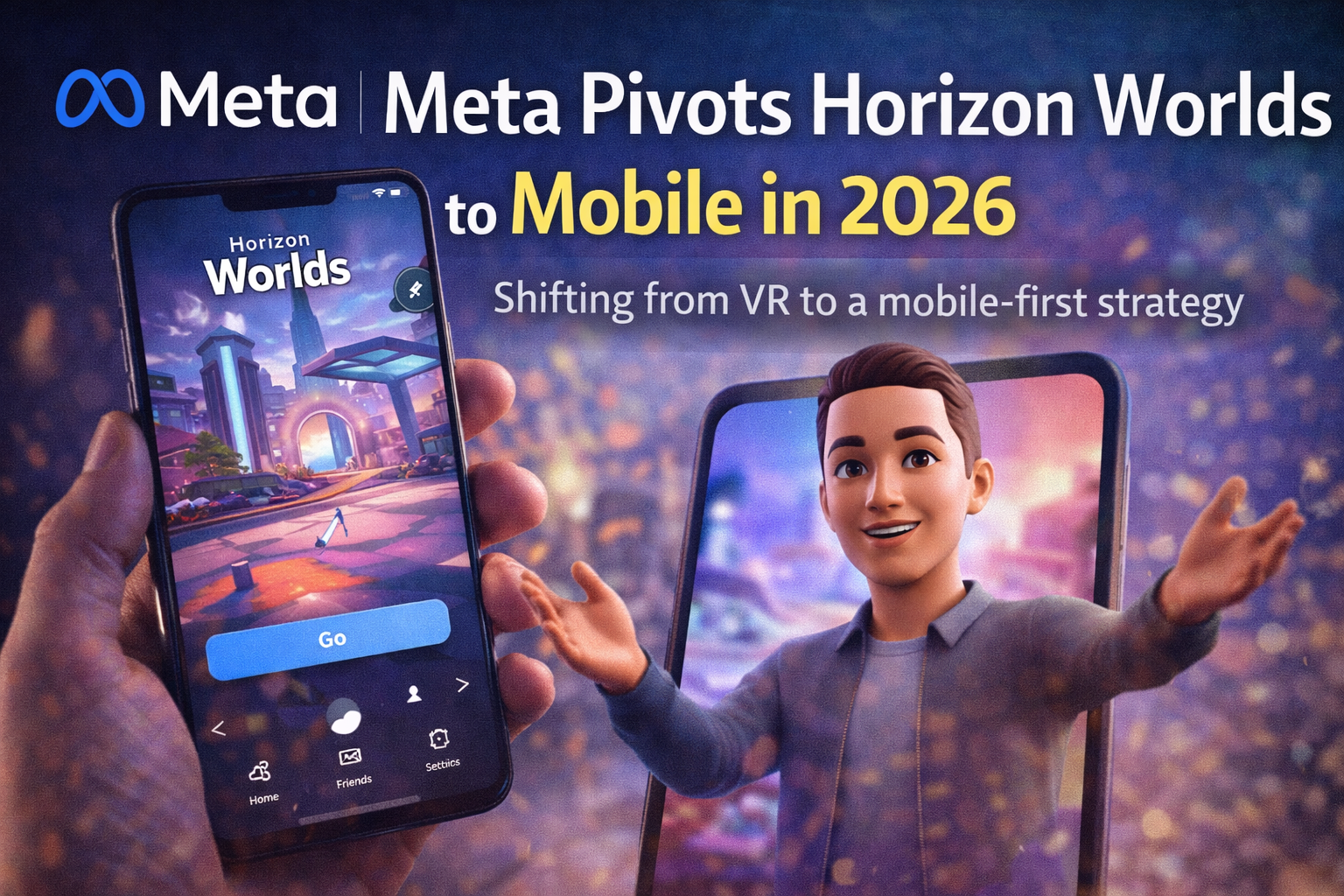
Meta Platforms has resolved to transform its metaverse approach considerably by aligning Horizon Worlds as a mobile-first platform rather than a principle-based virtual reality platform. This action is a significant change in the direction of the company that was previously advertising VR headsets as the primary access to the metaverse.
Over several years, Meta worked on investing in the world of virtual reality. The second step in the internet development, CEO Mark Zuckerberg referred to the metaverse as a space where individuals would work, socialize, and entertain themselves in digital worlds in virtual reality, in 3D. However, the user numbers in VR have not been so prominent, which makes the company reevaluate its long-term strategy and make Horizon Worlds more user-friendly, enabling users to use smartphones and tablets to join it. Unlike the case of having to buy the special VR equipment, people will access the digital worlds using the devices they already have.
Background of Horizon Worlds
Meta released Horizon Worlds as its star social VR platform. It enabled users to make their own avatars, create interactive worlds, host events, and interact with others in the virtual worlds. The platform had a tight integration with the VR devices line of Meta, particularly with the Quest ones.
The concept was to develop a complete immersion where one could feel a part of a common digital world. Meta was hoping that this would be the core of social interaction over the internet in the future. Nevertheless, adoption was not increasing as fast as it was anticipated. A lot of users who bought VR headsets decided to spend their time on third-party games and applications instead of spending time on Horizon Worlds. This posed a problem to Meta since its own social platform was failing to become the leading activity in its hardware ecosystem.
Financial Pressure from Reality Labs
Financial pressure is one of the primary causes of the mobile change. Reality Labs is the VR and augmented reality division of Metawar, which has registered huge financial losses in the last couple of years. Although the company has made billions of dollars in research, development, hardware manufacturing, and software development, the money generated by VR products and metaverse services has failed to cover the costs. Such a disproportion has compelled the leadership at Meta to cut costs and concentrate on areas that can bring more returns.
Meta has restructured teams and cut down on some projects as part of cost-cutting efforts and reallocated resources to mobile and artificial intelligence projects. This firm is looking at developing a more scalable and sustainable digital ecosystem.
Why Mobile Platforms Offer Greater Potential
VR hardware does not offer the same level of audience as mobile technology. Millions of users are using smartphones every single day, whereas the number of people owning VR headsets is very small. This approach will reduce the entry barrier because by turning Horizon Worlds into a mobile-first model, Meta will be able to attract a larger and more diverse user base. The user will not have to spend much money on buying extensive equipment or mastering VR controls. Rather, they just need to download an app and start exploring virtual worlds at once.
The shift will enable Meta to place them in direct competition with other successful platforms like Roblox and Fortnite. The popularity of these platforms has been ensured by their ease of use and the fact that they promote user-generated content. With the implementation of a similar accessibility model, Meta will be able to grow the number of users and the duration of their stay on the platform.
Integration with Existing Social Media Services
The other benefit of the mobile-centered strategy is that it will help to bridge the gap between Horizon Worlds and other social media that Meta already has. Given Facebook and Instagram, which Horizon Worlds can promote directly to millions of users is already provided by the Meta platform.
The integration of mobile devices has facilitated the sharing of content, friending and navigation through applications. As an illustration, a person who visits a social media site may easily get into a virtual world via a direct connection. Such smooth integration of social networking and 3D experiences may intensify user engagement. Meta can develop Horizon Worlds by building on the established ecosystem without depending on the sale of VR hardware only.
How the Mobile Version Will Function
Under the updated strategy, Horizon Worlds will continue to support VR, but mobile devices will become the primary development focus. The mobile version will likely feature simplified graphics compared to full VR immersion, but it will emphasize accessibility, social interaction, and creative tools.
Users will still be able to create avatars, design environments, and join events. However, the experience will be adapted to touchscreen controls rather than motion-based VR controllers.This approach allows Meta to maintain its long-term interest in immersive technology while focusing on user growth through mobile access. It also reduces development costs compared to building complex VR-exclusive experiences.
Impact on Virtual Reality Development
Although Meta is shifting toward mobile, it has not completely abandoned VR. The company continues to produce VR headsets and support third-party developers who build VR content. However, VR is no longer positioned as the primary entry point to the metaverse.
This shift signals a more balanced strategy. Instead of depending heavily on hardware adoption, Meta is expanding into software experiences that work across devices. VR may remain important for specialized experiences, but mobile platforms are now central to mass adoption. Industry analysts see this move as a practical response to market realities. While VR technology offers immersive potential, widespread adoption depends on convenience, affordability, and ease of use.
Broader Industry Implications
Meta’s change in direction could influence the broader technology industry. When the company first promoted the metaverse concept, many firms began investing in VR and immersive digital worlds. Now, Meta’s pivot suggests that the future of online interaction may involve a combination of mobile, VR, and other technologies rather than VR alone.
The shift highlights an important lesson in technology development: innovation must align with user behavior and market demand. Even advanced technology cannot succeed without strong user engagement. By focusing on mobile accessibility, Meta aims to create a more practical path toward long-term growth. As competition increases in digital entertainment and social interaction, Meta’s ability to adapt will play a key role in shaping its future position in the technology sector.