
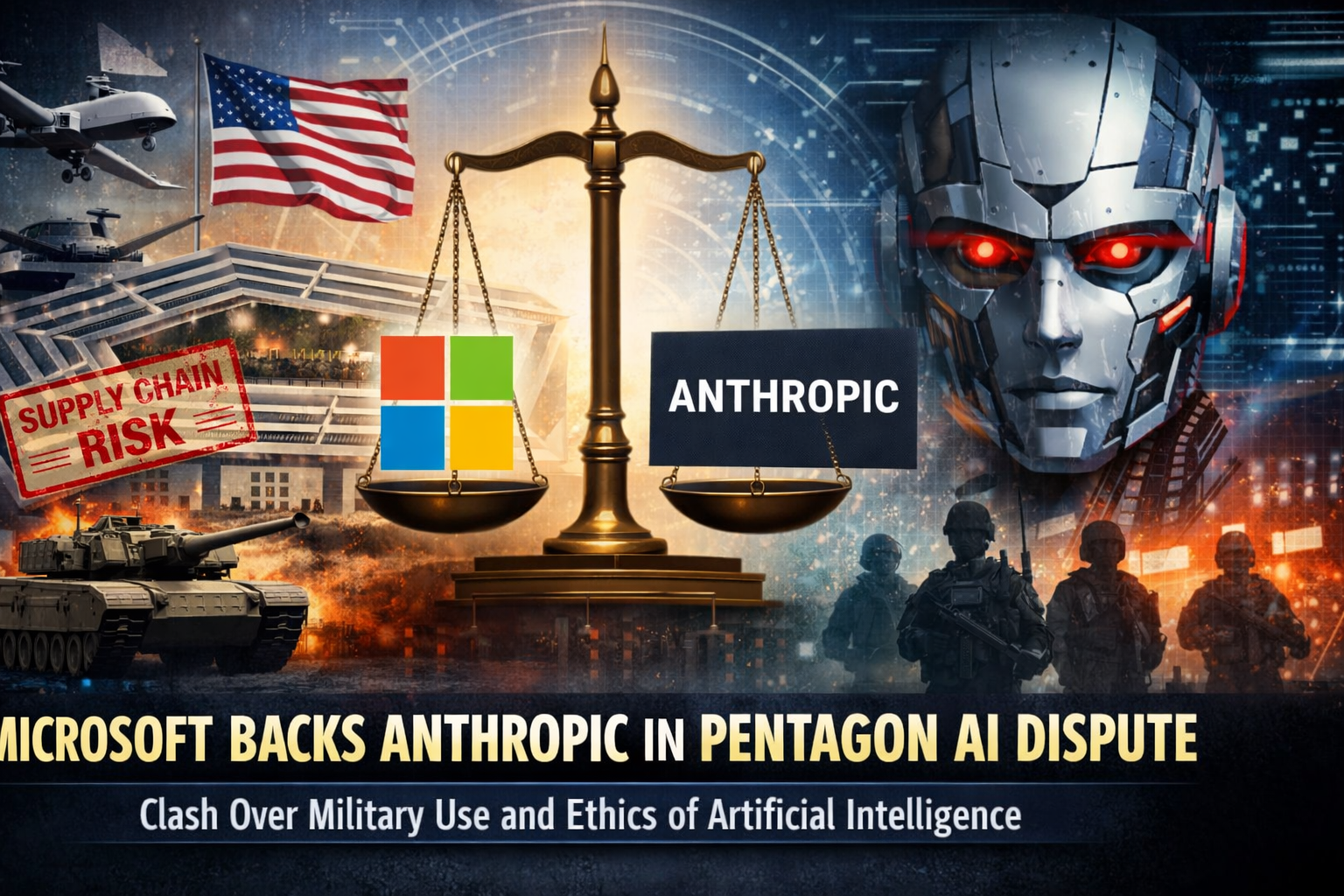
There has arisen a conflict over the use of advanced AI systems in the military between the U.S. Department of Defense and the artificial intelligence company Anthropic. The Pentagon is said to have put Anthropic under the category of potential supplying chain risk, which essentially prevents the company from taking on defense-based contracts. This group is typically applied in cases where the government feels that a given firm may be a security issue to the country or when its technology policies are incompatible with defense needs.
The controversy is largely regarding the limitations that Anthropic has on the use of its AI model, Claude. The company has rules that deny its technology from being applied in some military tasks, such as autonomous weapons systems or extensive domestic surveillance.
The Concerns of the Pentagon on AI Limits.
The Department of Defense officials presented an argument that such restrictions would cripple the military in terms of its capacity to incorporate the latest AI technologies in the defense systems. Artificial intelligence is becoming an important part of modern warfare, as it is used in analyzing data, detecting threats, and support of decision-making. Due to these shortcomings, the policies of Anthropic were allegedly considered by the defense officials to be incongruent with the military requirements. The classification of the company as a supply chain risk created a significant obstacle to government contractors who would otherwise wish to use AI tools at Anthropic in their projects.
This action was also an indication of a wider issue in the government on whether the government should leave it to the private companies to determine how the national security agencies would utilize the high-tech technology.
Legal Action by Anthropic
Anthropic has filed a lawsuit against the designation in reaction to the decision of the Pentagon. The company claimed that this move by the government was unjustified and would hurt its reputation and business relationships. The company stated that the supply chain risk label was implemented without enough evidence and might not allow it to compete for government contracts in the future. Anthropic further cautioned that the ruling might deter technology companies from coming up with moral limits for their products.
This lawsuit is intended to curb the government’s decision and allow the company to be included in the federal technology programs.
Microsoft Steps in to Defend Anthropic.
This legal battle was given wider publicity when Microsoft filed a legal brief in favor of Anthropic. The technology giant petitioned a federal judge to stay the Pentagon’s move pending the court hearing of the case. Microsoft claimed that the ruling of the government may cause uncertainties to the technology industry. Most businesses are dependent on collaborations and integrations with various systems of AI, and the shutdown of a large provider, such as Anthropic, may derail current projects and innovation.
The company has even warned that such practice by the government will create precedence where the federal agencies can punish companies just because they have created ethical restrictions on the use of their technology.
Military Use of AI: Ethical Debate
The controversy points to a bigger international debate regarding the use of artificial intelligence in war. Certain technology firms think that AI applications must not be applied in completely autonomous weapons and surveillance mechanisms that may pose risks to civil liberties.
Anthropic has made it publicly known that its mission involves the creation of safe and responsible artificial intelligence. The policies of the company are developed so that human control is key at any moment of intervention of the AI tools in sensitive situations. Nevertheless, military strategists believe that artificial intelligence is making it necessary to defend a nation. AI will be able to process large volumes of data, detect threats more quickly and contribute to strategic decision-making.
Effects on the Technology Industry.
The case may carry significant repercussions regarding the government-AI company relations. In the event the ruling by the Pentagon is upheld, the government agencies will be motivated to extend more control over the utilization of private technology in the defense processes. Conversely, in the event that Anthropic wins the case, the businesses can have more legal reinforcement to establish parameters on the use of their technologies. Such a result may affect the future development and implementation of AI systems.
The controversy also demonstrates the growing rivalry in the artificial intelligence sector in which businesses are competing to create forceful systems without giving in to ethical issues and business potentialities.