
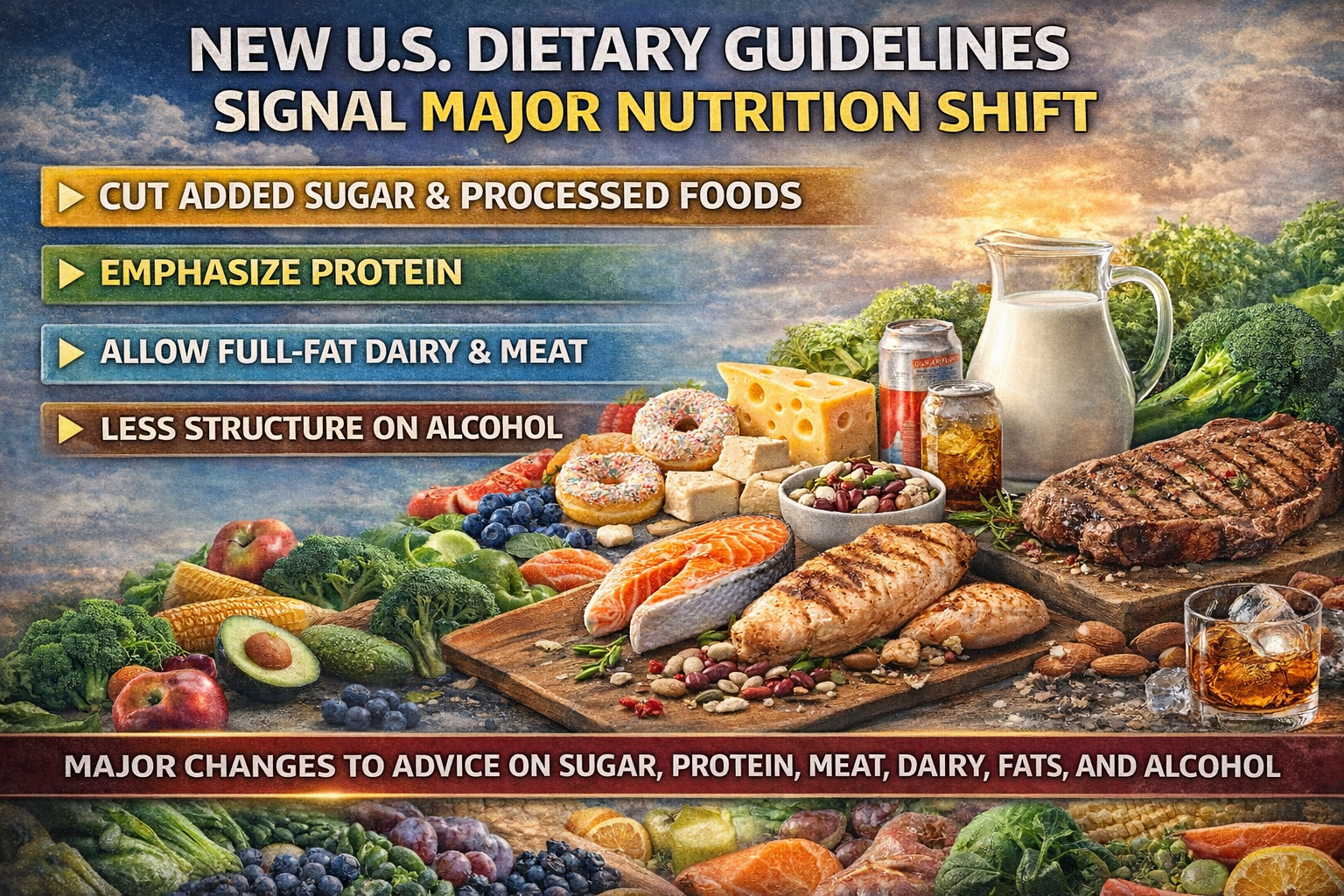
The latest edition of the Dietary Guidelines to Americans has been released by the U.S. government, and it informs people on how to eat within the next five years. One of the largest alterations in federal nutrition policy in decades is the 2025-2030 guidelines released by the Department of Health and Human Services and the Department of Agriculture. Their advice on sugar, protein, meat, dairy, fats, and alcohol is revised.
The rules influence school lunches and military meals, food assistance and messages about the general health. On this basis, any slight modifications may have significant impacts on the way Americans dine, shop, and perceive food.
Increased focus is directed towards ultra-processed foods and added sugar
The primary argument that the new rules offer is that individuals ought to consume significantly less ultra-processed food. The government is alerting people for the first time about meals which are highly processed, over-packed and contain high levels of added sugar, sodium and other artificial substances.
The recommendations emphasize the fact that added sugar is not a nutritious ingredient and must be enjoyed in limited amounts. Rather than taking freely added sugar during the day, adults should attempt to keep the level to extremely minimal amounts per meal. The primary things that make diets bad are sweetened beverages, desserts, and other snacks that are ready to eat.
Fruits and vegetables in their entirety are highly promoted. Frozen and canned fruits and vegetables are also fine, provided that they do not contain much added sugar or sodium. Fibrous and fermented food is particularly significant to digestive and metabolic health.
Protein is the central feature of the new eating model
Among the largest alterations, the increased importance of protein can be identified. The new regulations on protein consumption are made depending on the body weight and not the proportion of calories previously consumed. The quantity of protein that adults are supposed to consume daily in relation to their body weight is 1.2 to 1.6 grams. This is a huge contrast to what had been mentioned earlier.
Protein is good in meat and poultry, fish, eggs, dairy foods, legumes, and plant foods. According to federal health professionals, the target is to make people feel full, maintain their muscular weight and have better metabolic health, particularly as the population ages.
The shift indicates that there is a growing concern among people about the fact that older people are not receiving an adequate amount of protein, and that acquiring sufficient amounts of protein could prevent frailty and chronic illness.
Full-fat dairy products and meat are also regaining popularity
The new guidelines no longer instruct people not to consume full-fat dairy products, and this is different from the decades of preaching about low-fat dairy products. Rather, they recommend taking three portions of dairy foods daily and place full-fat milk, yogurt and cheese beside other complete meals.
The discourse on meat eating has also become less biased compared to the previous versions. The guidelines do not promote the consumption of excess food, but they no longer emphasize the strict restriction of red meat consumption. It is concerned with the quality of the food, the methods of its preparation and the balance of the diet.
This development is attracting the attention of people due to the fact that it is contrary to recommendations made over a long period of time that consuming a lot of saturated fat would result in heart disease. The advocates argue that whole-food sources of fats might not be as harmful as they were previously believed, but some believe that the scientific evidence is still inconclusive.
The saturated fat is also still limited, and this sends signals
Although the guidelines are less strict with meat and dairy, they still indicate that your daily fat intake should not exceed 10 percent of saturated fats. This may lead to certain issues with the recommendations, as a good number of the foods that are receiving increased attention are also high in saturated fat.
According to nutritionists, the text does not offer much practical information to consumers on how these recommendations can be applied in their everyday meals. The next likely cause of confusion is that there is no clear distinction between animal fats and plant-based fats.
Advice on alcohol becomes less particular
The other phenomenon that has led to much controversy is that of alcohol. There used to be definite limits that were governed by rules between men and women daily. The new version does not contain any numerical restrictions; it only states that less alcohol is healthier.
The federal government officials argue that the change is grounded in the increasing sources of data that alcohol consumption increases the susceptibility to cancer, liver disease, and other health conditions. However, other people who are concerned about the state of health are concerned that the dismantling of explicit restrictions will make people less cognizant of the dangers, particularly when biological dissimilarities in the way people process alcohol are no longer considered.
The implications of this on public health and policy
The new regulations will have an impact on governmental nutrition projects such as school lunch, food labeling, and nutritional counseling. Schools and other institutions might need to alter their menus to include more protein requirements and focus less on low-fat dairy.
The harder line of action toward added sugar and ultra-processed food might influence the food production and demand among customers as well. This may result in a reformulation and labeling of food more clearly.
Balancing between fresh ideas and clarity
The new dietary guidelines attempt to revise federal nutrition guidelines by considering new research and the shift to new eating patterns. The majority of the population believes that it is a good thing to pay attention to healthy food, reduce the amount of sugar consumed, and make sure that the level of protein is adequate.
However, the guidelines also raise very important issues regarding their clarity and consistency. The consequences of increasing the limitations on saturated fat and reducing the limitations on meat and full-fat dairy, and softening the restrictions on alcohol, with an emphasis on the health issue, may pose a challenge in the way people will know how to apply the recommendations in their day-to-day lives.