
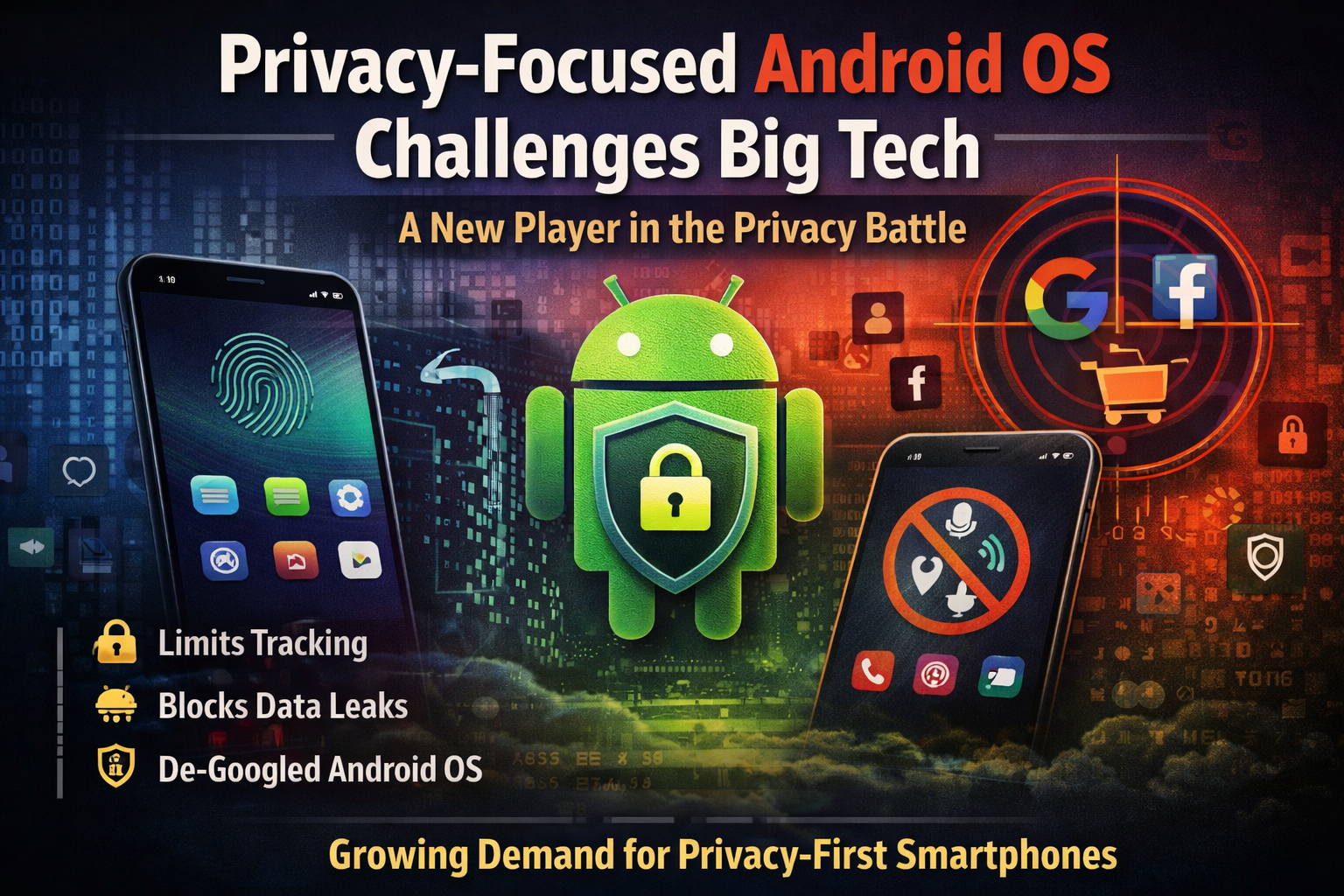
A new Android-based operating system is gaining attention for taking a strong stand on user privacy at a time when digital surveillance and data tracking are major concerns. Unlike traditional smartphone systems, which often rely on collecting user data to improve services or support advertising models, this privacy-focused OS is designed to minimize data collection from the very beginning. Built on the Android Open Source Project, it removes many of the built-in tracking mechanisms commonly found in standard Android devices. Instead of prioritizing convenience alone, it aims to give users full control over what information is shared and how their device operates. This shift reflects a growing demand for more secure and transparent technology in everyday life.
Why Privacy Has Become So Important
In today’s digital world, smartphones are not just communication devices—they store highly sensitive personal information such as location data, contacts, browsing history, financial details, and even daily habits. Many apps request permissions that go beyond their actual purpose, and users often accept these permissions without fully understanding the implications. Over time, this has created an ecosystem where large amounts of personal data are constantly being collected, analyzed, and sometimes shared with third parties. This lack of transparency has raised serious concerns among users, especially as data breaches and misuse cases continue to make headlines. As a result, there is a growing awareness that privacy is not just a technical issue but a fundamental right that needs stronger protection.
What Makes This OS Different
What truly sets this Android-based operating system apart is its privacy-first approach. Instead of adding privacy features later, it builds the entire system around protecting user data. It removes or limits access to services that track user behavior and replaces them with alternatives that focus on security. The OS also strengthens app sandboxing, which means each app operates in its own secure environment, reducing the chances of data leakage. Additionally, it gives users detailed control over app permissions, allowing them to decide exactly what information each app can access. Some versions of such systems even include built-in tools that block trackers, monitor network activity, and alert users about suspicious behavior. This level of control is rarely seen in mainstream operating systems, making it a strong option for privacy-conscious users.
Reducing Dependence on Big Tech
Another important aspect of this operating system is its effort to reduce reliance on large technology companies. Most Android devices today are closely tied to major service providers, especially for features like app downloads, notifications, and cloud storage. These services often collect user data as part of their functionality. In contrast, privacy-focused systems aim to provide a “de-Googled” experience by removing or replacing these services with open-source alternatives. This does not mean users lose access to apps, but rather that they can use them without being constantly tracked. By breaking away from traditional dependencies, this OS challenges the current data-driven business model and offers a more independent and secure mobile experience.
The Challenges of Adopting a Privacy-First System
Despite its advantages, switching to a privacy-focused operating system is not always easy. One of the main challenges is usability. Many users are привык to the smooth and integrated experience provided by mainstream platforms. When certain services are removed or replaced, it can affect how apps function or how easily users can set up their devices. Some apps that rely heavily on proprietary services may not work perfectly, which can be frustrating for users who depend on them daily. There is also a learning curve involved, as users need to understand new settings, permission controls, and alternative app sources. For non-technical users, this adjustment can feel overwhelming at first. However, those who value privacy often see these challenges as a reasonable trade-off for better control over their data.
Growing Interest Among Users
Interest in privacy-focused operating systems is steadily increasing as more people become aware of how their data is being used. Users are beginning to question the trade-off between convenience and privacy, and many are looking for solutions that offer both security and functionality. The open-source nature of these systems also builds trust, as anyone can review the code and verify that there are no hidden tracking mechanisms. This transparency is a major advantage over proprietary systems, where users have limited visibility into how their data is handled. As awareness grows, more developers are contributing to these projects, improving their performance and making them more user-friendly. This gradual evolution is helping bridge the gap between privacy and usability.
Editor’s View
From an editorial perspective, this shift toward privacy-first operating systems is a necessary and positive development. For years, the tech industry has prioritized growth and convenience, often at the cost of user privacy. Many users have unknowingly given up large amounts of personal data in exchange for free or easy-to-use services. This new wave of privacy-focused technology challenges that model and encourages a more balanced approach. However, for these systems to truly succeed, they must become more accessible to everyday users. If they remain too complex or limited in functionality, their adoption will remain niche. The real opportunity lies in combining strong privacy protections with a smooth and simple user experience.
The Bigger Picture
Looking at the bigger picture, the rise of privacy-focused Android alternatives reflects a broader change in how people view technology. Privacy is no longer a secondary concern it is becoming a key factor in decision-making. As users demand more control and transparency, companies will be forced to adapt and improve their practices. This could lead to stronger regulations, better security standards, and more ethical use of data across the industry. In this sense, even if these alternative operating systems do not dominate the market, they play an important role in pushing the entire ecosystem toward better privacy practices.