
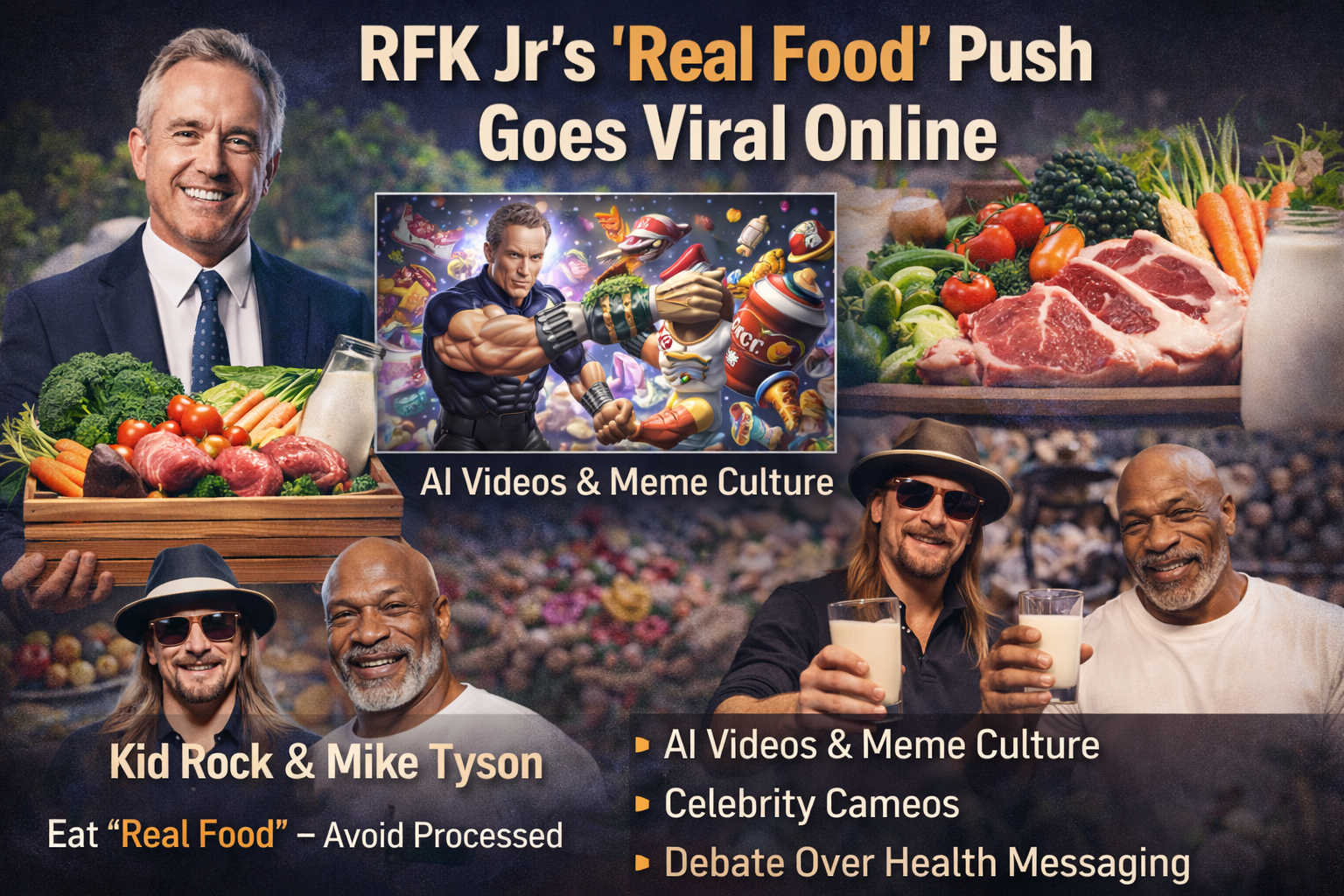
In the current digital media landscape, politics is closer to influencer marketing. In no place can it be seen better than in the social-media campaign of Robert F. Kennedy Jr., the U.S. Secretary of Health and Human Services. Kennedy has been relentlessly pushing a message that has been easy to hear and yet controversial with the help of AI-generated videos, internet memes, and celebrity collaborations: Eat real food.
What started as a policy message regarding nutrition has become a very stylized online campaign aimed at the younger generations to draw attention. It is one of the initiatives of Kennedy as a whole under his health messaging in the larger movement, Make America Healthy Again, as the content is a mix of viral content, sometimes absurd, sometimes provocative and often widely shared.
The Digital Strategy The Campaign
The communications strategy that has been adopted by Kennedy and his team is more of TikTok influencers than that of government officials. The campaign does not follow the standard press releases or long policy reports, but rather it is based on short videos, AI animation, funny memes, and the appearance of celebrities that circulate fast on social media.
A number of these videos are as short as a few seconds, yet are carefully cut and produced to be as interesting as possible. A single clip was supposedly shared tens of thousands of times, which proves how simple a short meme-like video can become in terms of its widespread appeal.
A younger communications team within the Department of Health and Human Services orchestrates the digital push to a large extent. Their aim is simple: to make health content enjoyable enough to compete with the never-ending torrent of viral content overtaking social media in the present-day world.
There is danger in the way of entertainment. The government starts to sound as if it is being used to make people laugh online; critics say that the gravity of the government’s health policy may be lost.
AI Videos and Meme Culture
The largest part of the campaign is the AI-generated video that will dramatize the concept of eating real food. In other clips, they have some fictitious or cartoon characters who reject processed snacks and instead eat natural foods.
A popular AI clip featured an action-figure Kennedy fighting artificial food dyes and urging the audience to eat natural food. The disturbing imagery left a lot of fascination and criticism on social media, with some people applauding its creativity and other individuals doubting the suitability of such content being delivered by a federal agency.
The other AI video that was shared on the holidays featured the transformation of Santa Claus into a fitness enthusiast following a call with Kennedy- eventually giving cookies a replacement with carrots. The flirtatious idea received ambivalent responses and managed to create a large amount of interest.
Advocates indicate that the strategy is witty. According to critics, it is propaganda, disguised as entertainment.
Power of the Celebrity Kids Rock and Mike Tyson
Celebrity appearances have also dominated the digital campaign by Kennedy. In one of the most popular videos, Kennedy went on a bizarre fitness montage with musician Kid Rock and push-ups, sauna, and a celebratory toast using whole milk glasses.
The film was intended to market two key concepts (Get active and Eat real food) of the campaign.
The other celebrity partnership involved a former boxing champion, Mike Tyson, who featured in promotional content about his problems with poor eating and obesity. Kennedy credited the participation of Tyson as one of the most effective methods of raising awareness about the health crisis in America.
Although these celebrity associations are making it more visible, they are also introducing more polarization. The campaign has been criticized as being more about spectacle than substance at times.
The Ideology of Real Food
The principle of the core of Kennedy messaging is easy to grasp: to cut processed foods and promote the use of natural foods, including meat, dairy, vegetables, and whole foods.
Kennedy has been a critic of highly processed food products and chemical additives, as they cause chronic diseases in the United States. His wider agenda of Make America Healthy Again (MAHA) connects the food preferences to the increased prevalence of obesity and other health complications in the country.
The campaign would even suggest a new food pyramid putting more emphasis on protein-dense foods such as steak and whole milk, but vegetable-rich foods, a trend that is far different from what had been put forward by the federal government in the past.
But there is still division among nutritionists. Others concur that processed foods are related to poor health outcomes, whereas others caution about the simplistic messages that may confuse people about healthy eating.
Critics Raise Concerns
The campaign has elicited massive criticism despite its viral success.
Disciplines like nutrition policy are important topics in complicated situations and thus, should be communicated with keenness and evidence-based information according to the view of the public health experts. They are concerned that meme-based messaging could create confusion between science and branding by political parties.
It has also been a concern among political analysts whether the campaign is a reflection of the previous programs like the “Let’s Move! initiative sponsored by Michelle Obama. There has been an irony in the commentators that conservative voices once criticized the same health campaigns.
The mere campaign is bizarre, according to other critics. Viral videos with surreal visuals (like imaginary animals or dramatic gymnastics) have even elicited claims that the government is focusing on attention-seeking images over significant policy discourse.
However, the proponents make a different case: when conventional means of messaging are not able to attract the younger generation, it might be required to resort to unusual forms of doing so.
A New Age of Political Communication
Regardless of whether the campaign is considered clever or absurd, it is an indication of a larger change in the manner in which political leaders reach people.
Previously, government communication was done through official speeches, policy papers and press conferences. The war front is now social media feeds with memes, short videos and influencer-style content.
The politics of Kennedy is an example of the changing politics of the attention economy. Viral clips have a higher potential of going a long distance and becoming viral more than traditional policy announcements.
Whether this strategy conditions an increase in awareness of the population or whether it has been transformed into another kind of online entertainment is the question.