
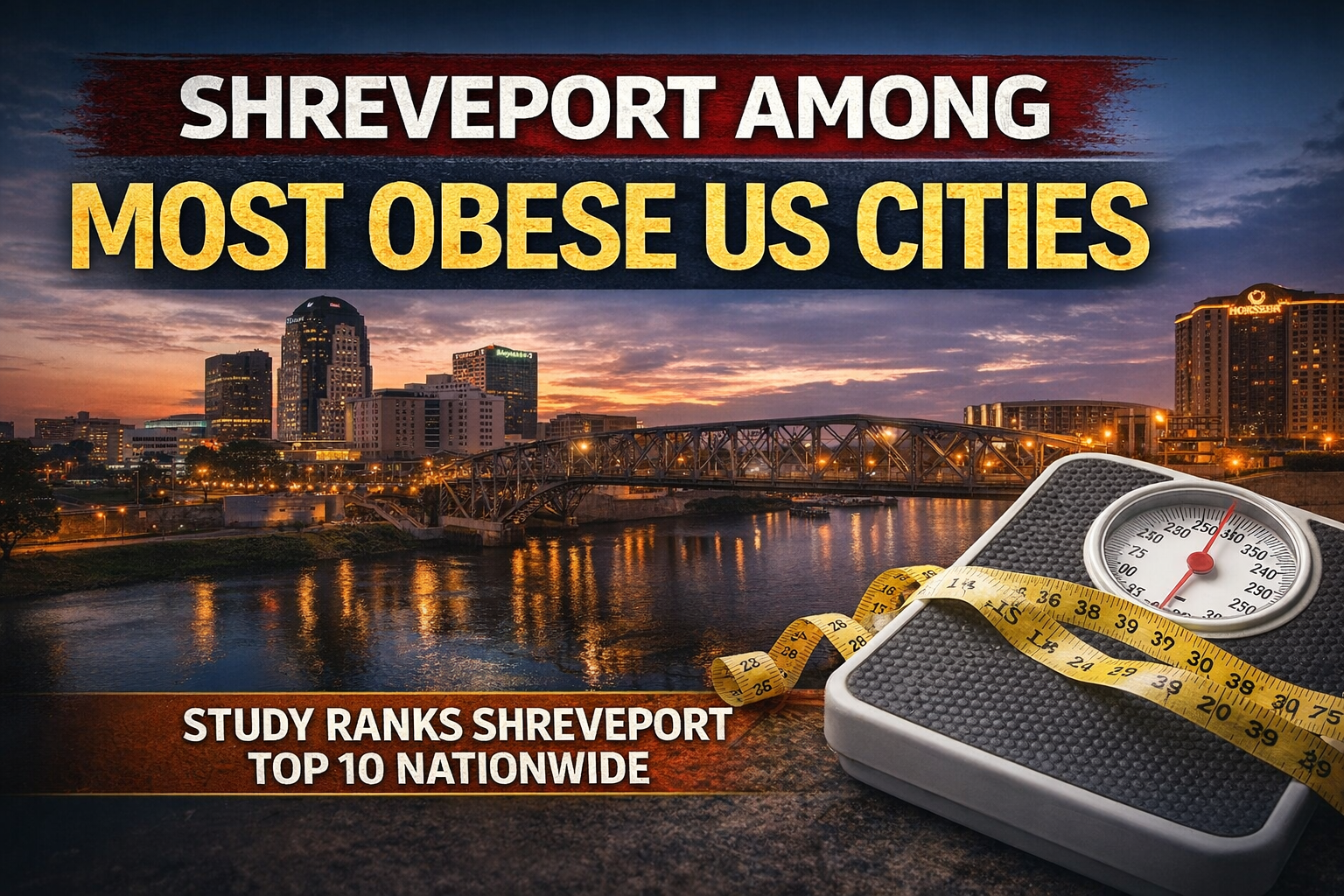
The City of Shreveport, Louisiana, has recently been ranked on a list of the most overweight and obese cities in the United States by a recent national study, and this has given new impetus to an already existing public health crisis. The results are supported by the detailed analysis, which is going to assess not only the statistics of body weights but also the lifestyle aspects, availability of healthy food, and occurrence of obesity-related diseases. This ranking underscores a concerning trend that is still being experienced in most cities in the southern part of the United States, where structural and socioeconomic factors play a significant role in the health outcomes. The ranking of Shreveport in the study is a very much-needed wake-up call with regards to the dire need for awareness and action at various levels in the country due to the increased level of obesity.
Methodology and Highlights of the Study
According to the research, which was conducted by WalletHub and covered by KSLA, the 100 largest metropolitan areas in the United States were evaluated based on a broad range of indicators. These indicators were grouped into three main categories: obesity and overweight rates, health outcomes like diabetes and heart disease, and availability of food and fitness. These dimensions enable the study to have a more holistic perspective on obesity as opposed to using data on body mass index (BMI). The high position of Shreveport shows that the city had challenges in all three categories, which means the problem is not a single-person problem but a systemic and environmental one. This is a holistic approach to the study that explains why there are areas that are always ranked more than others.
The Major Forces that cause Obesity in Shreveport
The obesity rates in Shreveport are high because of a number of factors, which relate to each other. The lack of access to affordable and healthy food choices is one of the most important problems. There are large food deserts in which residents of various neighborhoods rely on fast food and processed foods because of the lack of grocery stores that provide fresh products. Physical inactivity is also a significant contributing factor since the city does not have enough infrastructure, like parks, walking paths, and recreational centers, that can motivate people to exercise. Socioeconomic factors also make matters worse, as reduced levels of income limit access to healthcare facilities and resources in terms of fitness and nutrition education. Lifestyle choices also uphold the patterns of unhealthy behaviors because of cultural habits and established dietary patterns.
Trends in the region Southern United States
Shreveport has contributed to a larger body of regional trends, with the cities of the South taking up the obesity statistics in the United States. The cities such as those of Texas, Mississippi, Alabama and Louisiana are not rare to find on such lists. This trend indicates that the problem goes deep down to the features of the regions, such as economic inequalities, weather conditions, and cultural standards. Indicatively, the hotness in the southern areas might deter physical exercises in the open air, whereas traditional diets usually contain high-calorie foods, to which the energy-free foods belong. These common problems suggest that obesity is not just a local problem but also a regional problem that will need coordinated approaches in various states.
Health risks that are related to obesity
Obesity has serious health problems that are far-reaching. Overweight or obese people are at a high risk of acquiring chronic diseases, including heart disease, type 2 diabetes, high blood pressure, and stroke. The conditions are more common in such cities as Shreveport, with high rates of obesity, which causes extra pressure on health care systems. On top of physical health, obesity can also affect mental health, which results in such problems as low self-esteem, depression, and social stigma. It is the accumulated impact of these health hazards that illustrates the need to tackle obesity as one of the key health concerns of the population.
Communities Economic Impacted
Obesity has not only been a health problem, but it has also been an economic issue. The economic cost of obesity related diseases is high not only to the individual but also to society at large. There is an increment in the costs of healthcare because the treatment of chronic diseases is required on a prolonged basis; at the same time, lowered productivity is observed because of absenteeism and low performance at the workplace. In America, the amount of money spent on obesity related health care is in billions of dollars per year. In the case of such cities as Shreveport, such an economic burden may impede the development in general and burden the state resources with extra stress. Obesity is a problem that must not only be addressed to enhance health outcomes but also to make the economy sustainable.
Plans for the response to the problem
The fight against obesity must be multifaceted, involving the policy makers, the communities and the individuals. Governments can invest in infrastructure that encourages physical activity at the policy level, like parks, bike lanes and recreational centers. Enabling people to have access to affordable, healthy food is also essential, and it can be done by encouraging local farmers to sell their products in local markets, as well as encouraging grocery stores to enter the underserved neighborhoods. Programs conducted in the community may become an important factor as they foster nutritional education and promote the adoption of more healthy lifestyle habits. Educational institutions, especially schools, can be used as a good platform to encourage children to maintain healthy lifestyle practices of eating well and engaging in exercise. At the personal level, healthier lifestyles, which include exercise and conscious eating, can be of significant use in the long run.
The Suicide Awareness and Education
The creation of awareness on the causes and effects of obesity is one of the important measures in curbing the vice. Through education, people are able to make educated choices on their health, and it motivates the community to campaign for better resources and policies. One can influence perceptions and decrease stigma with the help of public health campaigns, where obesity can be discussed as a complex problem. A variety of factors can cause it, and it is not the individual’s responsibility. When the stakeholders develop a deeper appreciation of the problem, they can also collaborate to establish healthier lifestyles.
Looking Ahead
Shreveport is ranked among the cities of the United States as one of the most obese, which is why this issue is a problem that should be addressed and worked on. As much as the causes of obesity are complicated, they are not imminent. When there is an effective combination of policy interventions, community involvement and personal commitment, then a significant change could be realised. The research results must be used as a wake-up call to both the leaders, healthcare professionals, and residents to put health and well-being at the forefront. The concern about obesity is not only about the statistics, but it is also about the quality of life and creating healthier and more resilient communities in the future.