
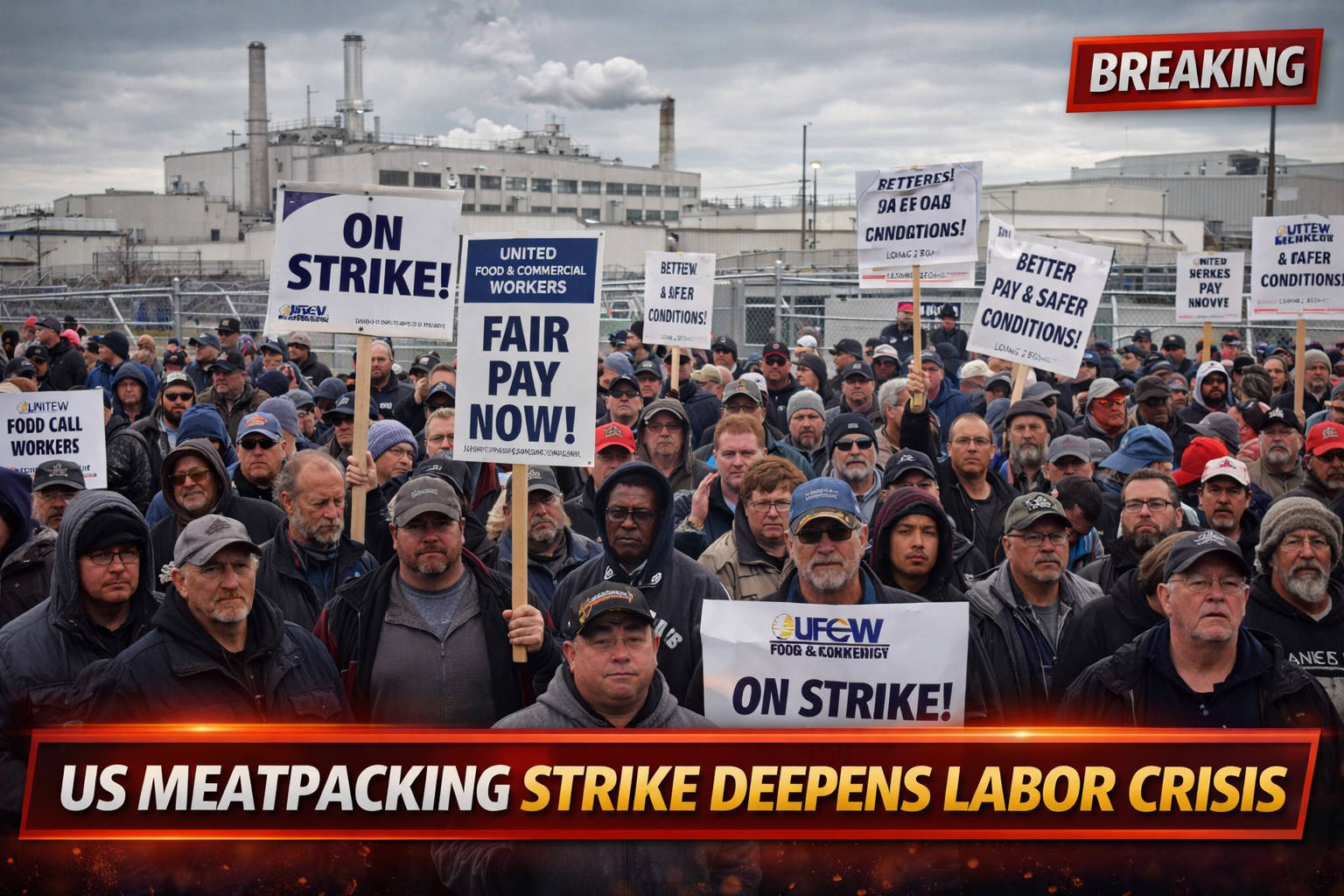
One of the largest meat processing plants in the United States is experiencing a stage of a severe labor strike, which shows the strong undertones between employees and company management within the food supply chain of the country. The strike, which is headquartered at a huge meatpacking facility in Greeley, Colorado, consists of almost 3,800 employees and is the first major strike in the US meatpacking sector in close to 40 years.
The strike was initiated by the workers through the United Food and Commercial Workers (UFCW) Local 7 union after several months of negotiations between the local union and the owner of the plant, JBS USA, the largest meat processing plant in the world. The issues related to wages, healthcare expenses, and the safety conditions at the workplace are at the center of the conflict. Employees complain that the wage increments of the company, which are below 2 percent per year, cannot keep up with inflation and are actually lowering their real-time earnings as the cost of living goes up.
The working conditions within the plant have also been a matter of grave concern for the leaders of the unions. Workers say they have to cover the expenses related to necessary protective gear out of pocket, and some of them have gone as high as paying more than $1,000. That has compounded the frustrations of the employees who are already engaged in doing physically strenuous and dangerous work in one of the most labor-intensive food industry sectors.
The size of the unionisation in the strike highlights the degree of discontent among workers. About 99 percent of those who are in the union voted to go on the walkout, and thousands of them have always been at picket lines outside the plant. The high attendance is not only due to the economic grievances but also general issues of dignity, fairness and long-term employment.
JBS USA, on the other hand, has justified its stance by citing that it has been giving a fair and competitive contract, which is in line with industry standards. The firm has refuted claims of labor malpractices and has insisted that it is acting within the legal regulations. JBS has operated at the facility, moving towards other facilities where it has established business to achieve customer demand, though limited by the strike.
The labor strike has more far-reaching consequences than the direct labor conflict. The Greeley plant is a large participant in the US beef supply chain that has a large portion of the national processing capacity. Their operations have been derailed, with the industry analysts fearing a trickle-down effect throughout the market, such as supply shortage and already high beef prices.
Current problems in the agricultural field enhance these issues. The United States is experiencing a historically low supply of cattle, and this has been contributed to by long periods of drought that have decreased the number of herds. Meanwhile, other meat processing plants have reduced or completely closed down, further constraining supply. In this regard, the strike would have the effect of increasing price volatility and imposing more pressure on consumers.
According to economists, the effects of the strike on retail prices may not be immediate but might have a more significant effect if the dispute takes a long time. Although it has been observed by some analysts that lower processing capacity would be a boost to large meatpacking companies as it would help to enhance their profit margins, some fear that the long-term impact of the disruption would eventually have negative effects on producers, retailers, and consumers.
The strike also throws light on the more general tendencies in the labor market, especially in the key industries. Employees in industries like food processing have sought improved pay and protection at workplaces more than ever before, and particularly in the post-crisis period of COVID-19, which revealed weaknesses in safe working environments and supply chain resiliency. The existing conflict is indicative of an increasing readiness of the employees to engage in mass action to respond to these requests.
The other significant aspect of the conflict is that it could affect the labor relations in the industry. Being the first major meatpacking strike in decades, the result of this conflict could prove to be a precedent when it comes to further negotiations between employees and employers. An effective solution to support workers can prompt others to do the same, whereas the inability to reach a consensus might strengthen the status quo in the industry.
At the same time, the federal government and the industry players are keeping a tight check on the situation. The US Department of Agriculture has also suggested that it is monitoring the effects of the strike on meat supply and prices, even as the industry associations have threatened that some damage would be felt across the entire supply chain, including cattle ranchers and grocery store chains.
With the negotiations still at a standstill, the strike still attracts national attention, not just due to its economic consequences but also because of what the strike has said about the changing labor-management relationship in the crucial sectors. Having the two parties at the extreme ends, this issue has yet to be resolved, but its consequences are already being experienced throughout the market. They could define the future of labor relations in the American food production industry.